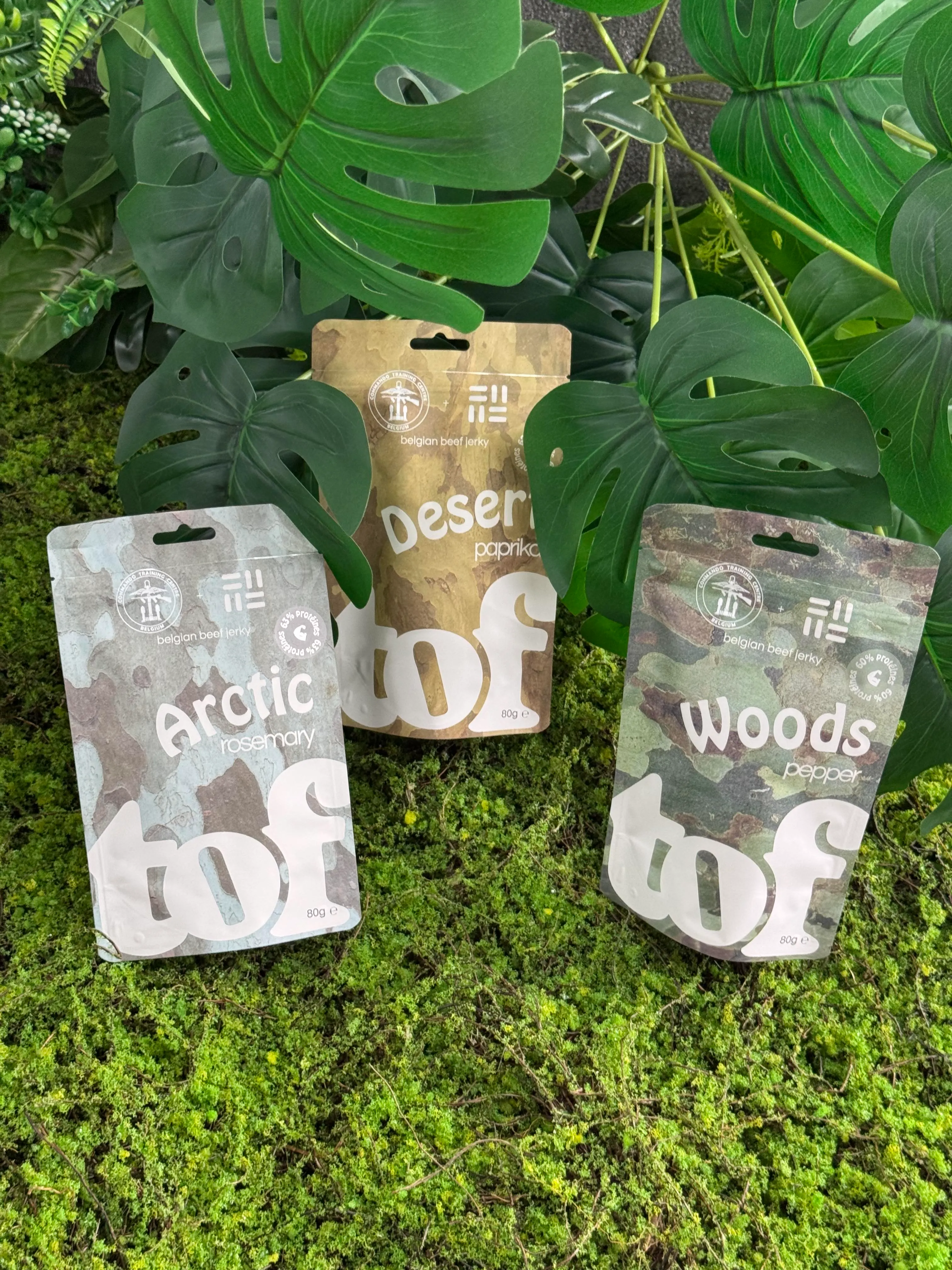
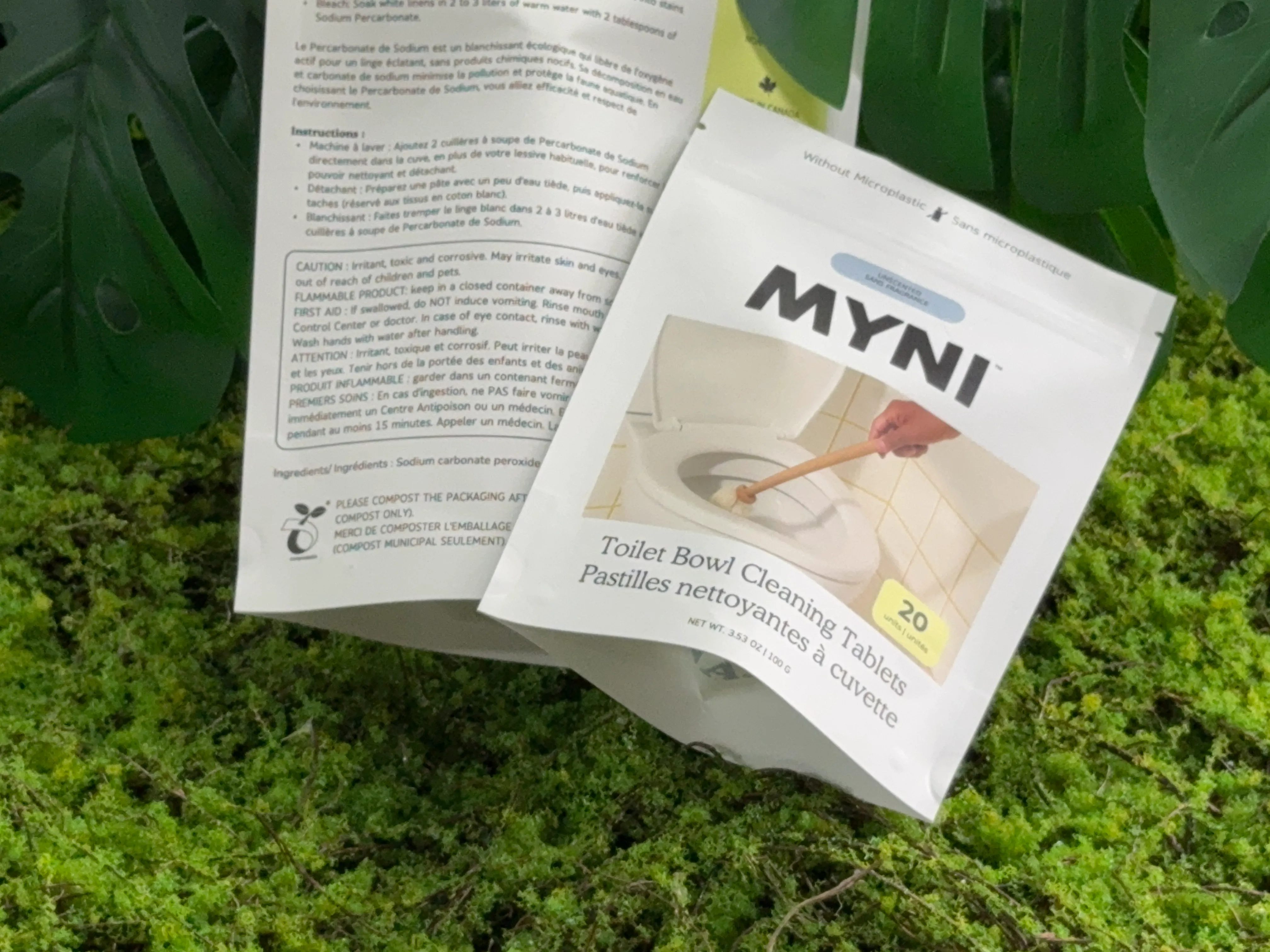
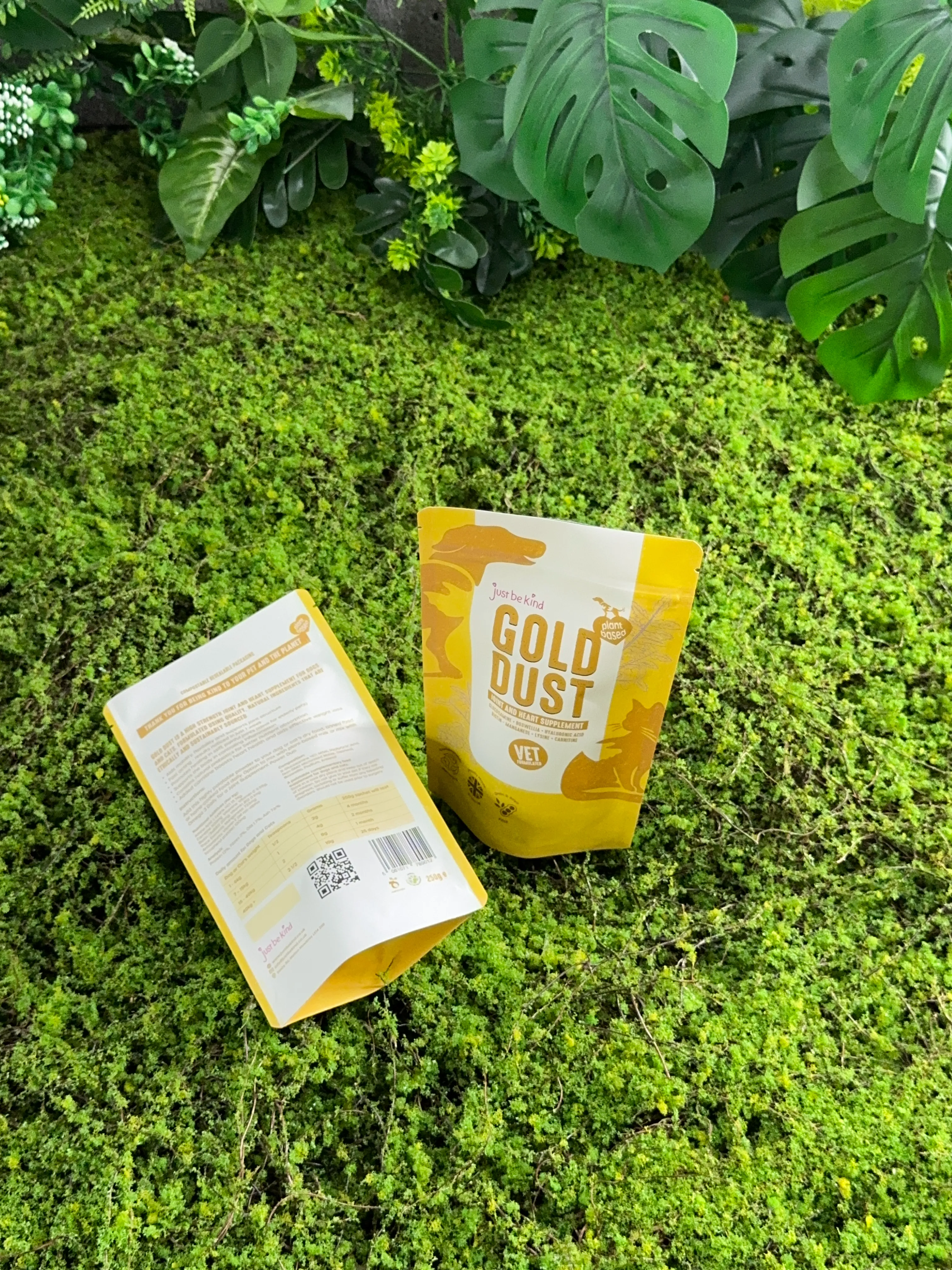
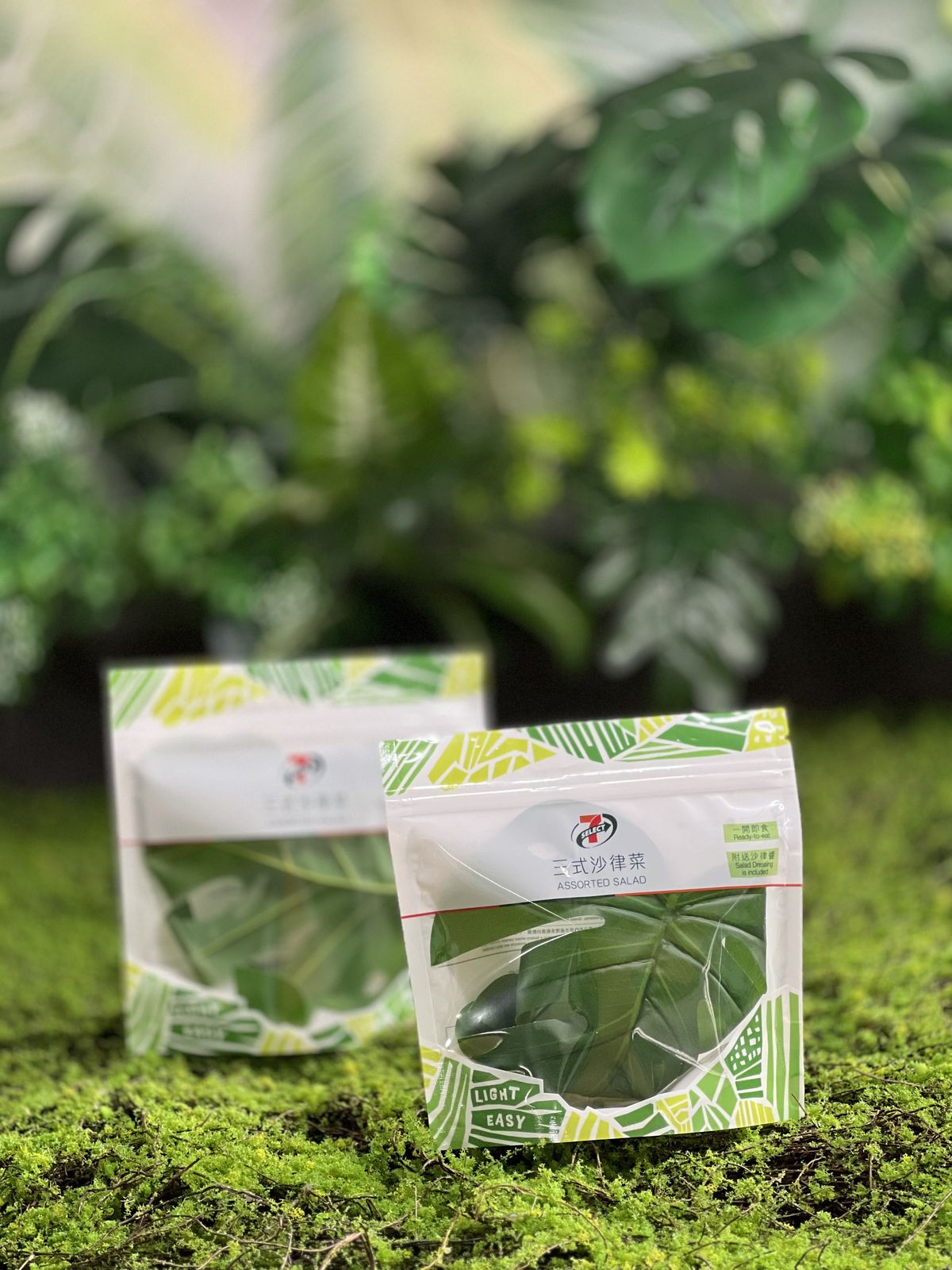
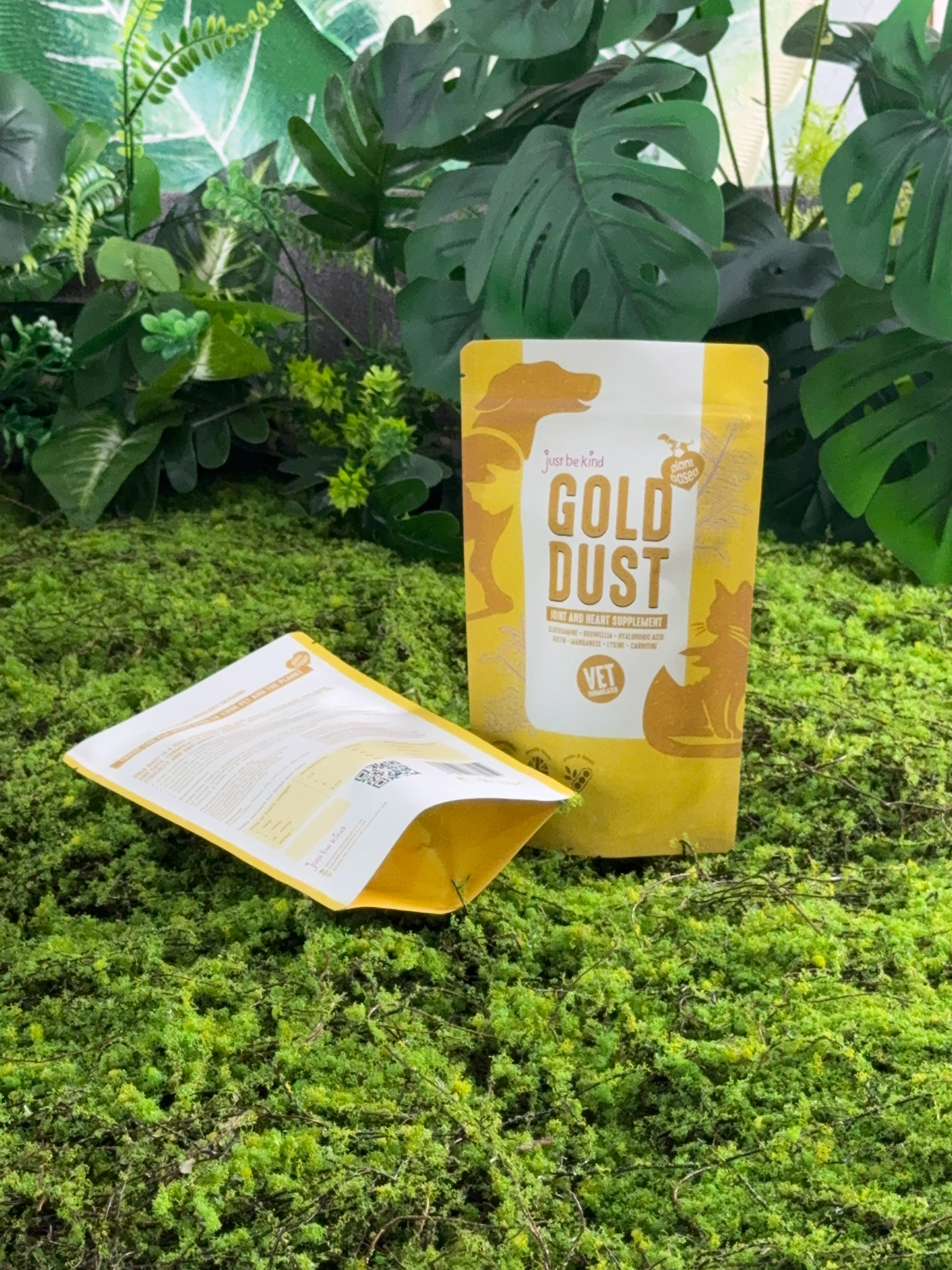
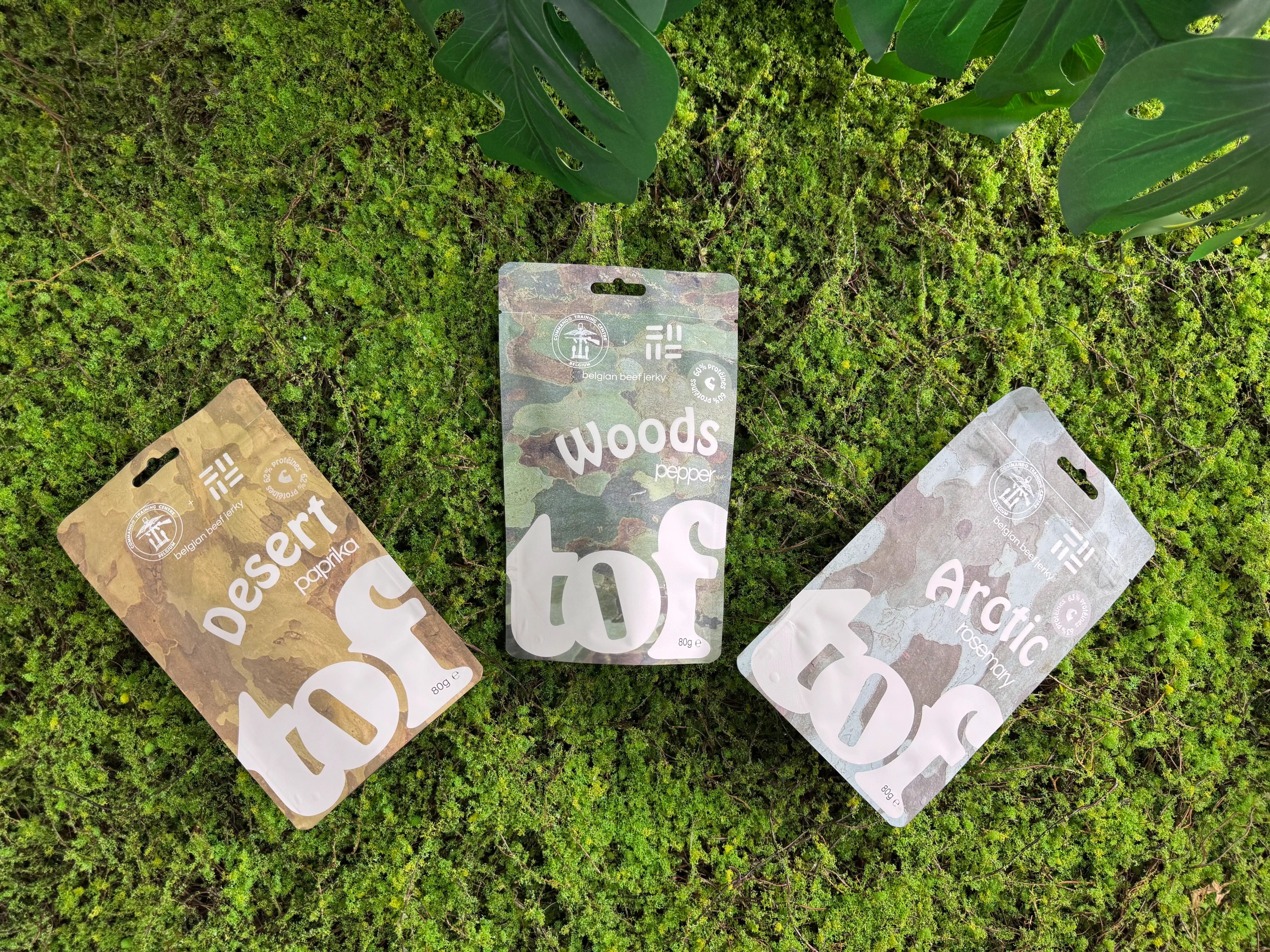
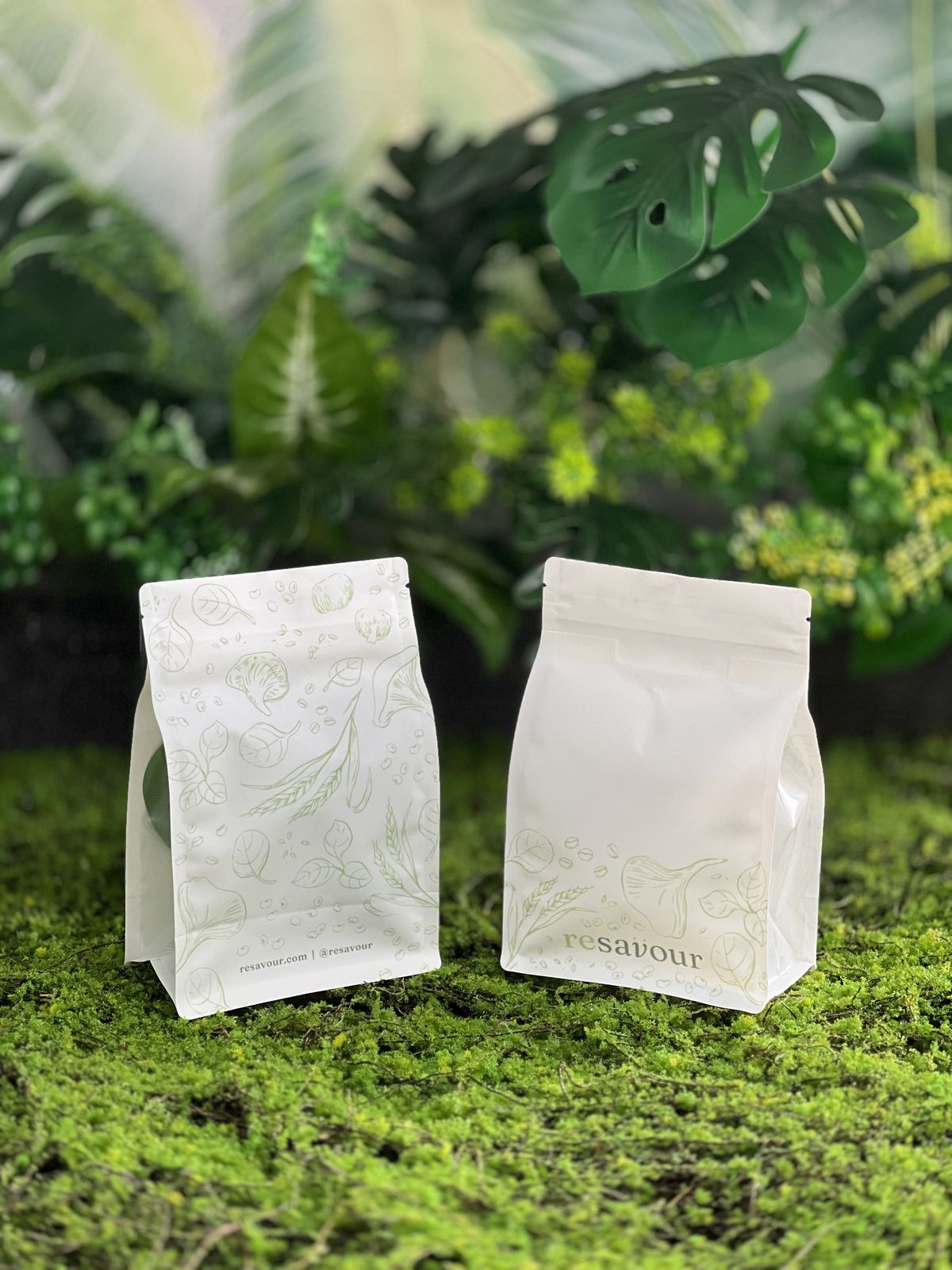
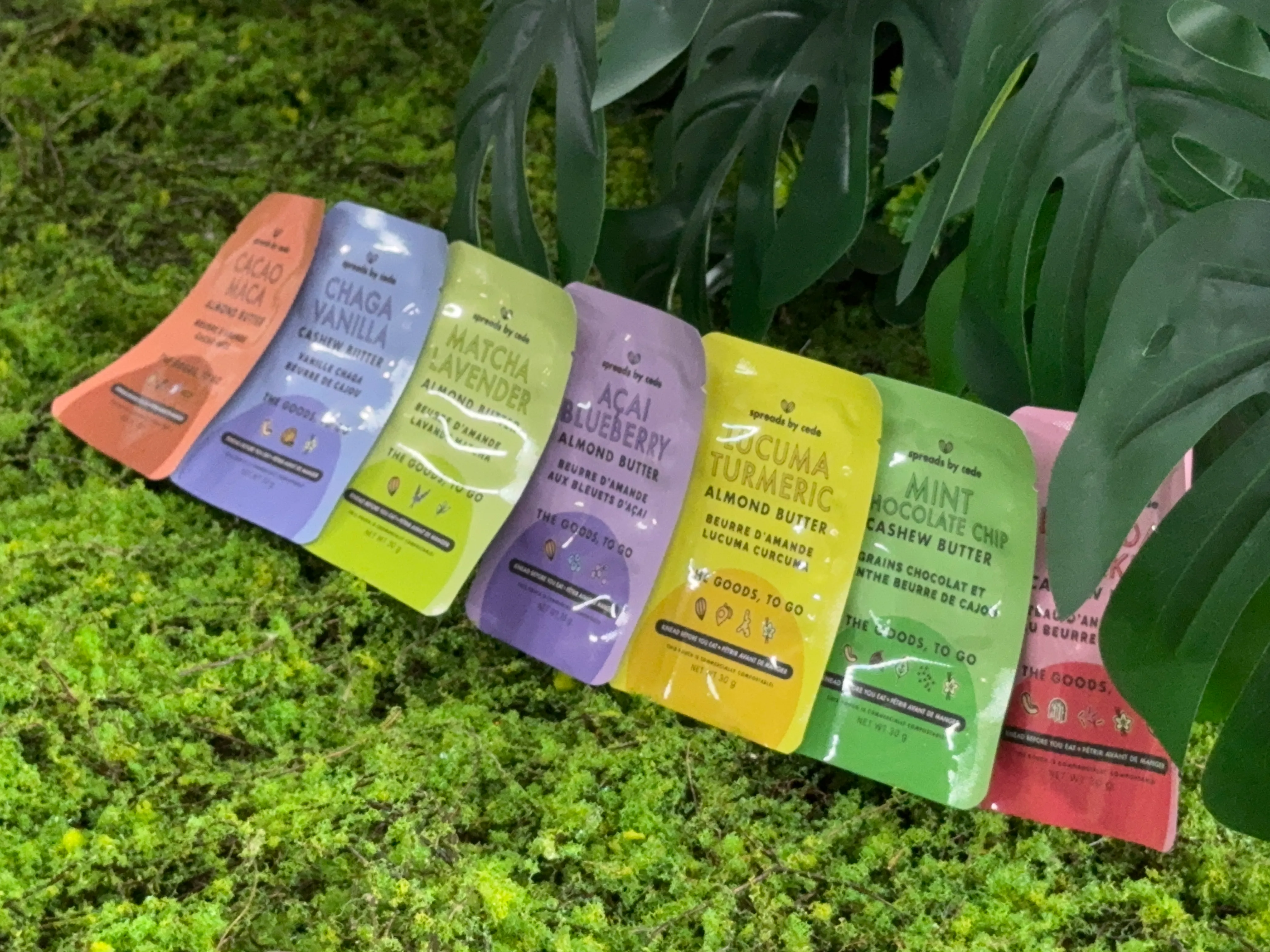
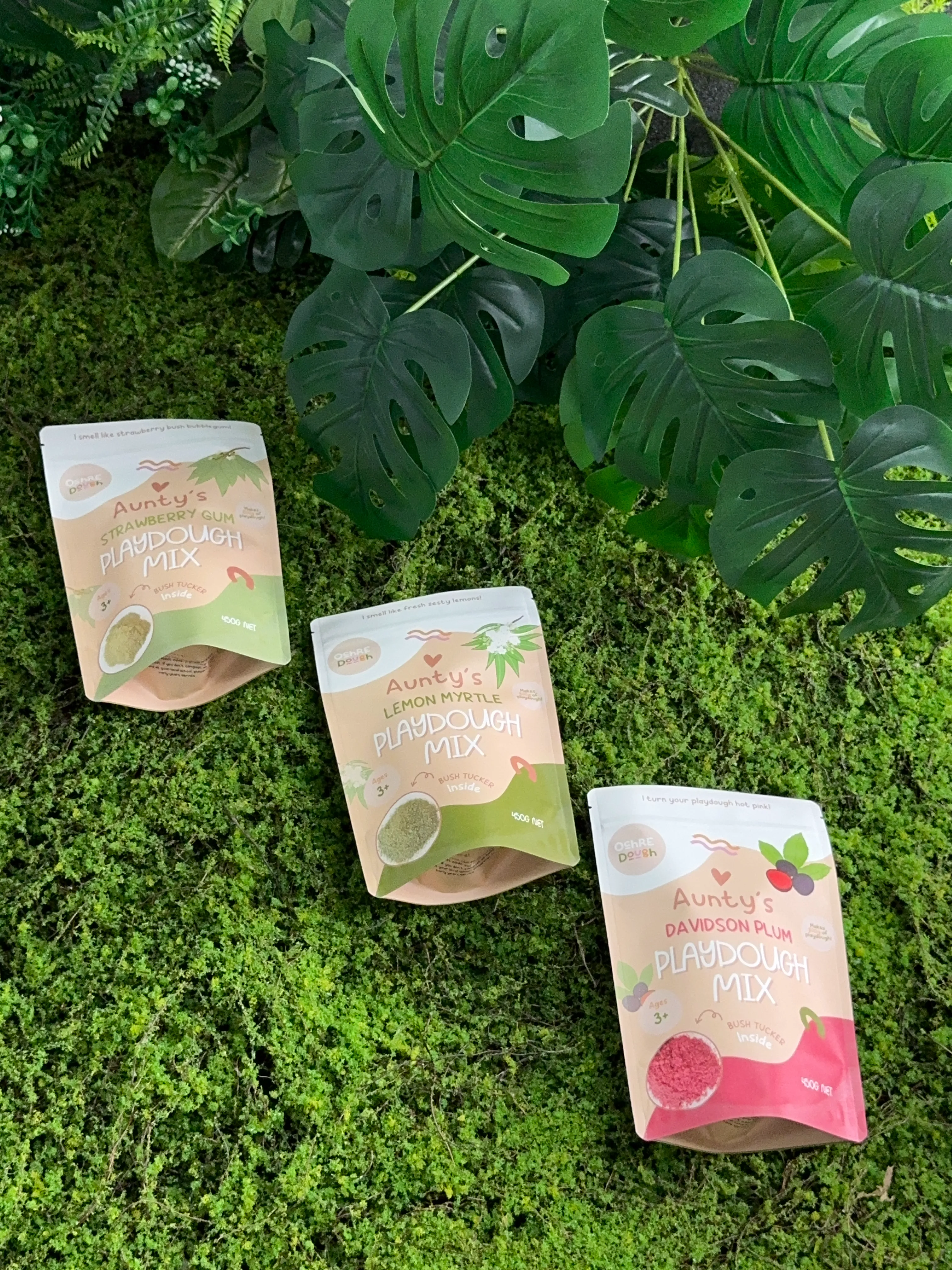
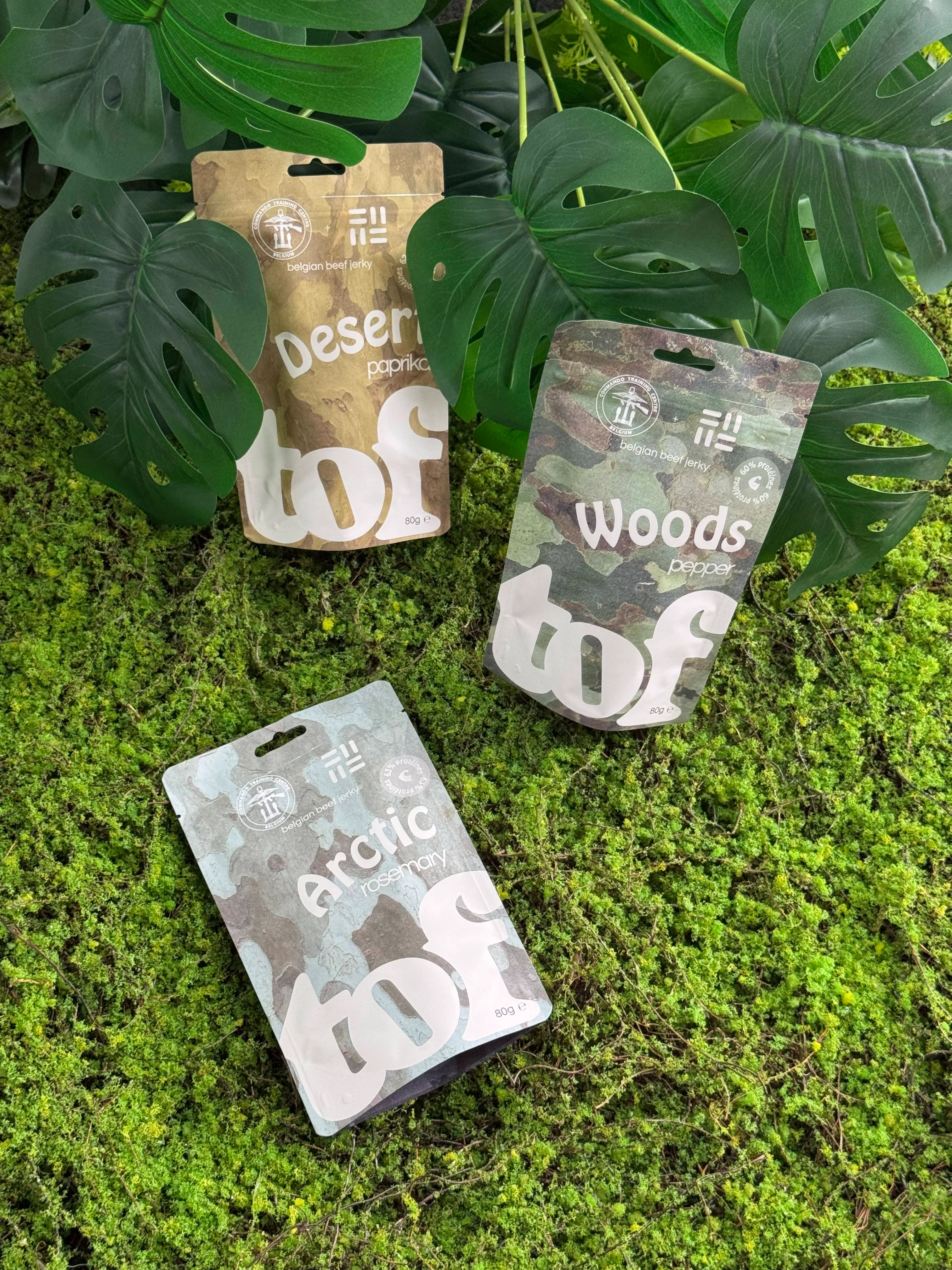
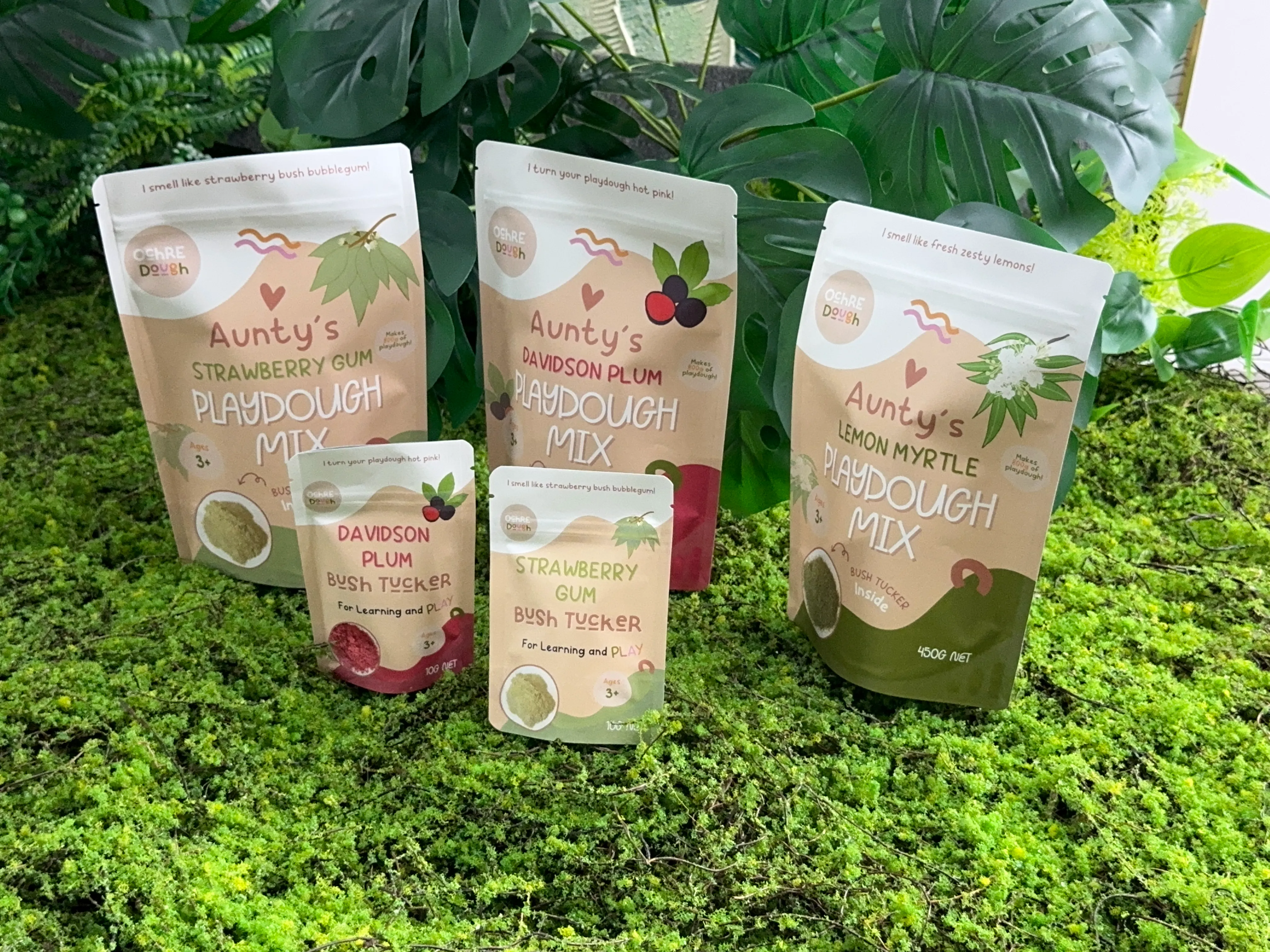
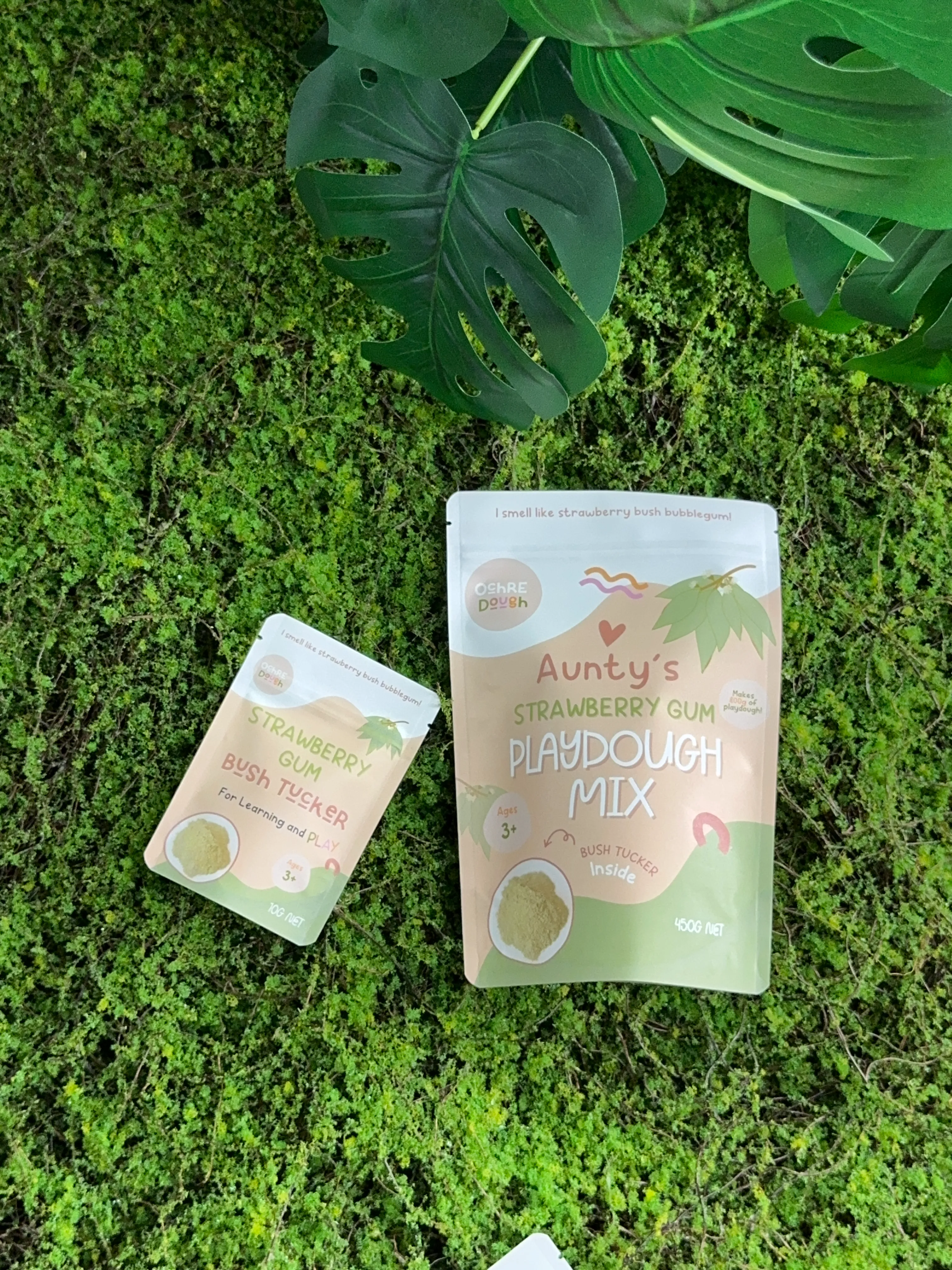
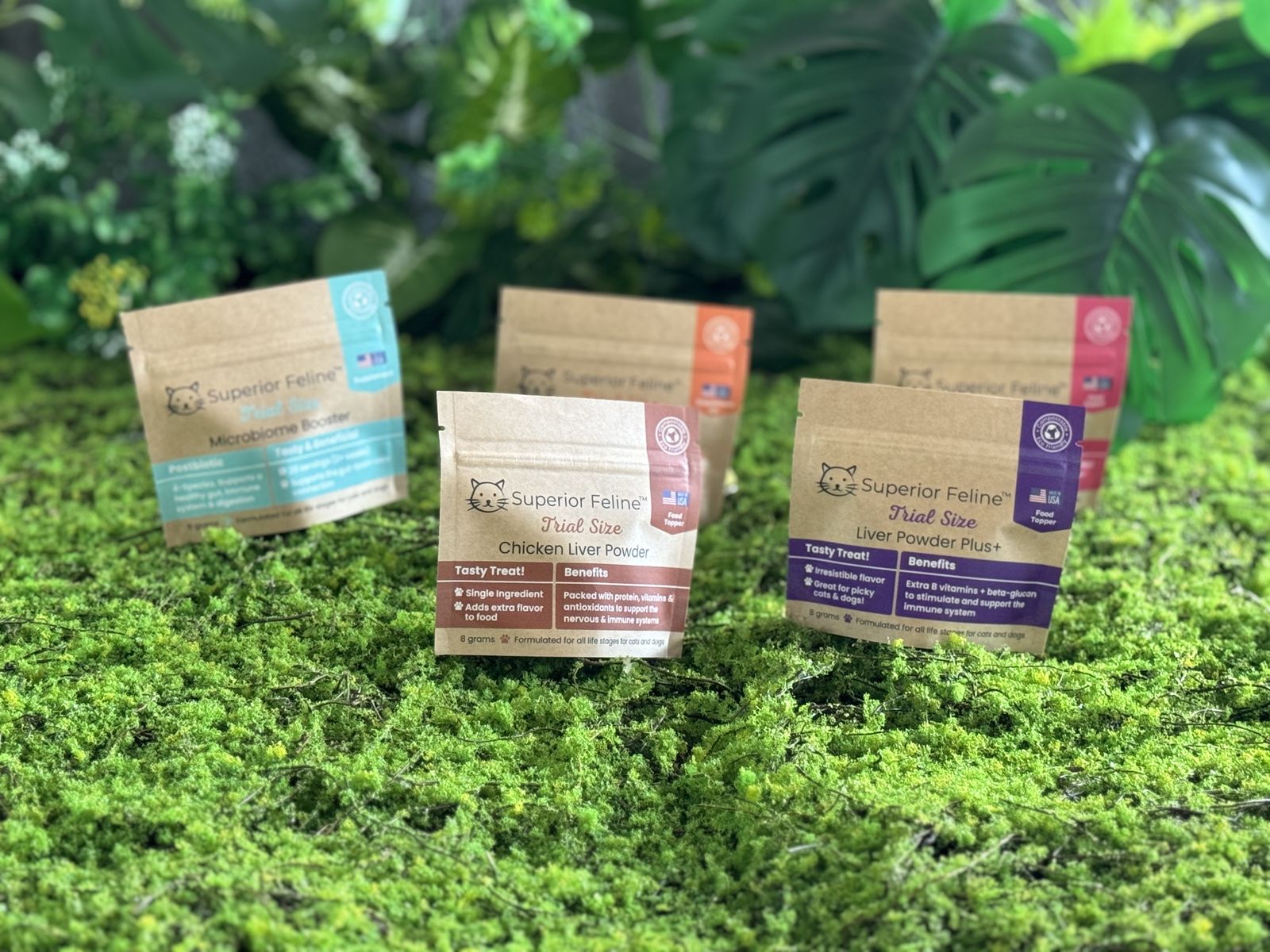
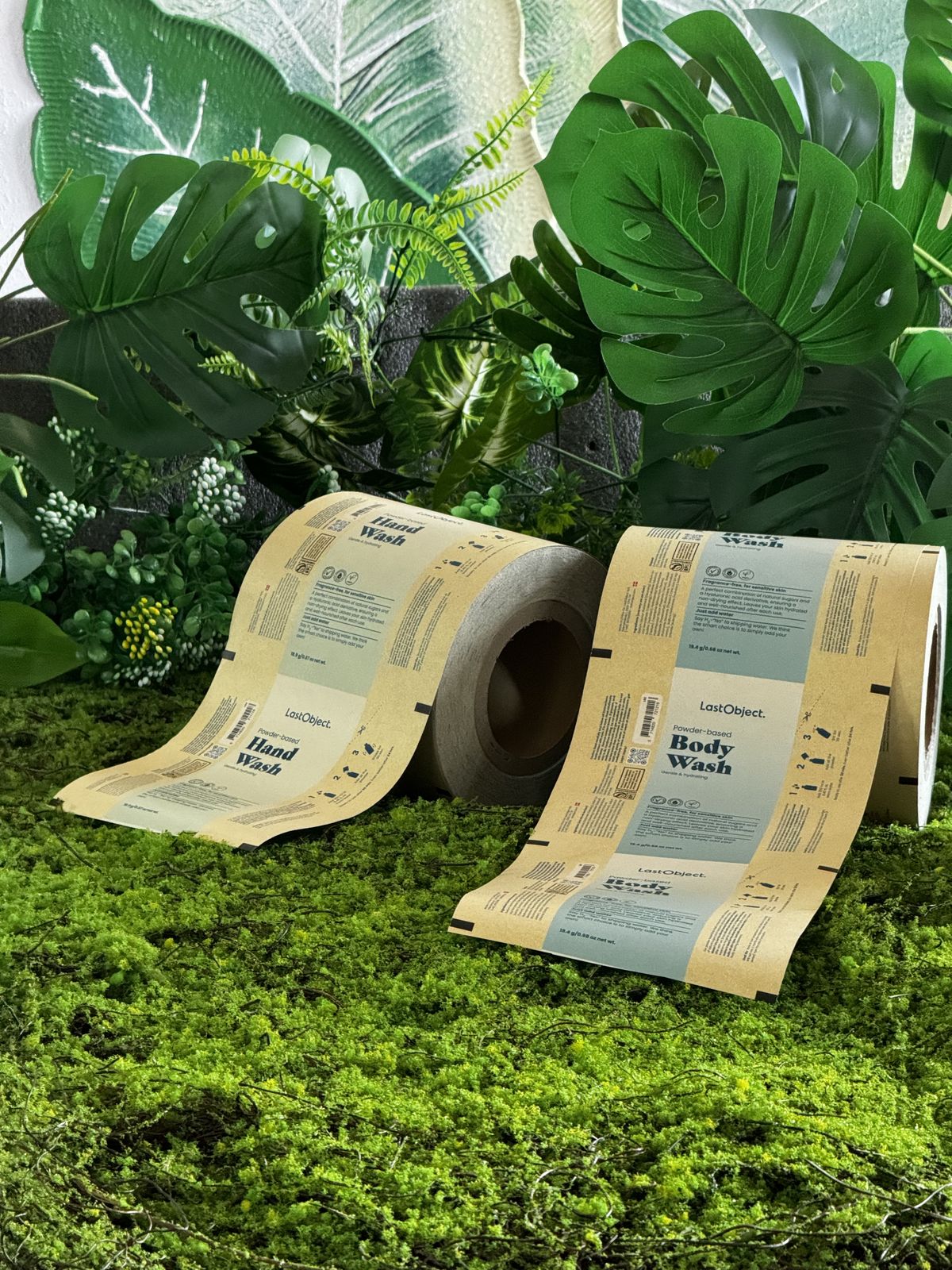
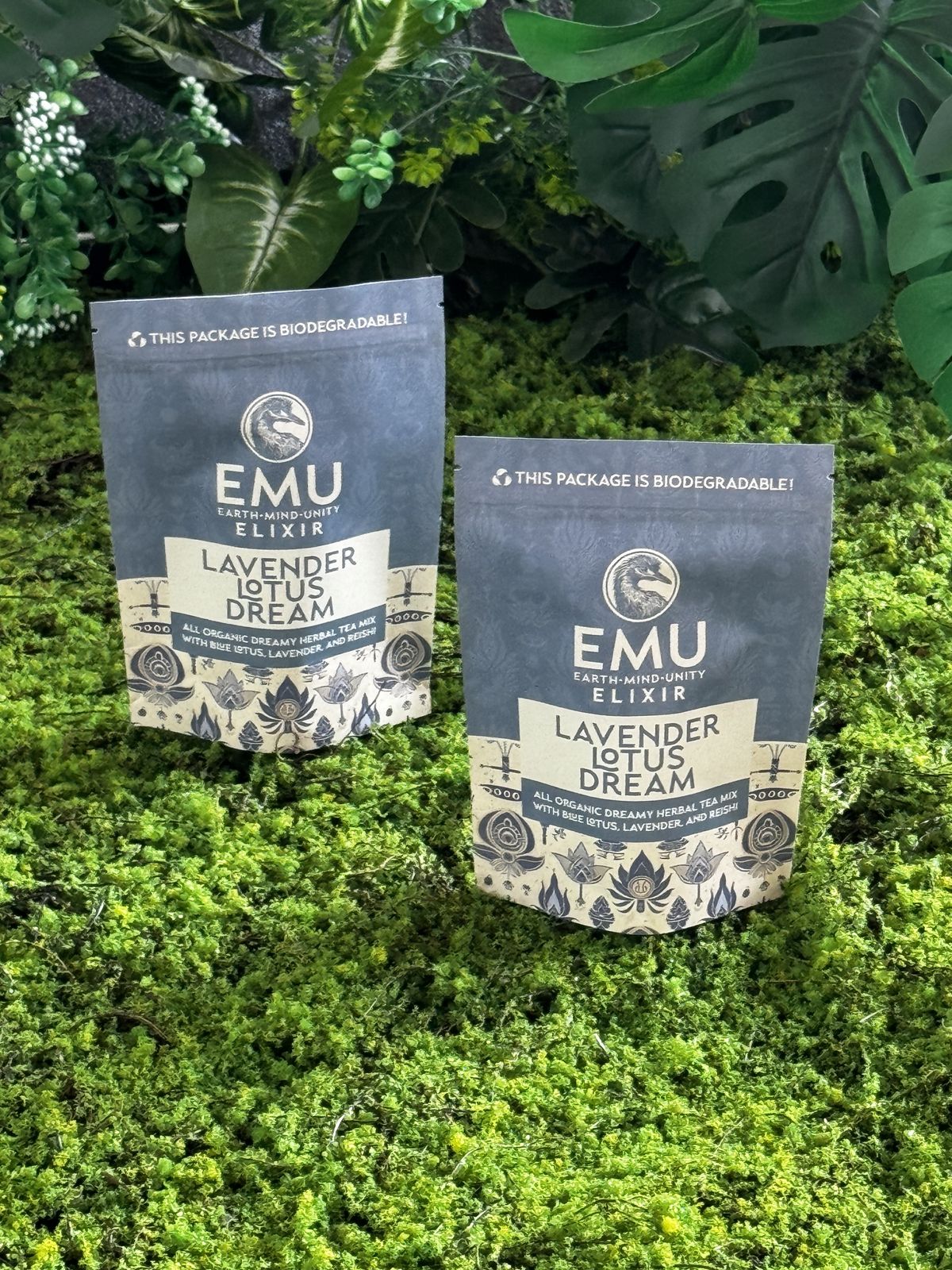
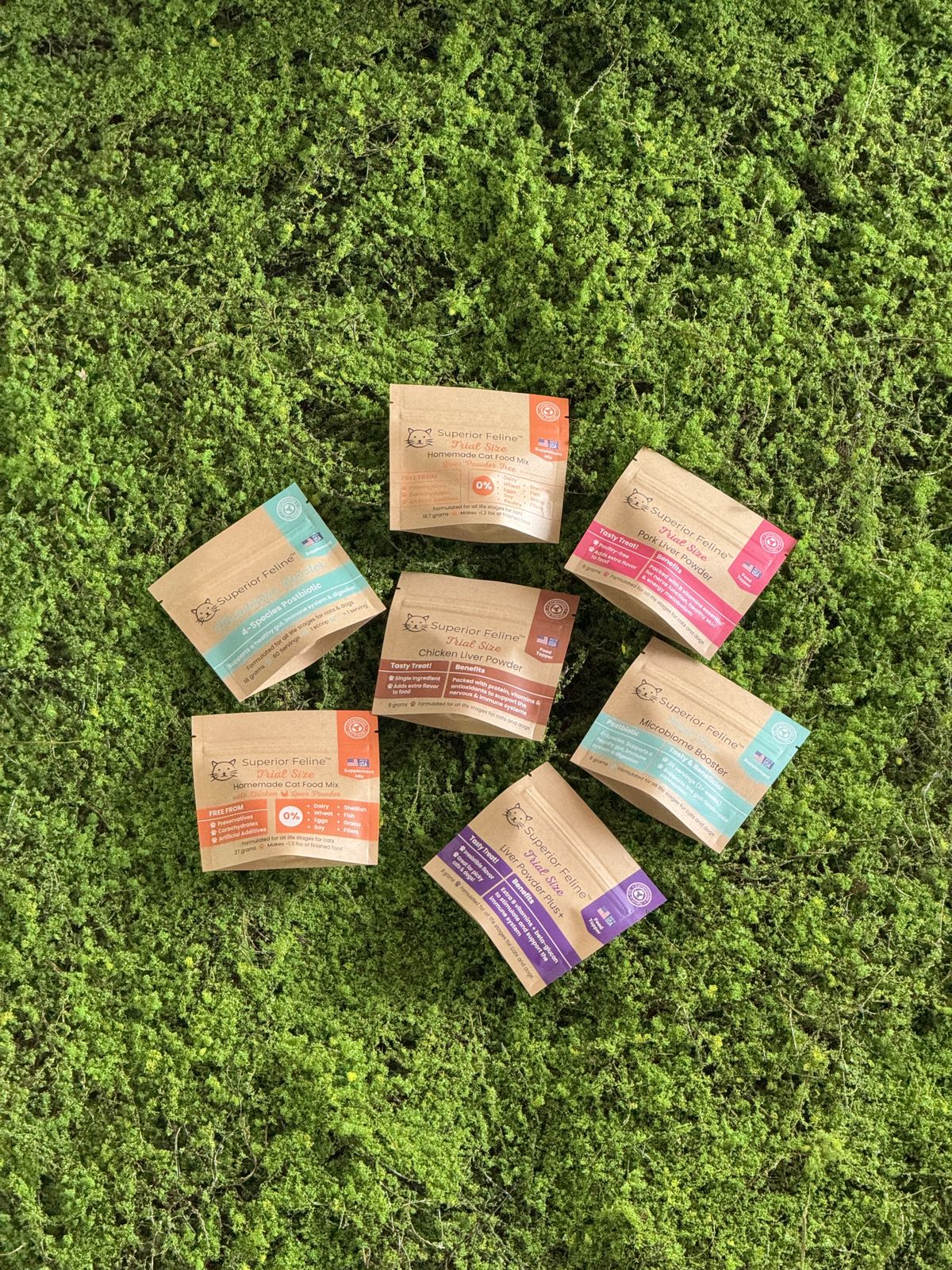
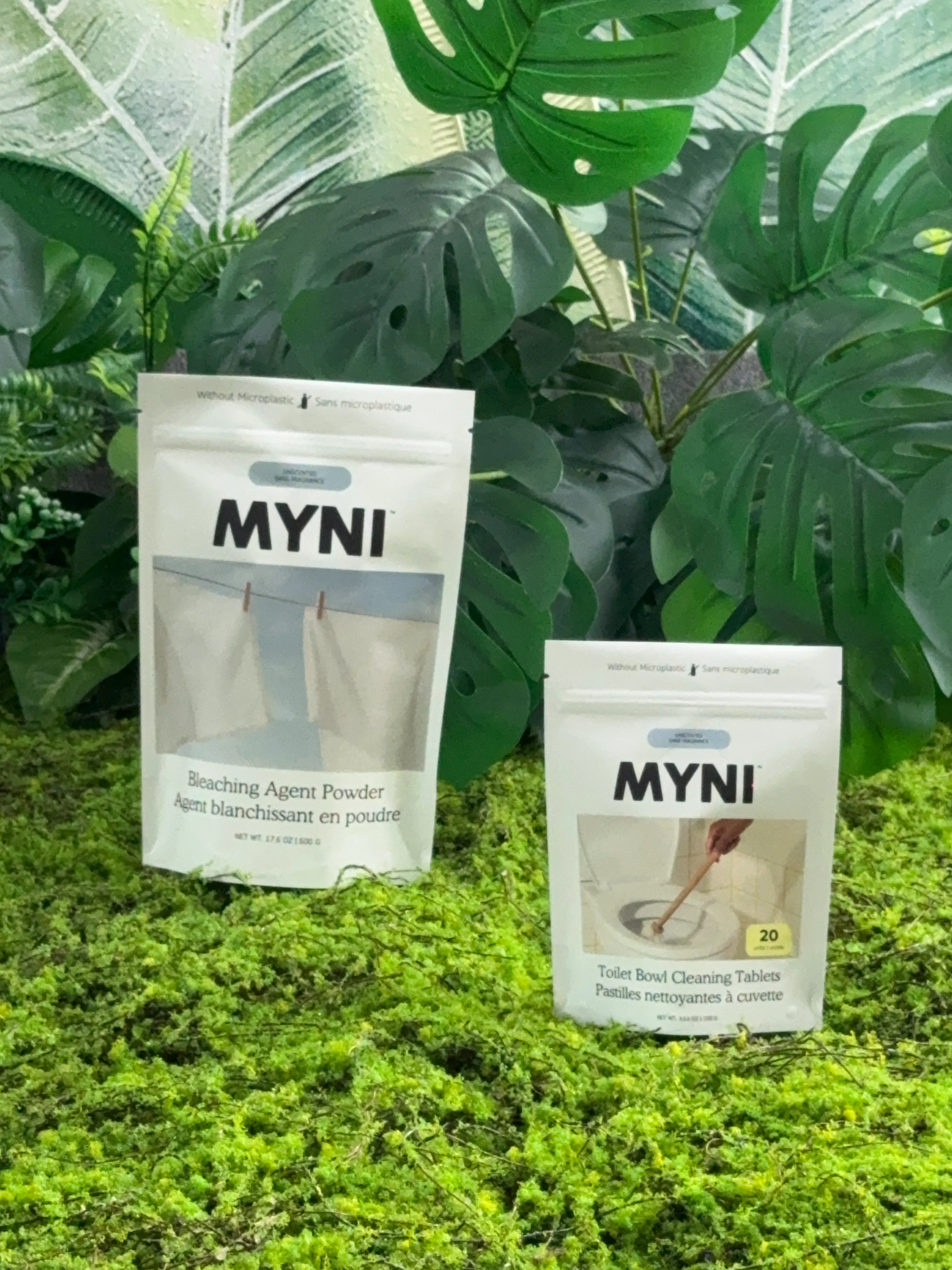
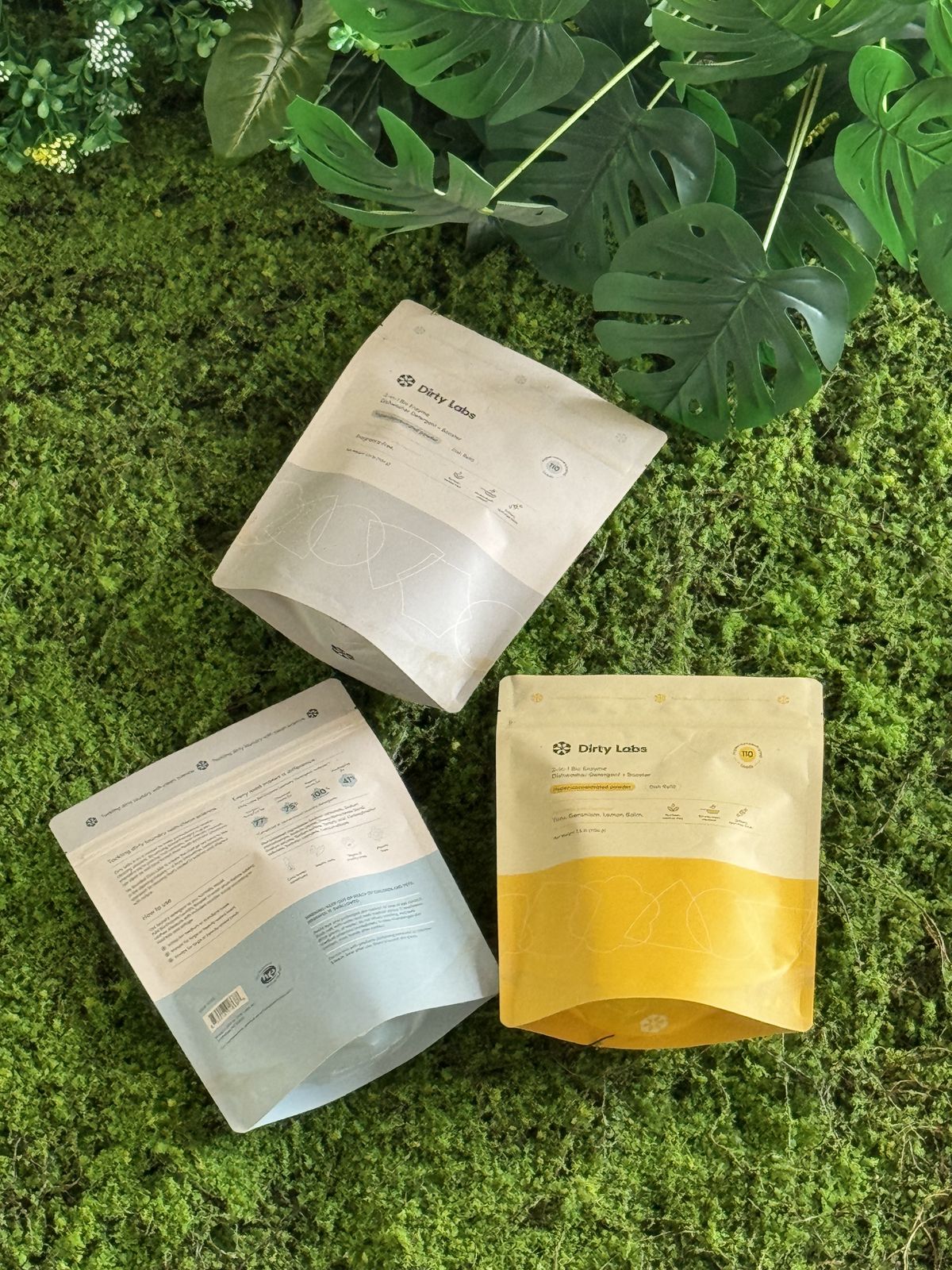
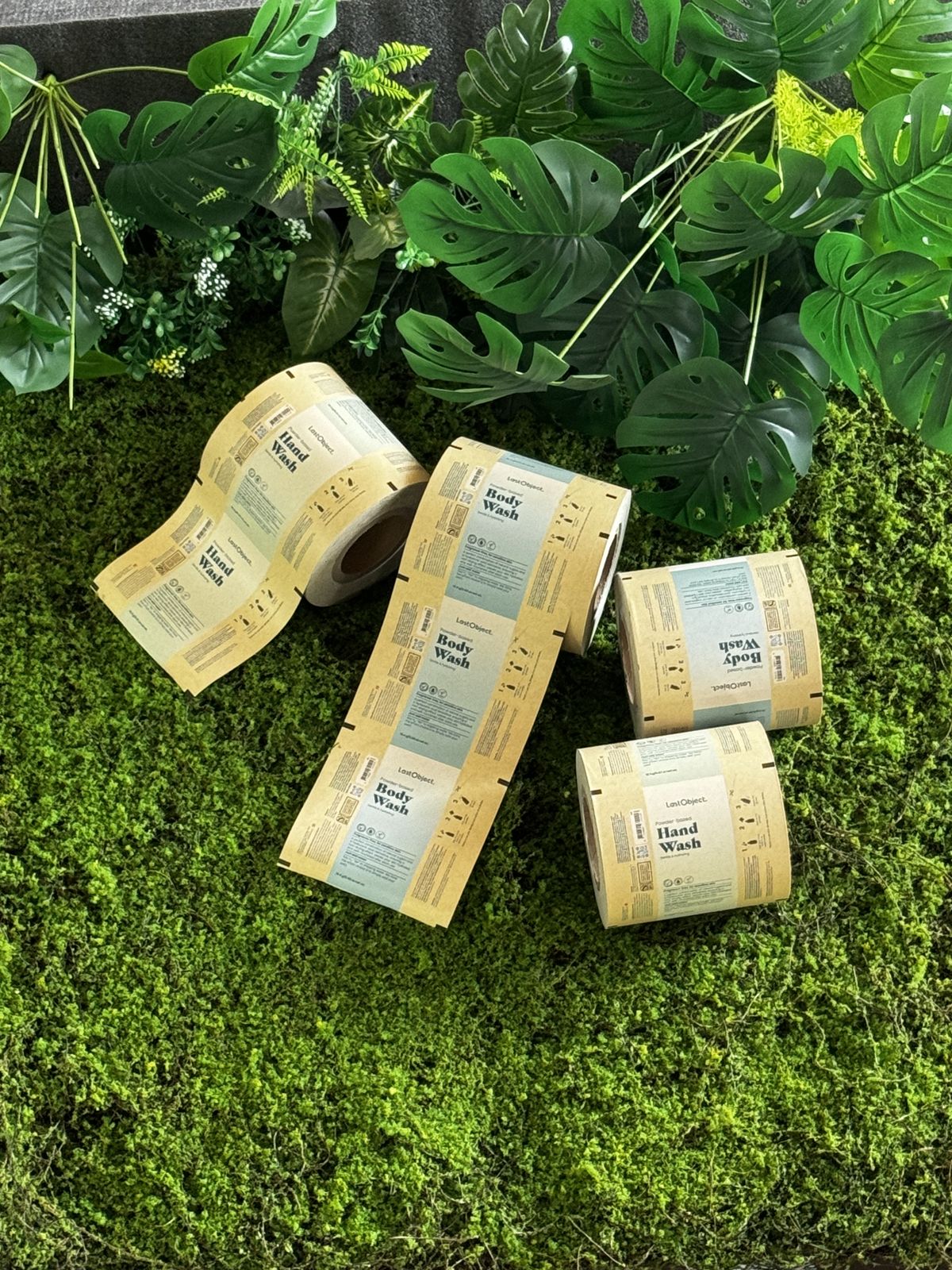
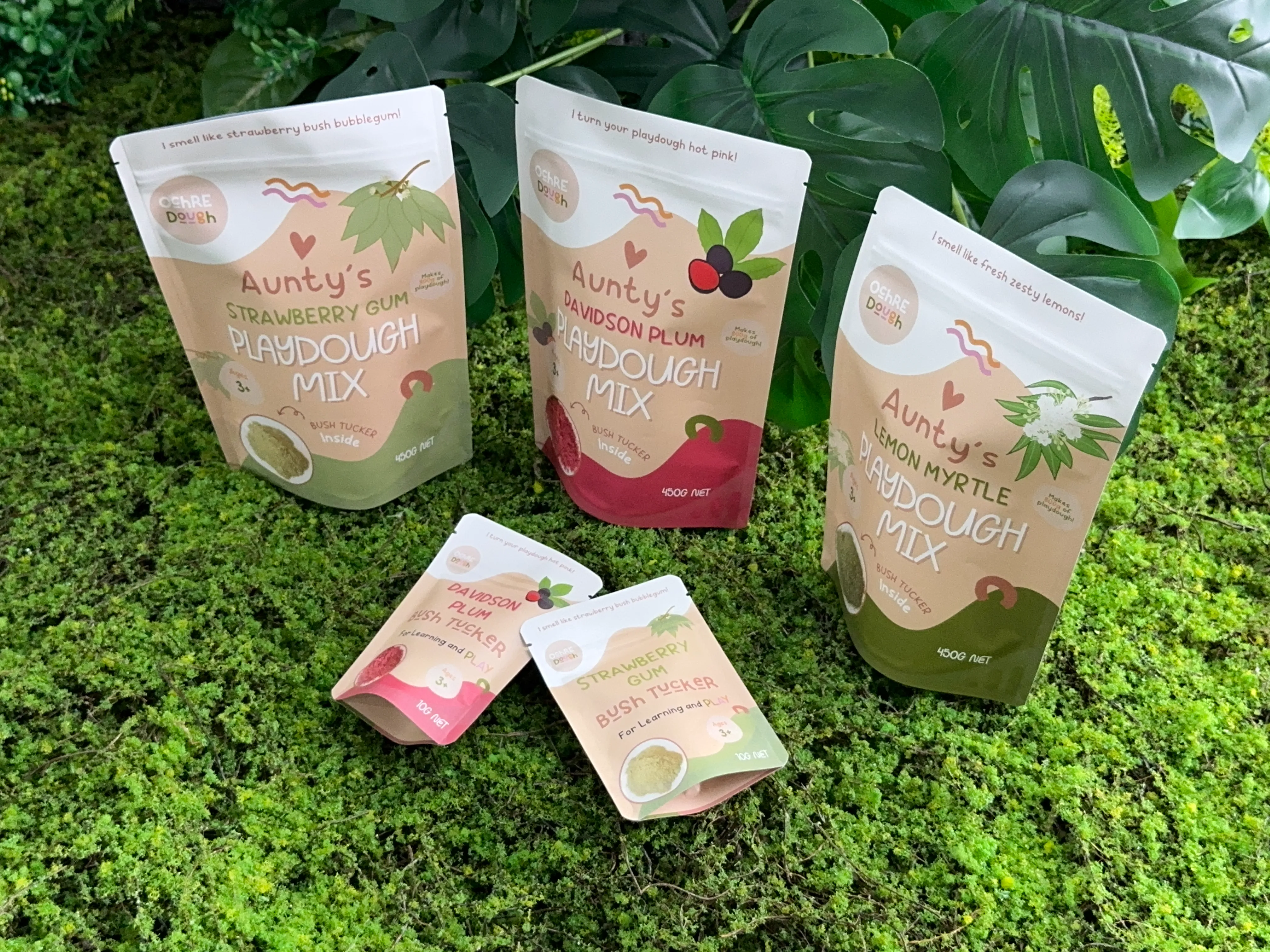
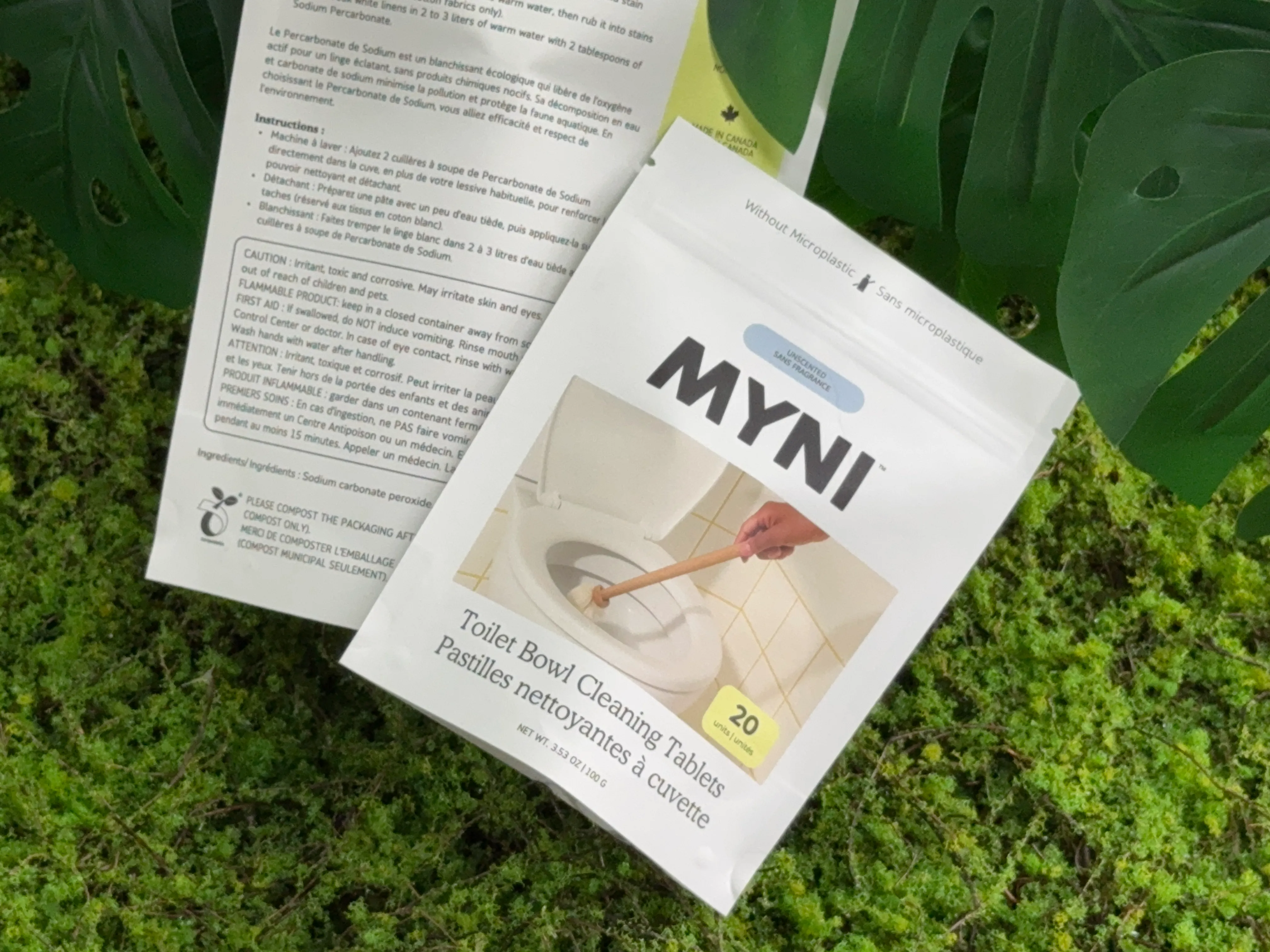
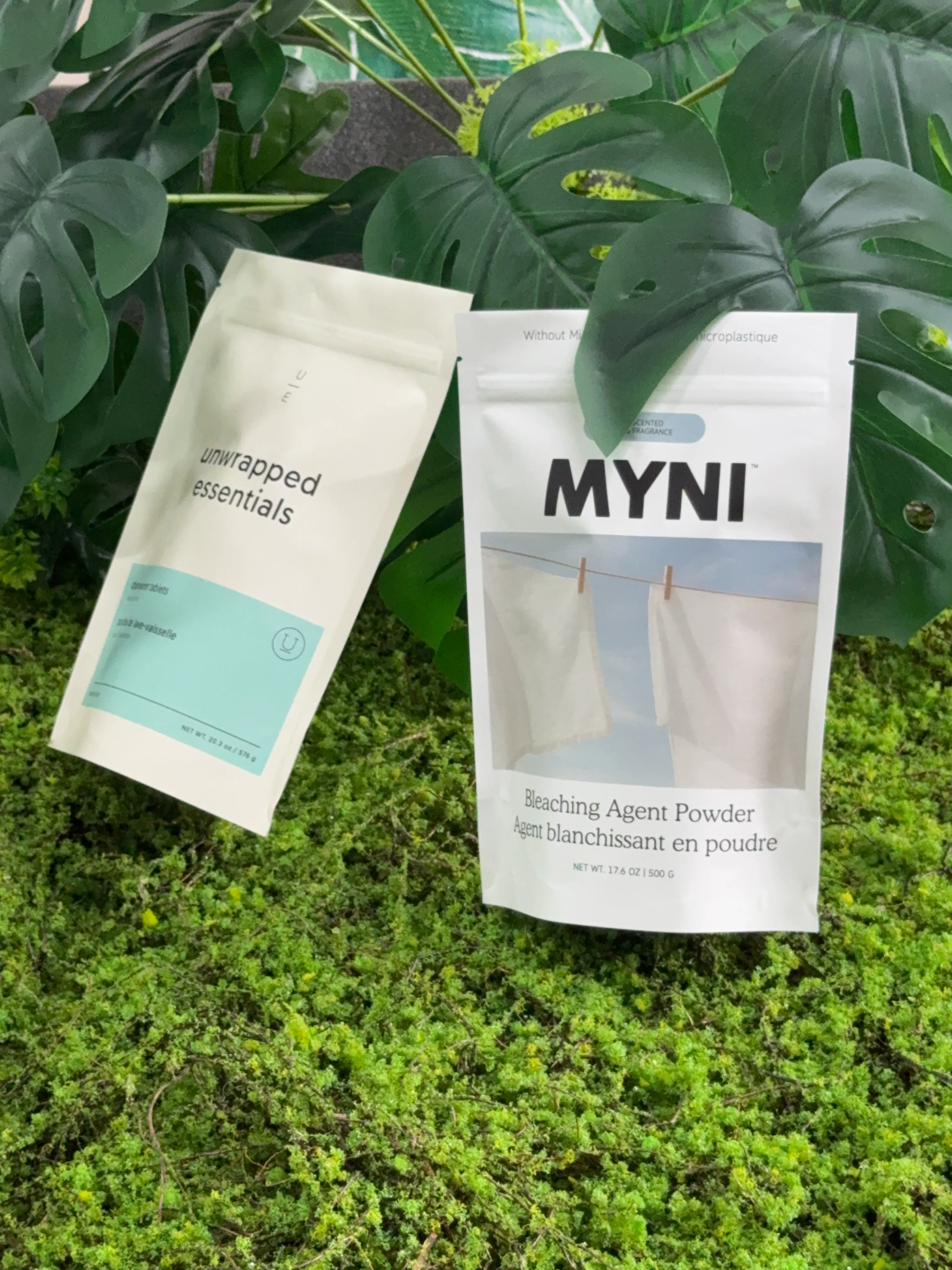
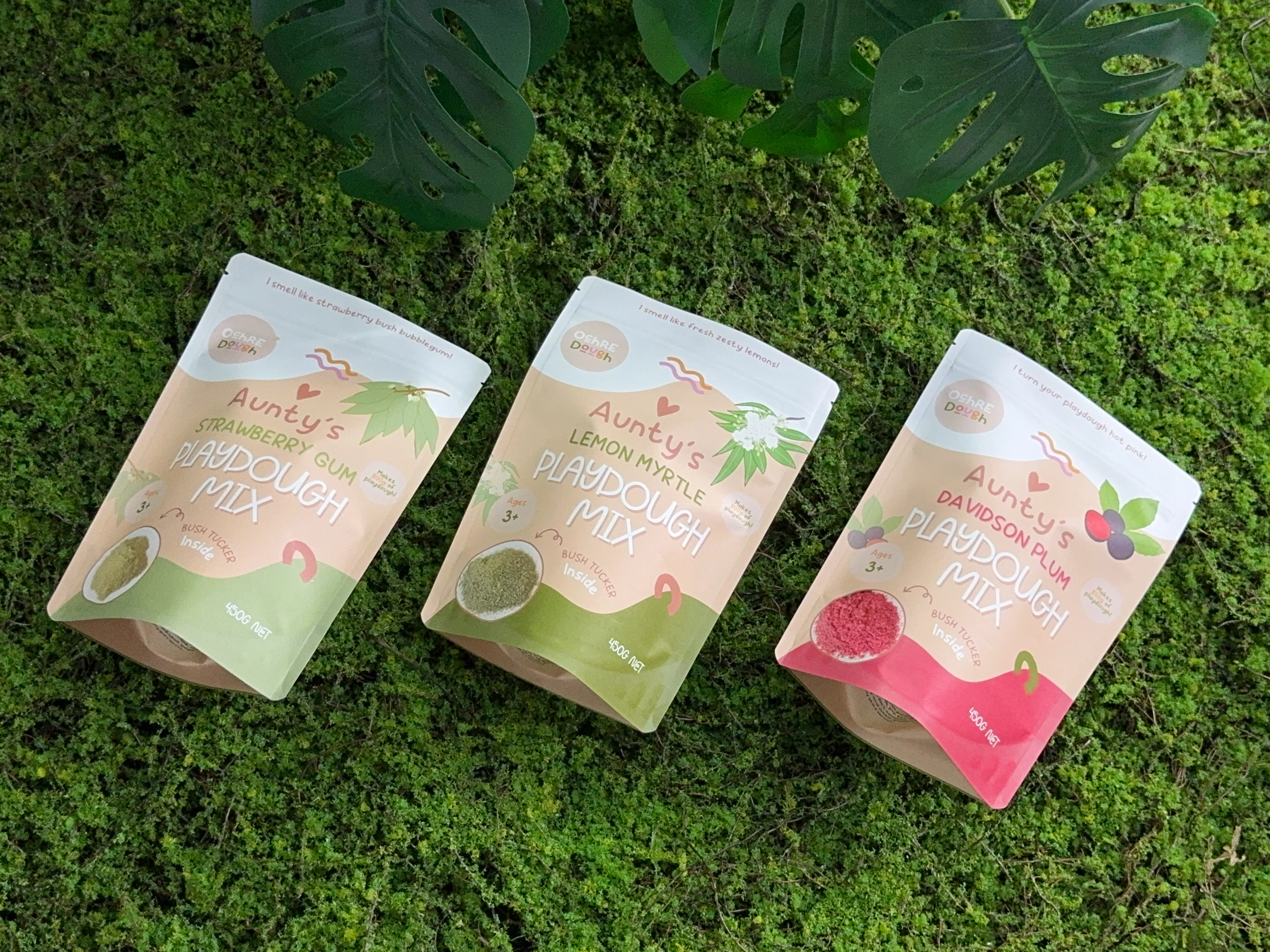
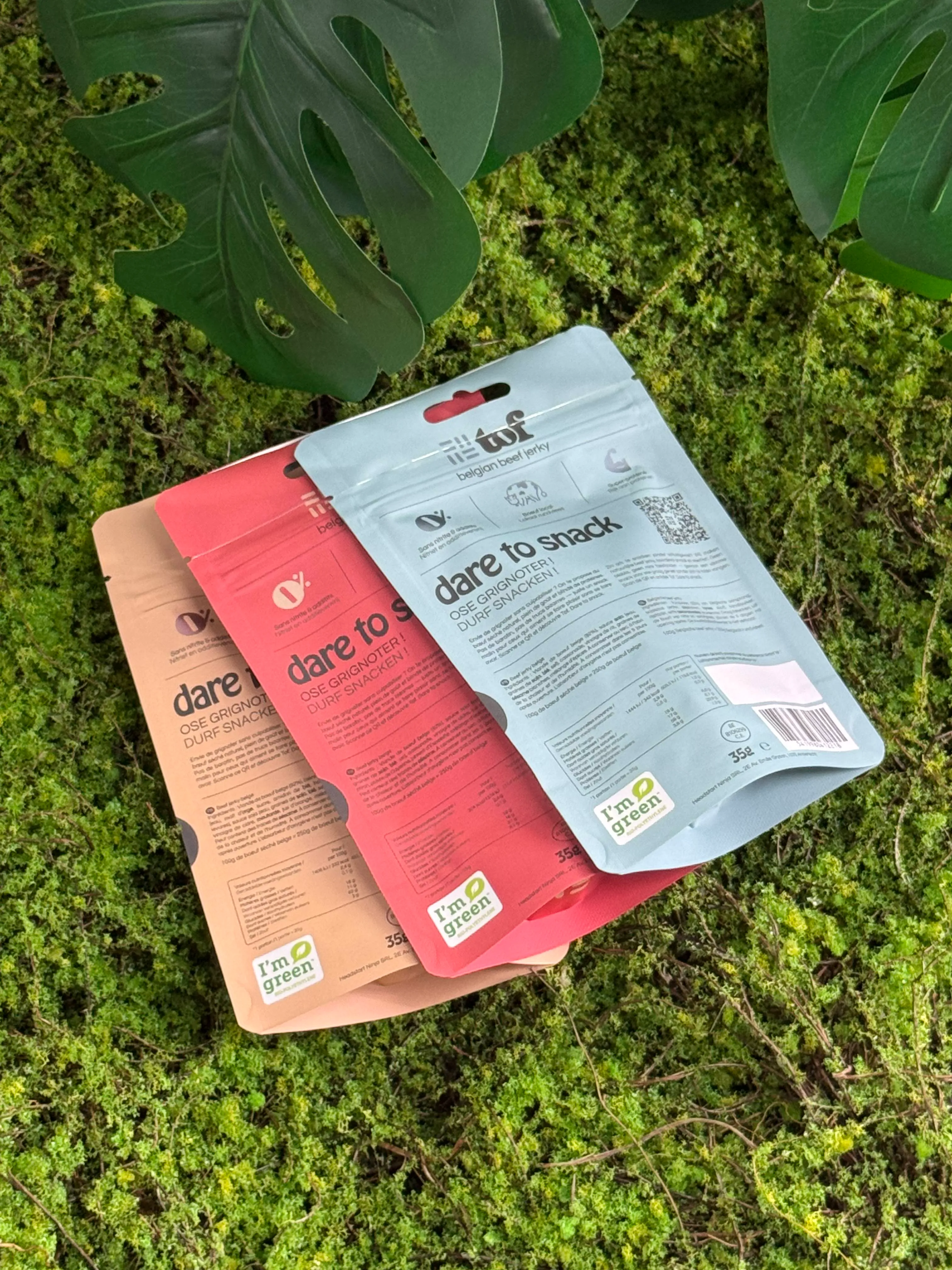
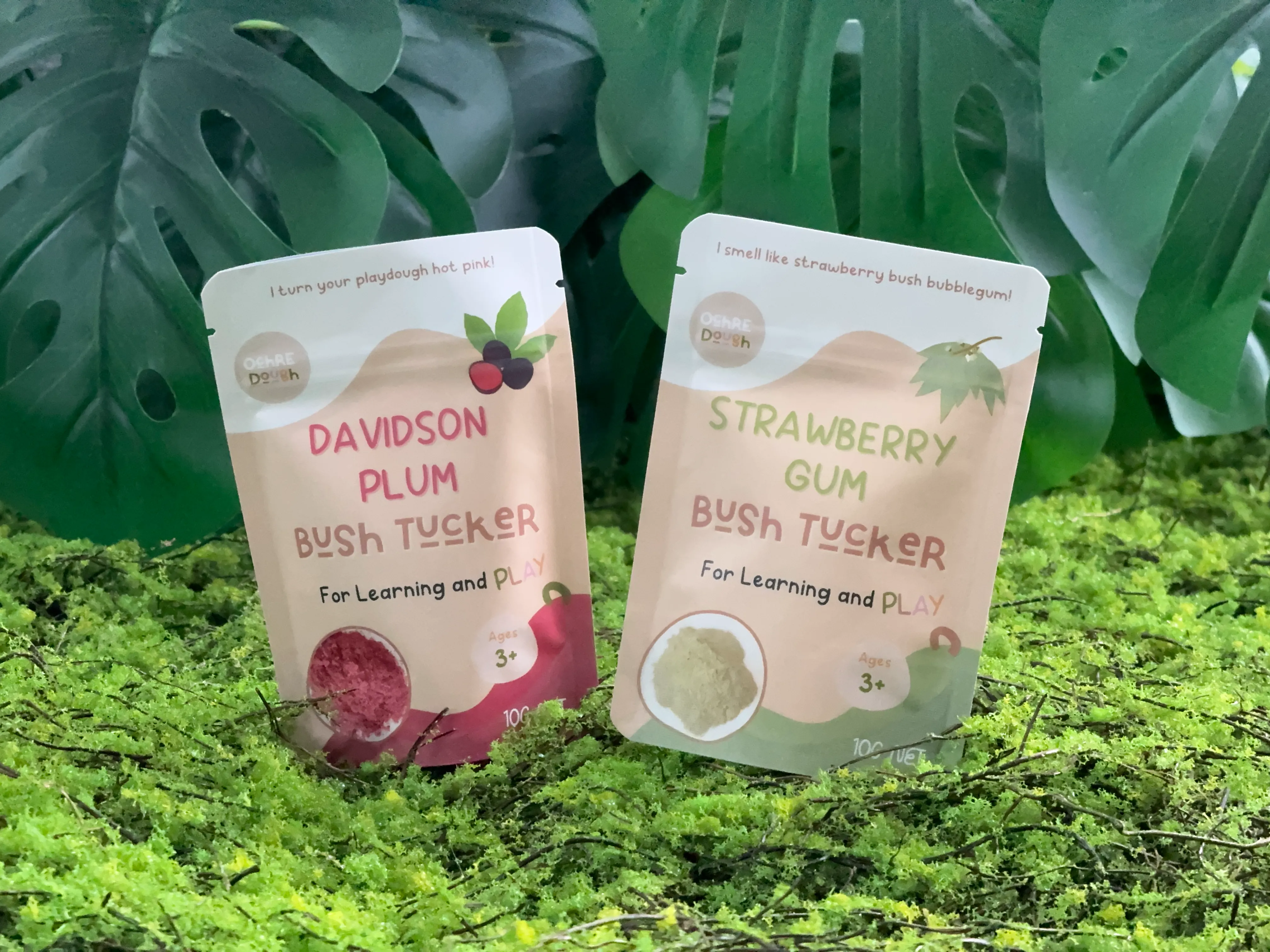
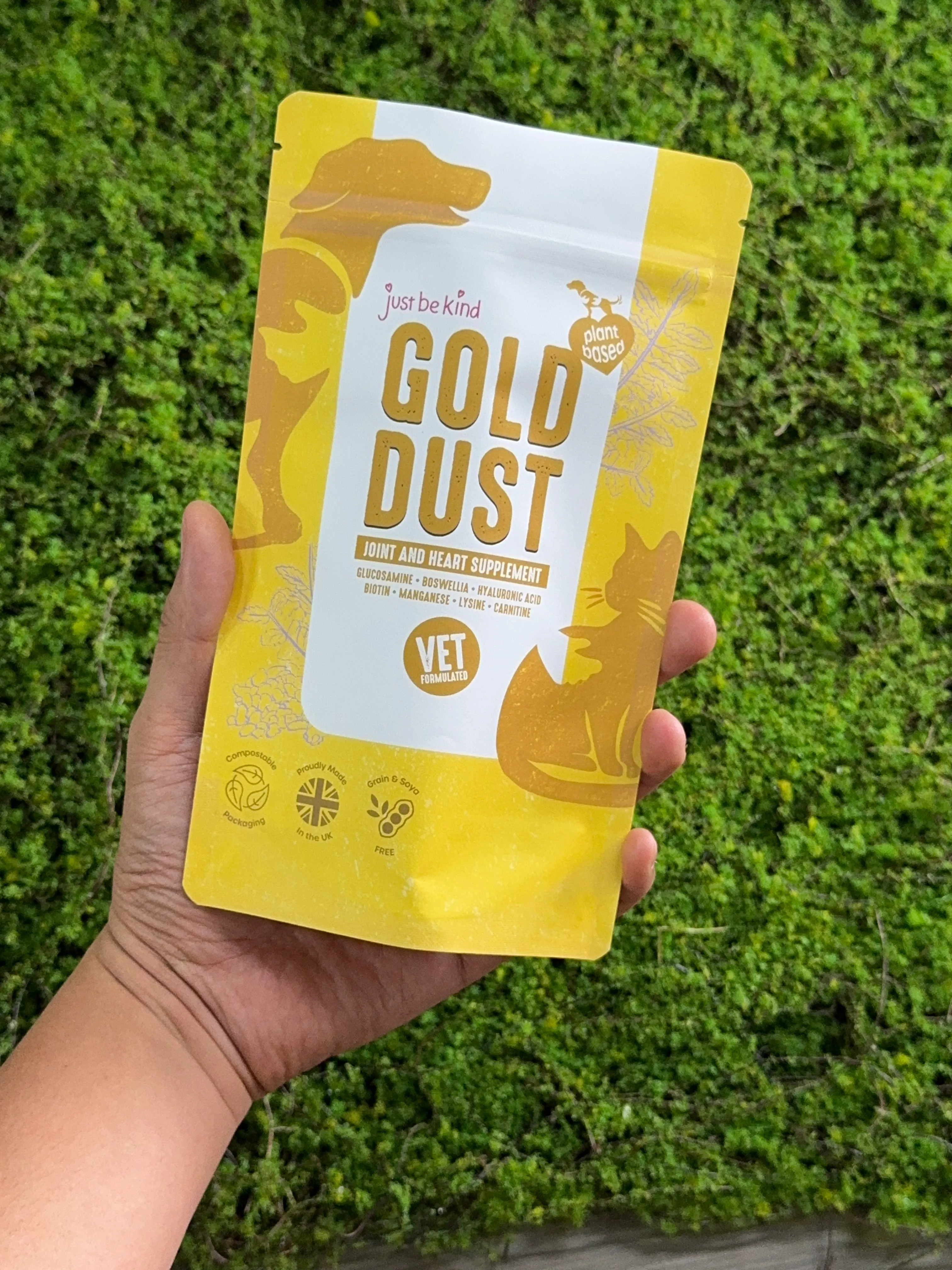
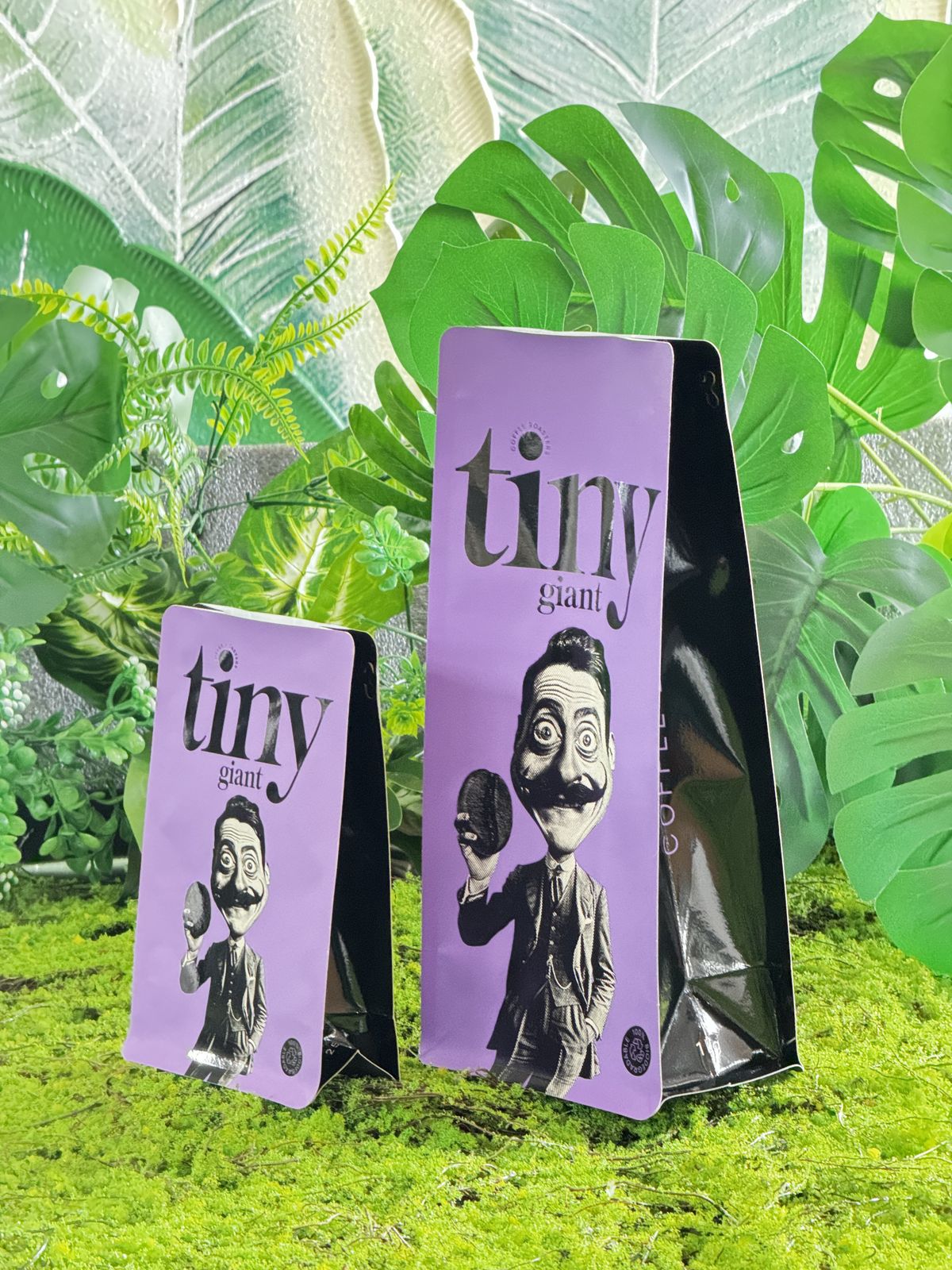
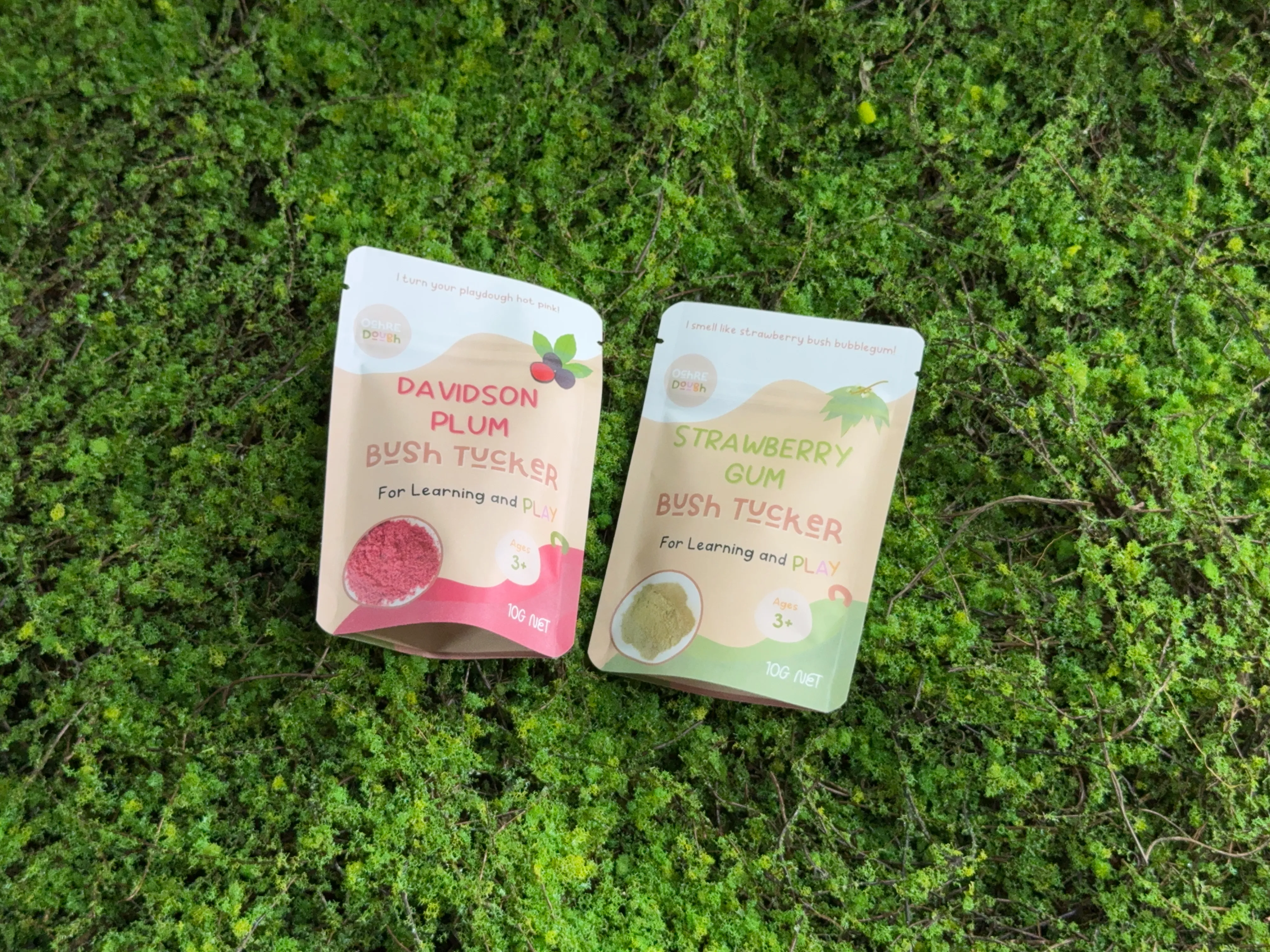
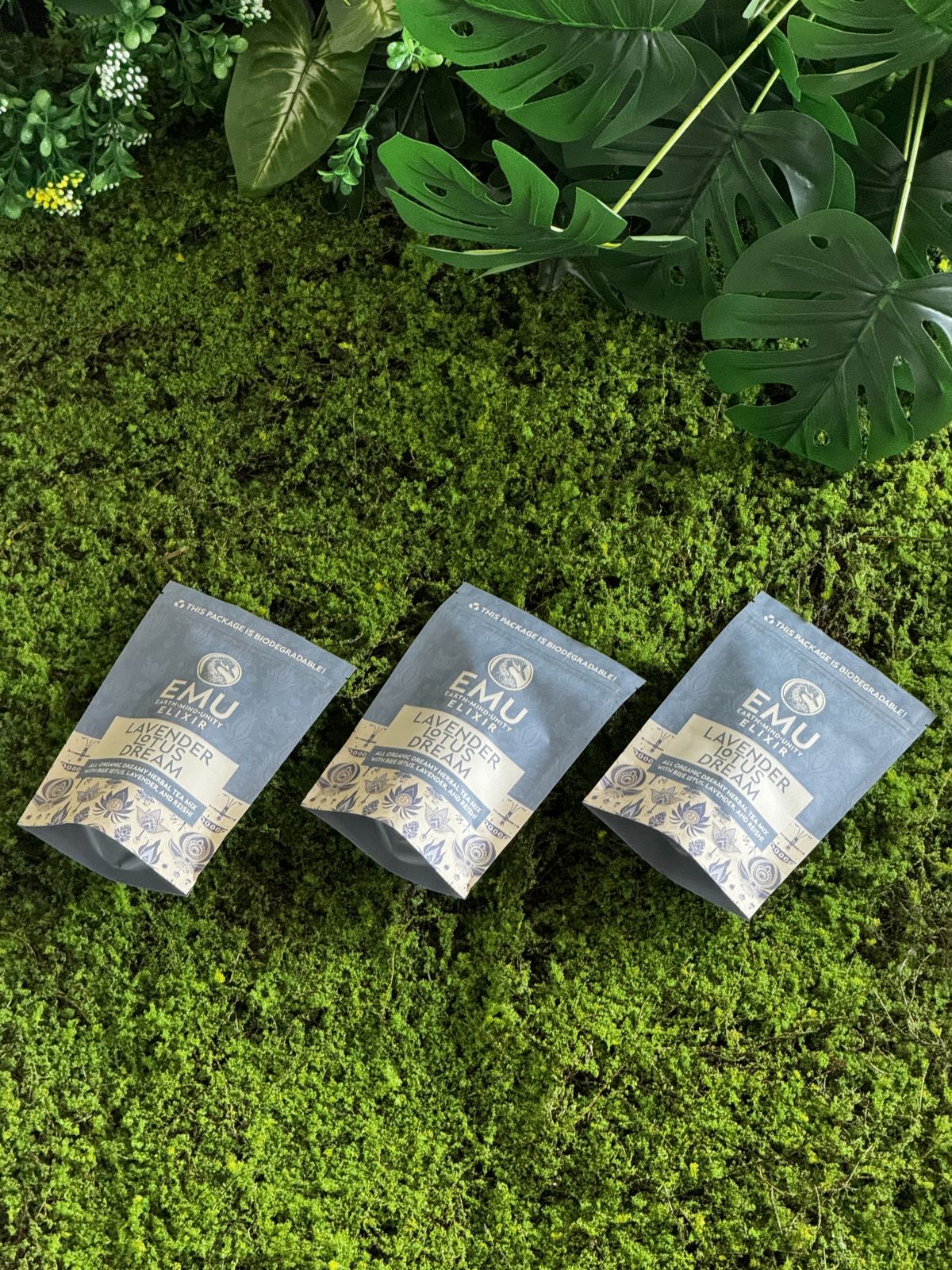
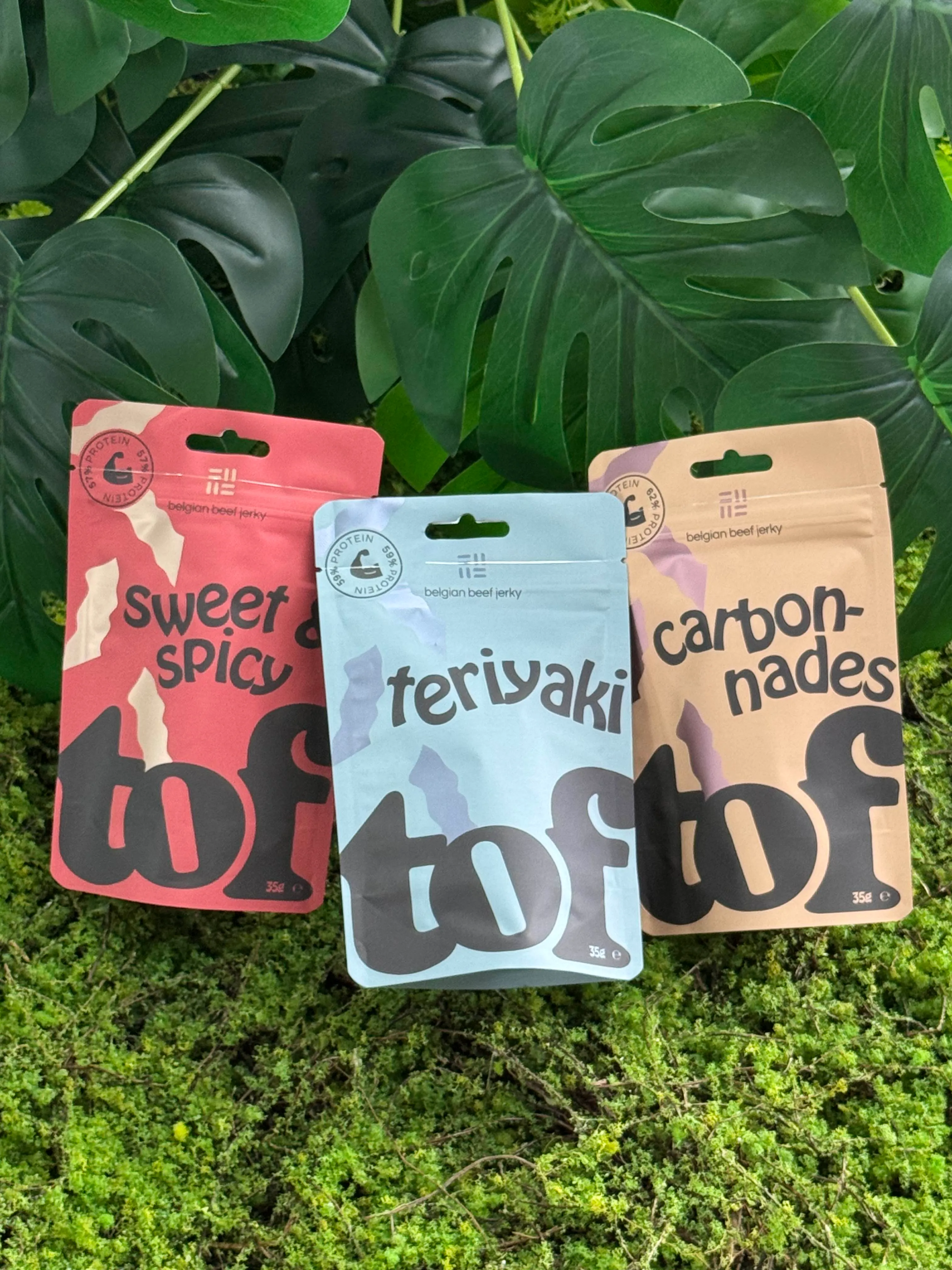
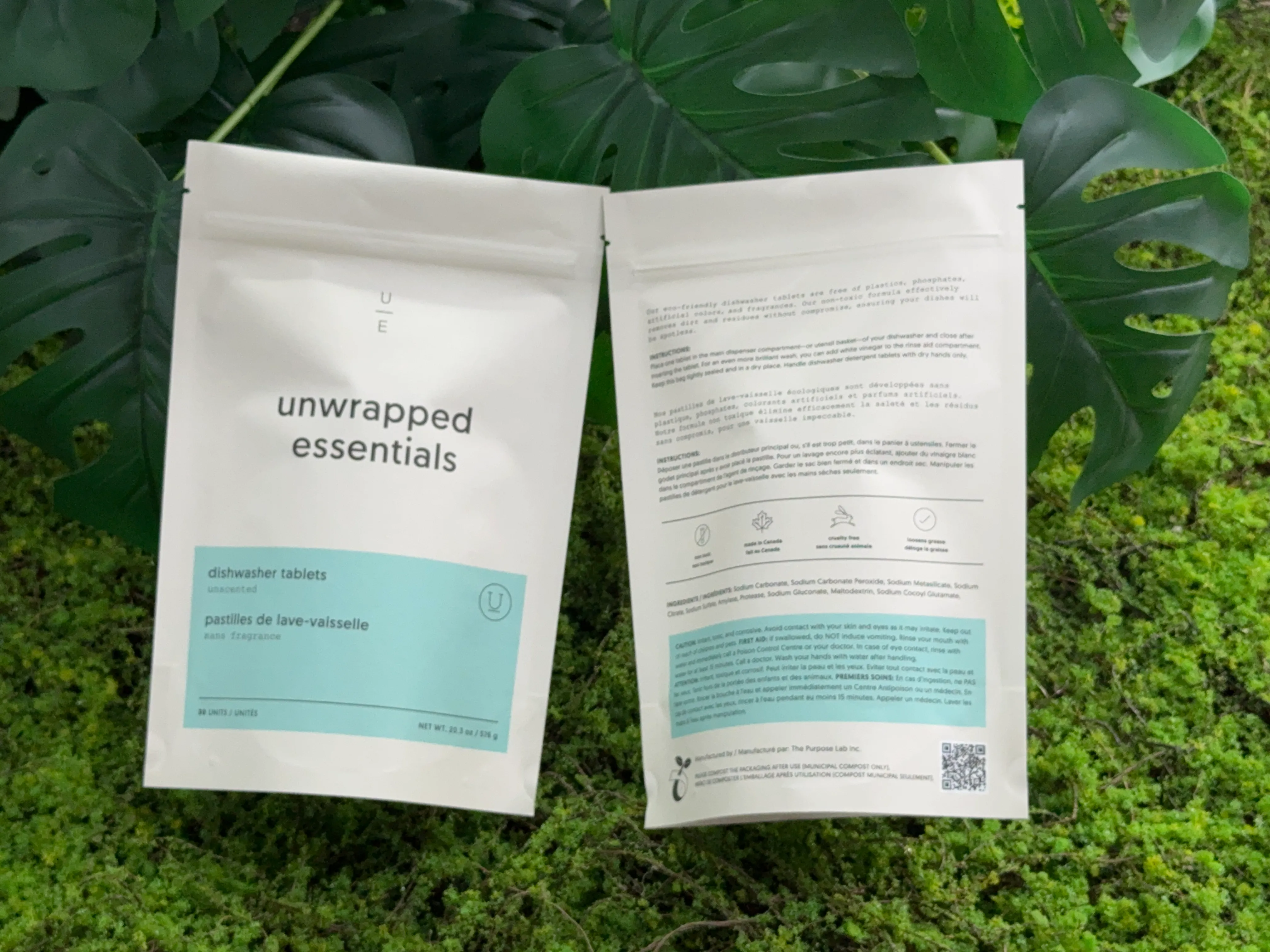
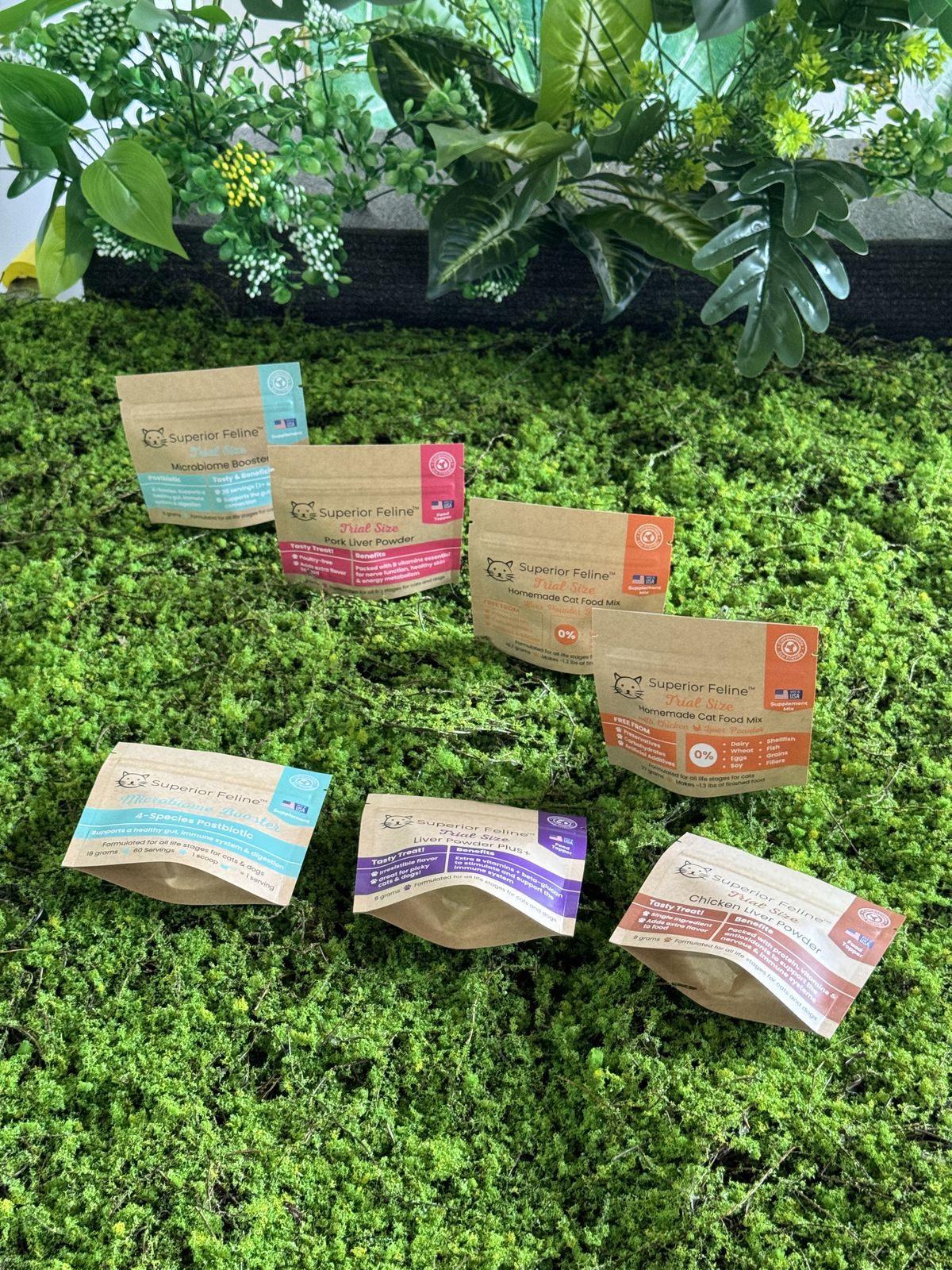
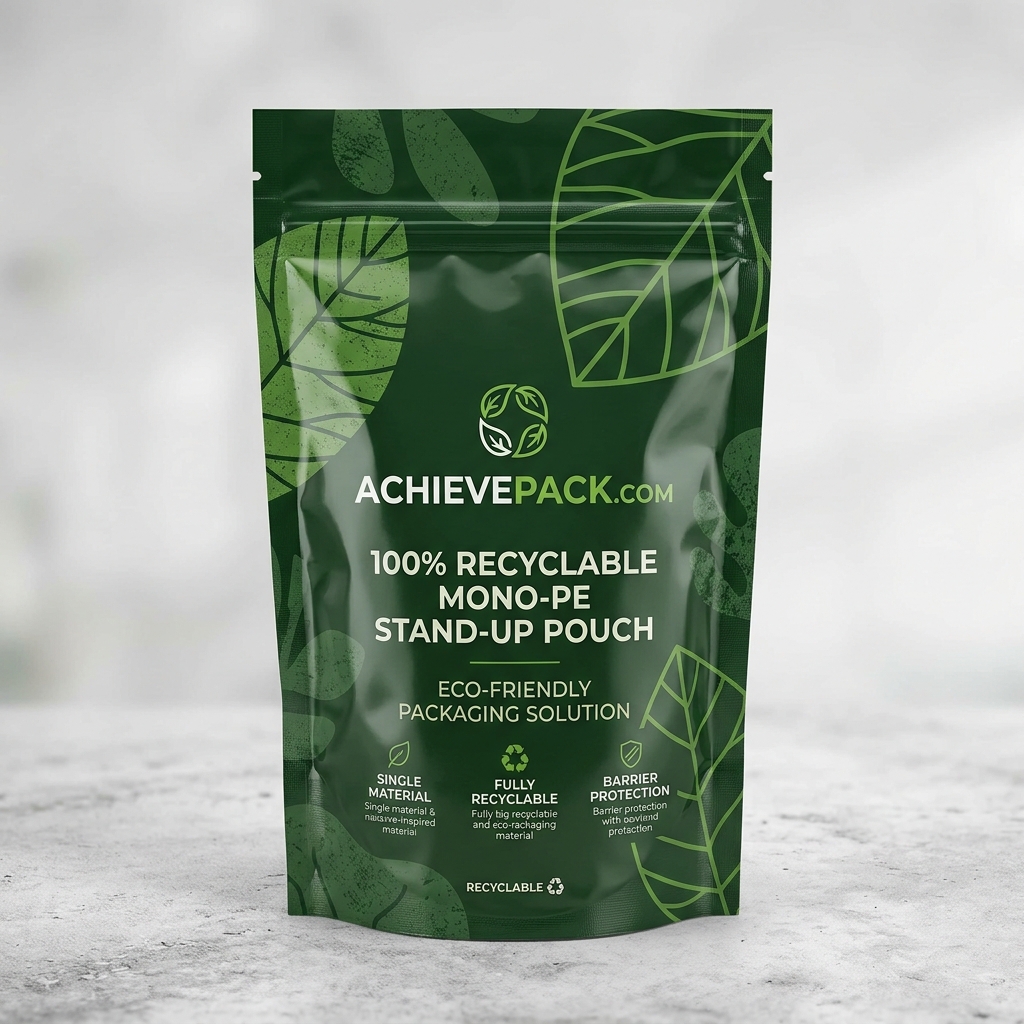
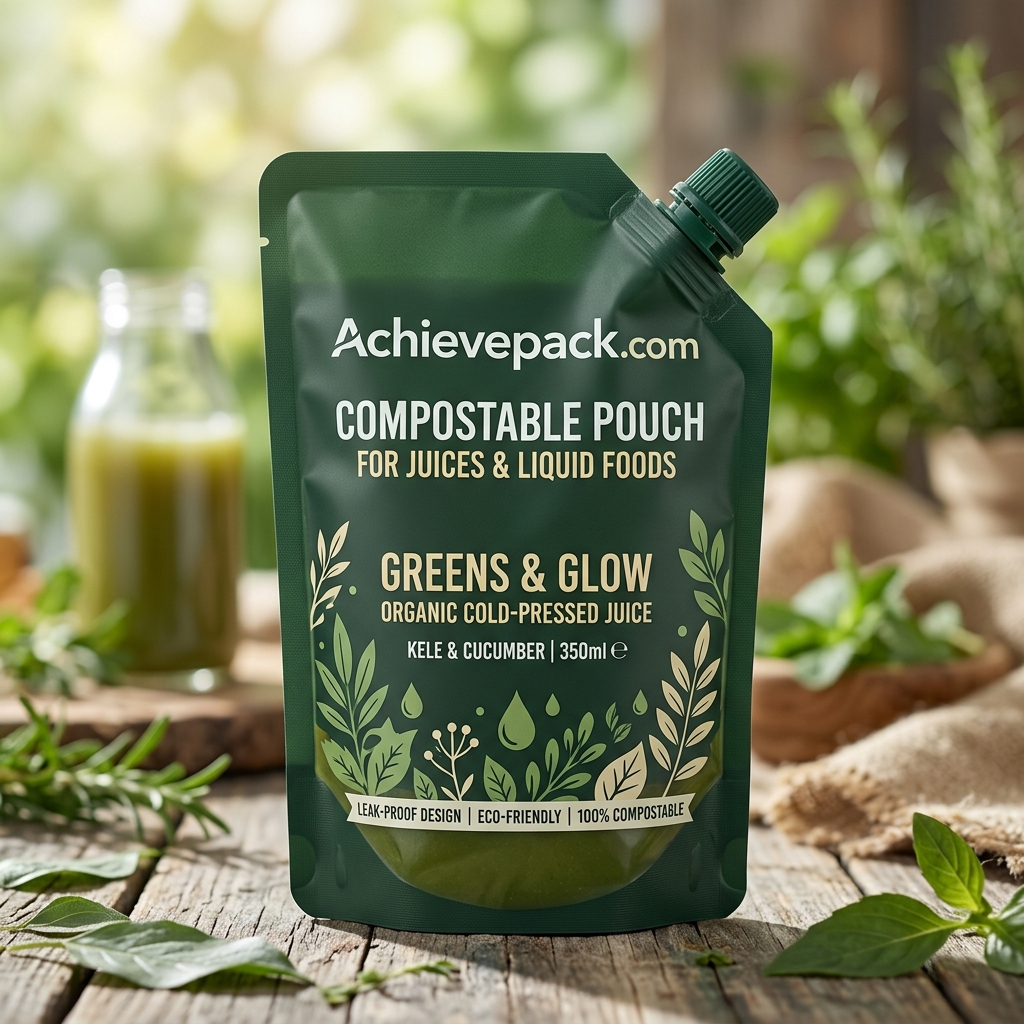
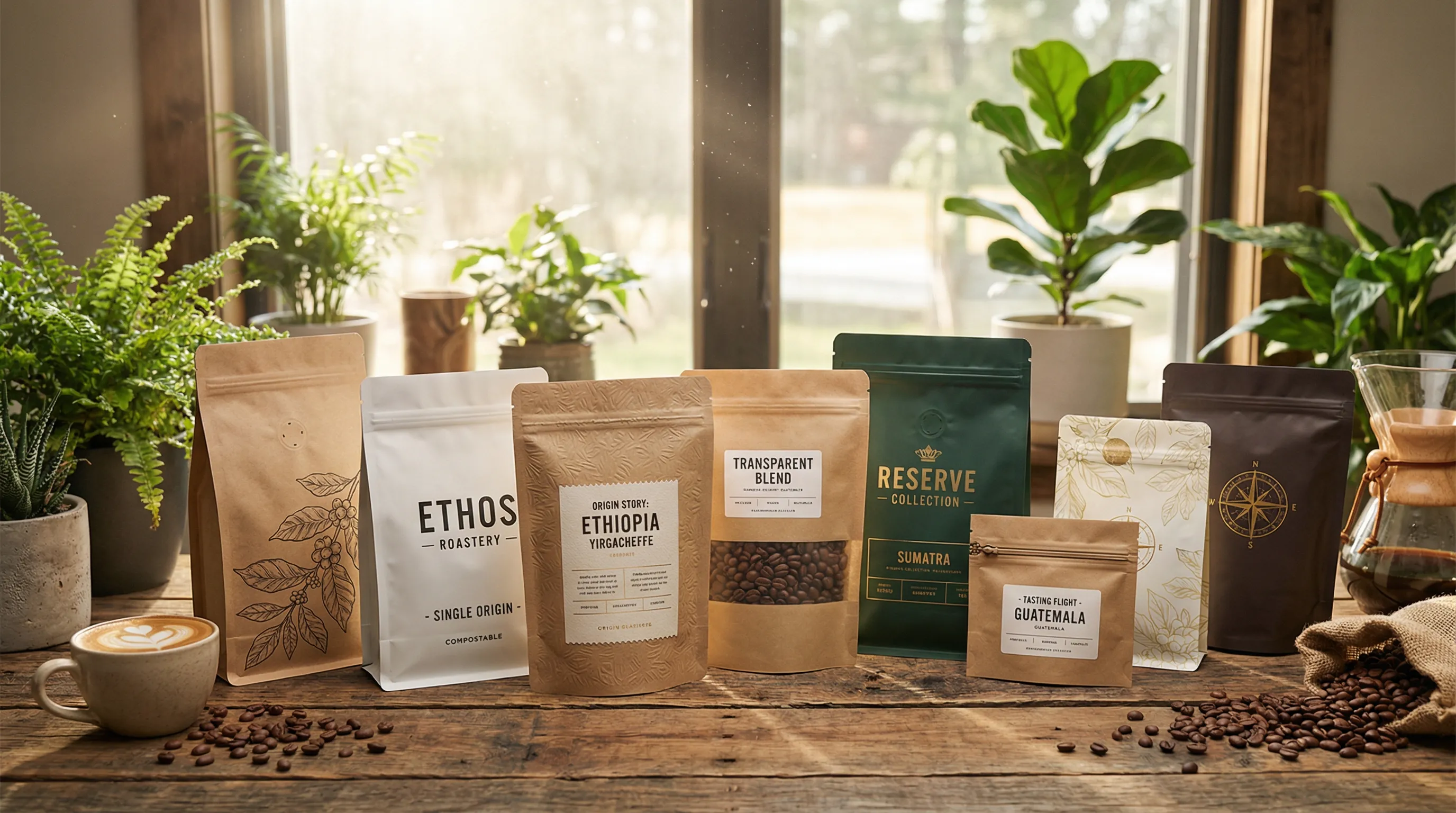
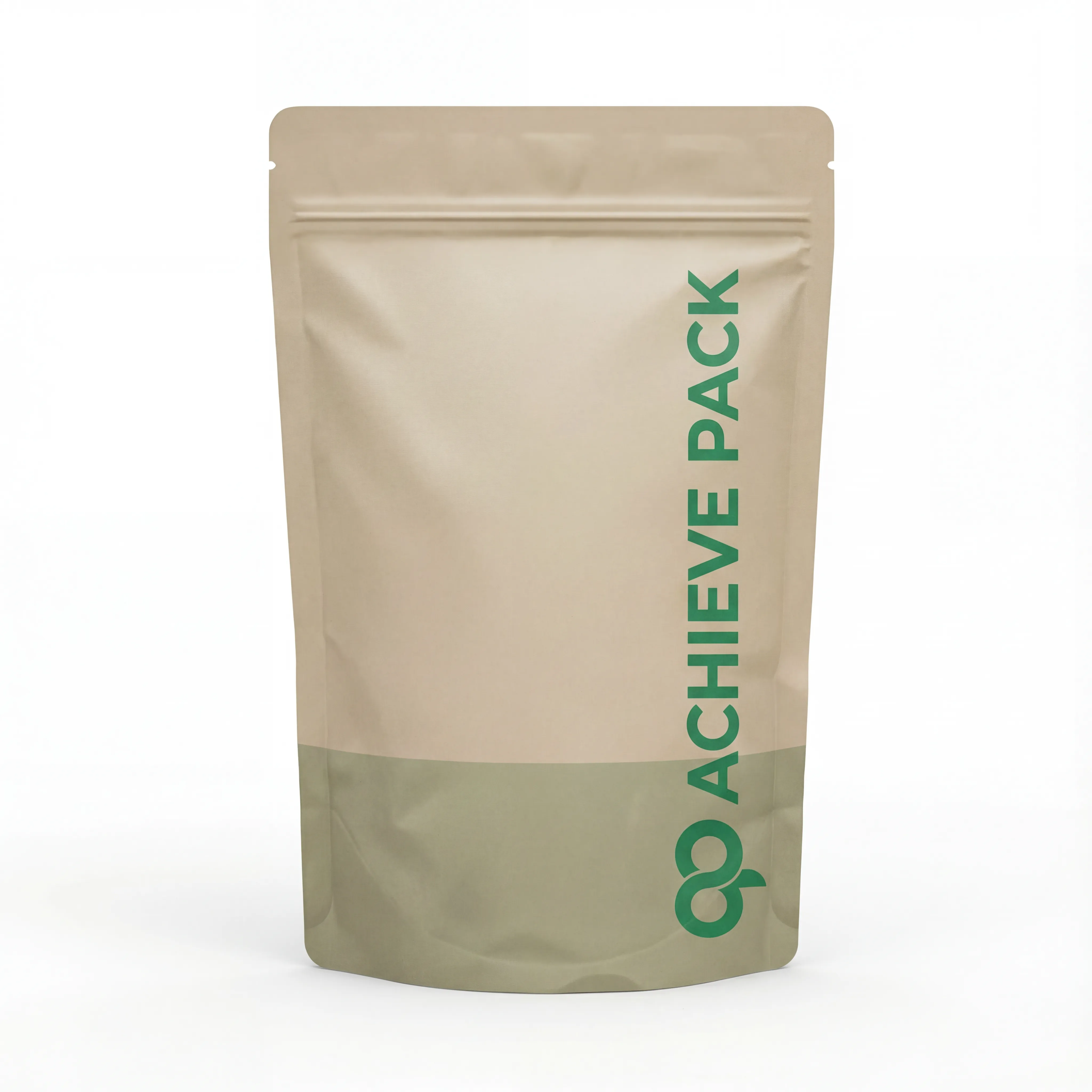
 Stand Up
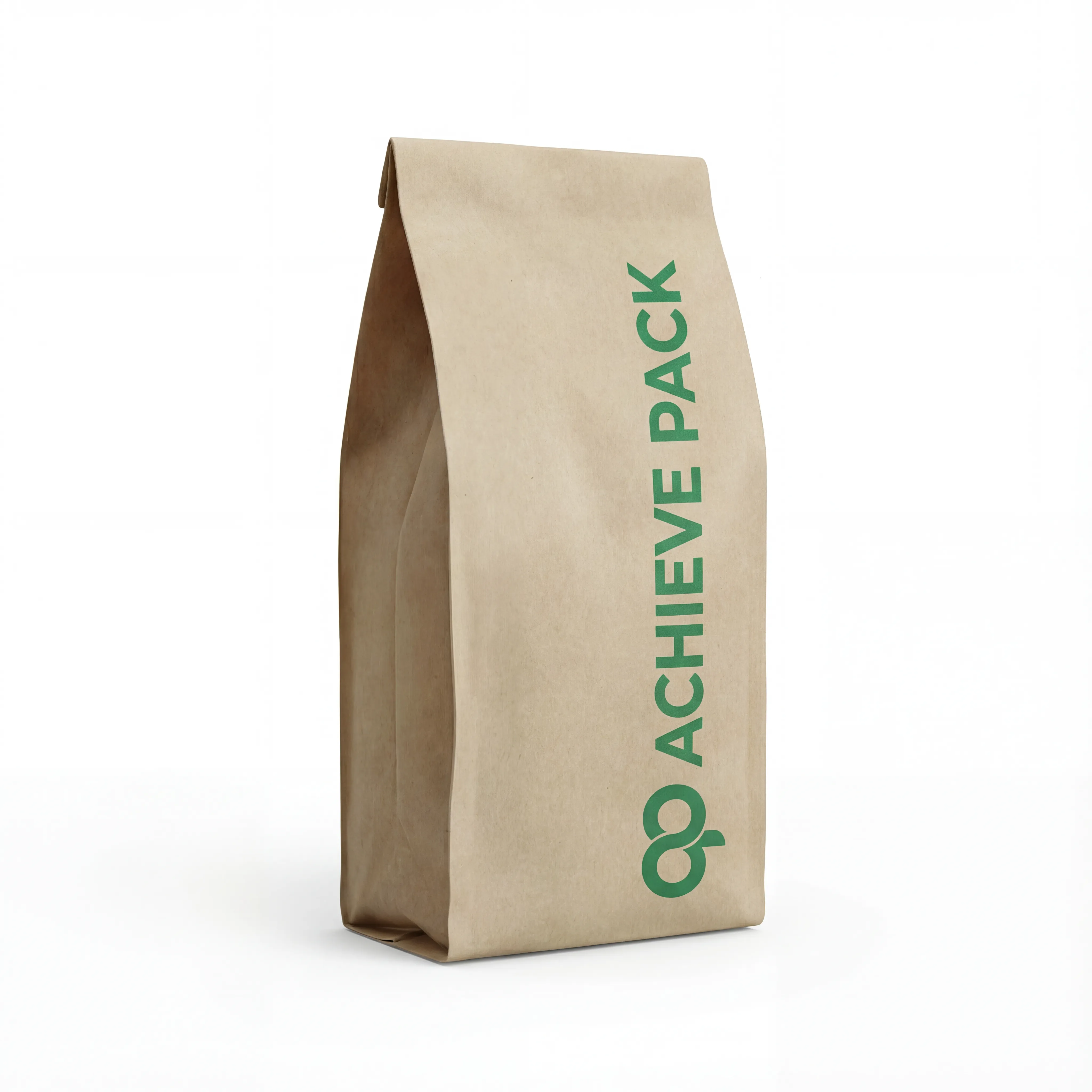 Side Gusset
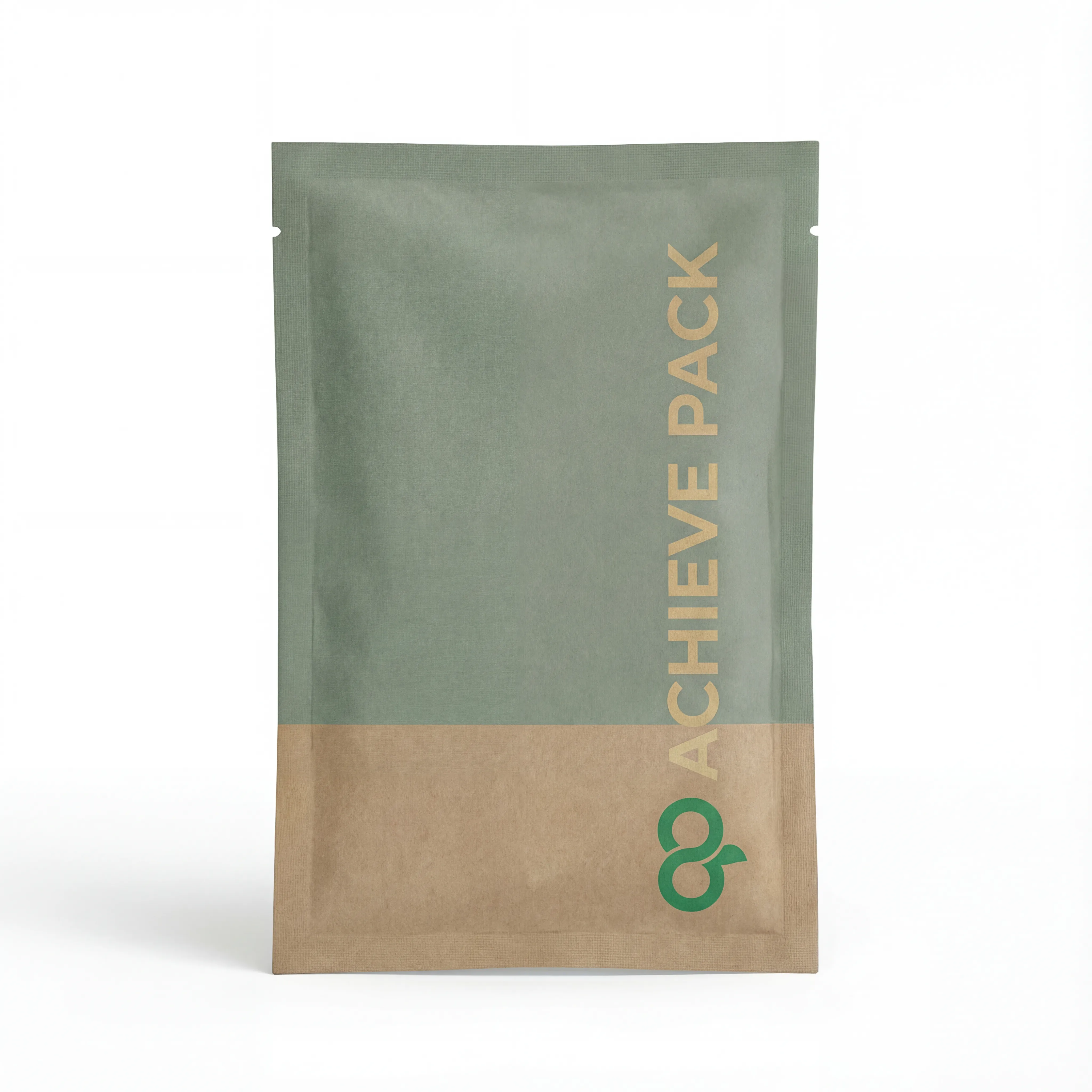 3 Side Seal
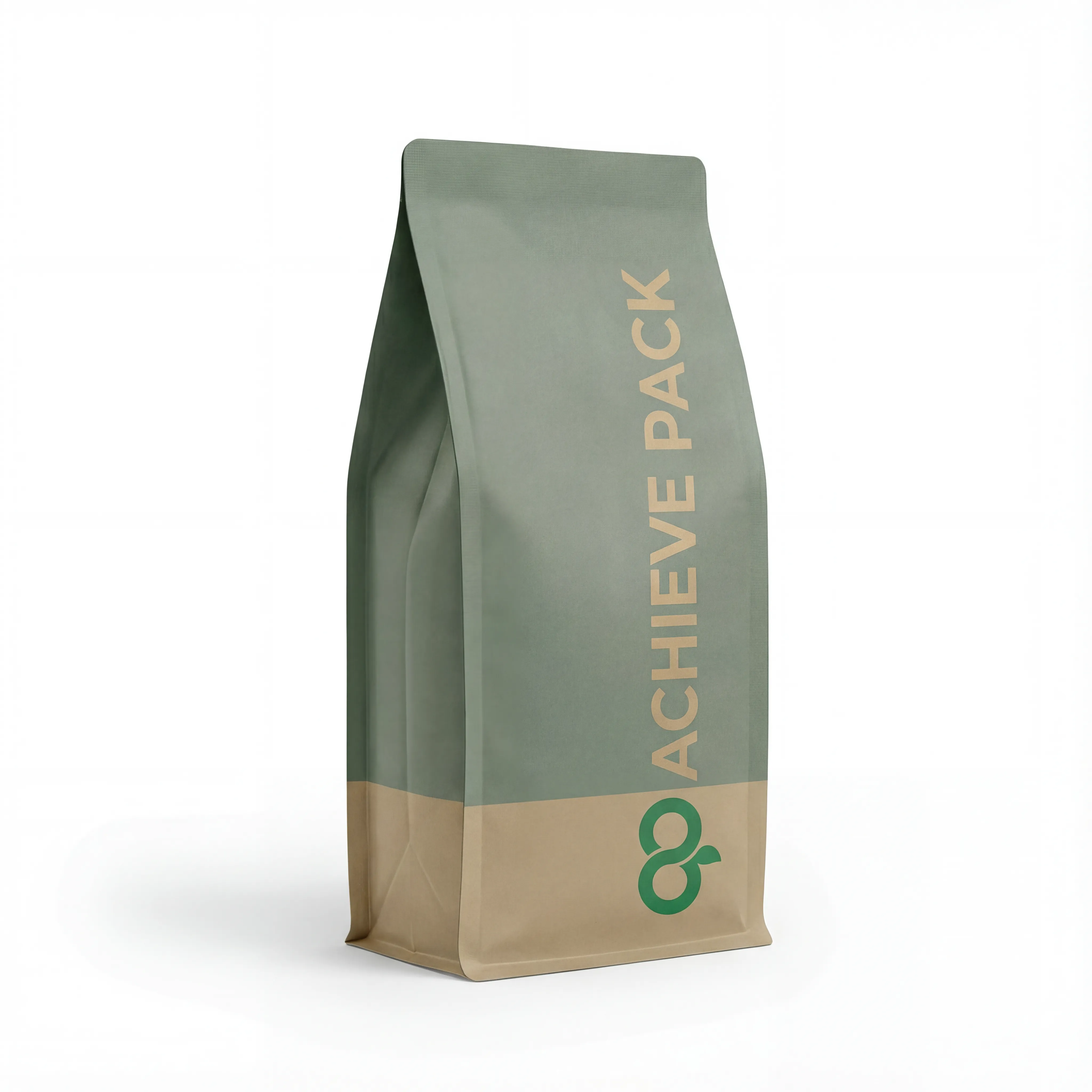 Flat Bottom
 Shrink Sleeve
Flat Bottom Pouch vs. Side Gusset Bottom: Structural Difference Guide | Achieve Pack Specifications
Solving Core Packaging Challenges for Flat Bottom Pouch vs. Side Gusset Bottom: Structural Difference Guide | Achieve Pack
Concise B2B technical benchmarks designed to eliminate transit failures, regulatory penalties, and shelf-life loss.
Barrier Specified Wrong, Shelf Life Lost
Risk: A film that is too thin lets oxygen and moisture through before the date code.
Structure Matched to Your Product, Quoted With OTR & WVTR
You get the barrier numbers before you approve the quote.
Compliance Documents Arriving Too Late
Risk: Retailers and co-packers hold the order until the supplier file clears their QA.
Approval Pack Issued With the Quote, Not After It
Product specification, SDS, food-grade statement, lot code statement, PFAS statement, letter of guarantee.
Plate Fees and High MOQs Killing the Range
Risk: Every variant needs its own cylinders, so the line-up never gets launched.
Digital Printing from 500 Units per SKU
Multiple designs in one run, zero plate charges.
Experience 3D Packaging Design & Free Dielines
Preview your pouch in 3D WebGL Studio and export production-ready dielines.
From Ryan Wong's Engineering Notebook
Engineering Memo
"A high-end granola startup was using side-gusset bags but kept getting customer complaints that the bag would tip over on breakfast tables, scattering oats. When they tried to transition to flat-bottom box bags, their co-packer warned them that the thicker bottom joints would melt or fail under their existing sealing settings. We visited their facility and calculated that their thermal sealer was set to 150°C with only a 0.8s dwell time—perfect for side-gussets but causing cold-seals on flat bottoms. We increased the dwell time to 1.3s and dropped the temperature to 135°C to allow heat to penetrate the 5-panel joint without burning the outer PE layer. Corner seal strength tripled, and failures dropped to zero. Stability and sealing solved in one go."
Interactive 3D Structural Visualizer
[ REAL-TIME WEBGL RENDERS — MOVE CURSOR TO SWAY / SCROLL TO ROTATE ]
Flat Bottom Pouch
Note the separate, fully flat rectangular base and clean vertical quad corner seals.
Side Gusset Pouch
Notice how the side folds collapse and gather at the bottom to form a center folded seam.
Technical Anatomy Deep Dive
Analyzing the mechanical properties, stress points, and retail advantages of both bottom shapes.
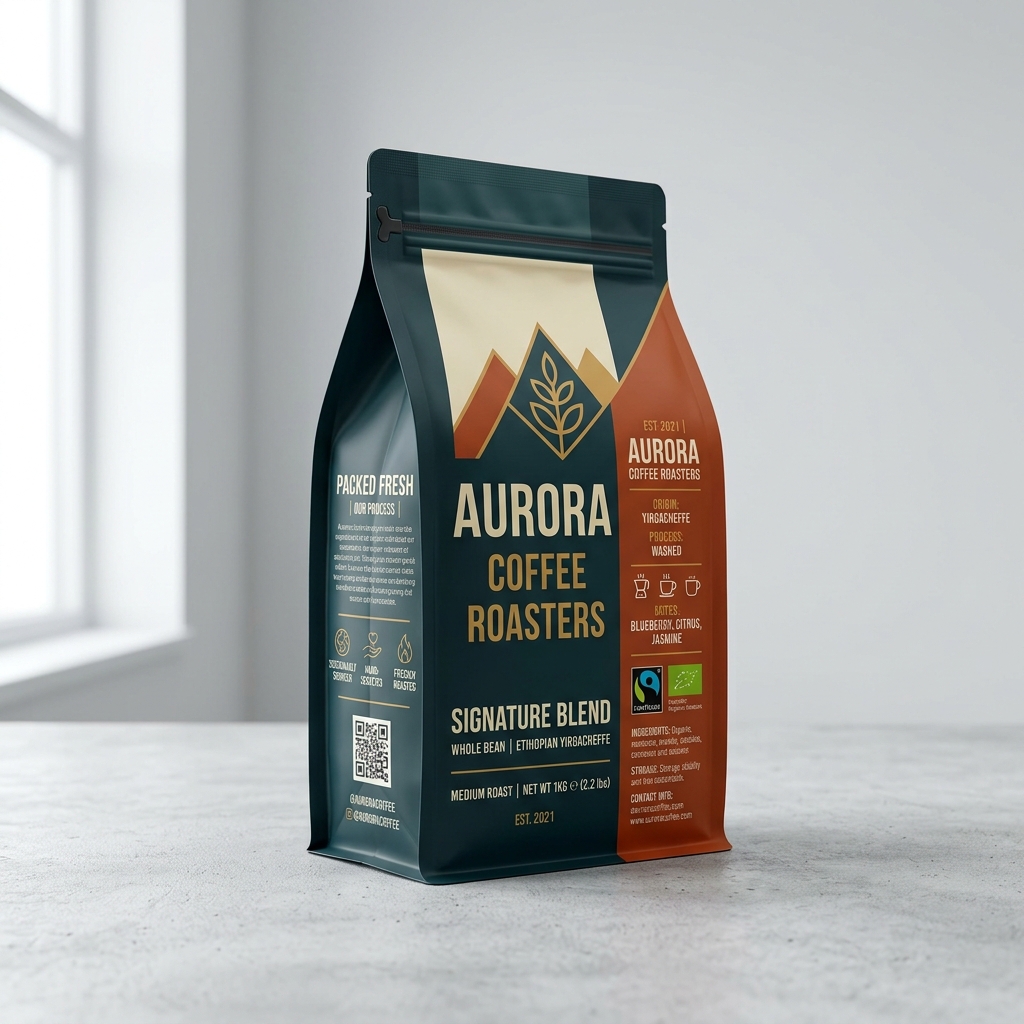
The 5-Panel Flat Bottom Box
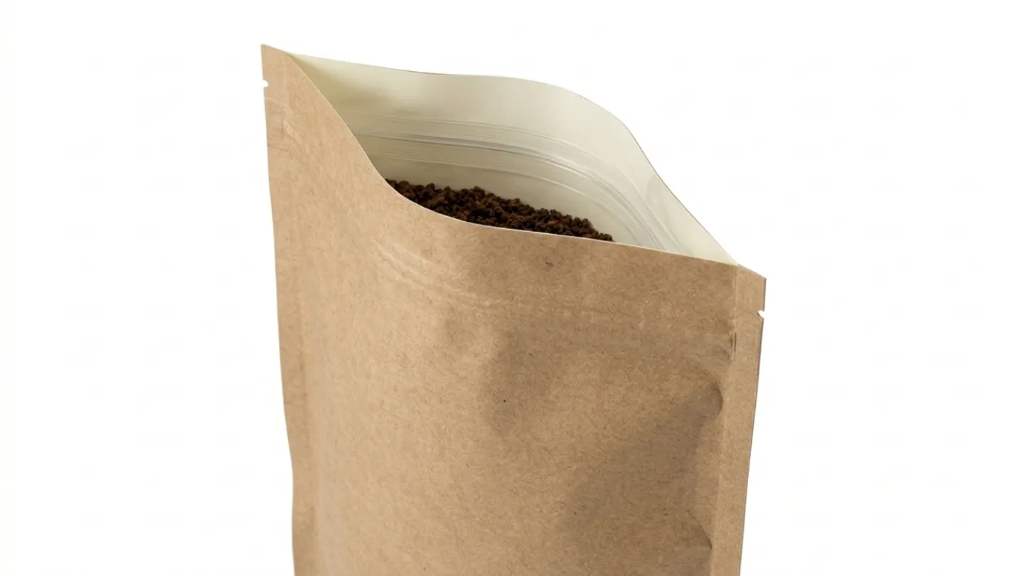
Unlike standard gusset bags, the bottom of a flat bottom pouch is a separate rectangular panel of packaging film heat-sealed to the front, back, and two side gussets. This is what creates its distinct box-like silhouette.
✓ Total Standing Stability: Completely flat footprint stands upright even when holding extremely lightweight products or when partially empty.
✓ Five Printable Panels: Front, back, left gusset, right gusset, and bottom display panel are all available for branding.
✓ Resealable Zip Integration: Enables convenient pocket zippers or standard press zippers.
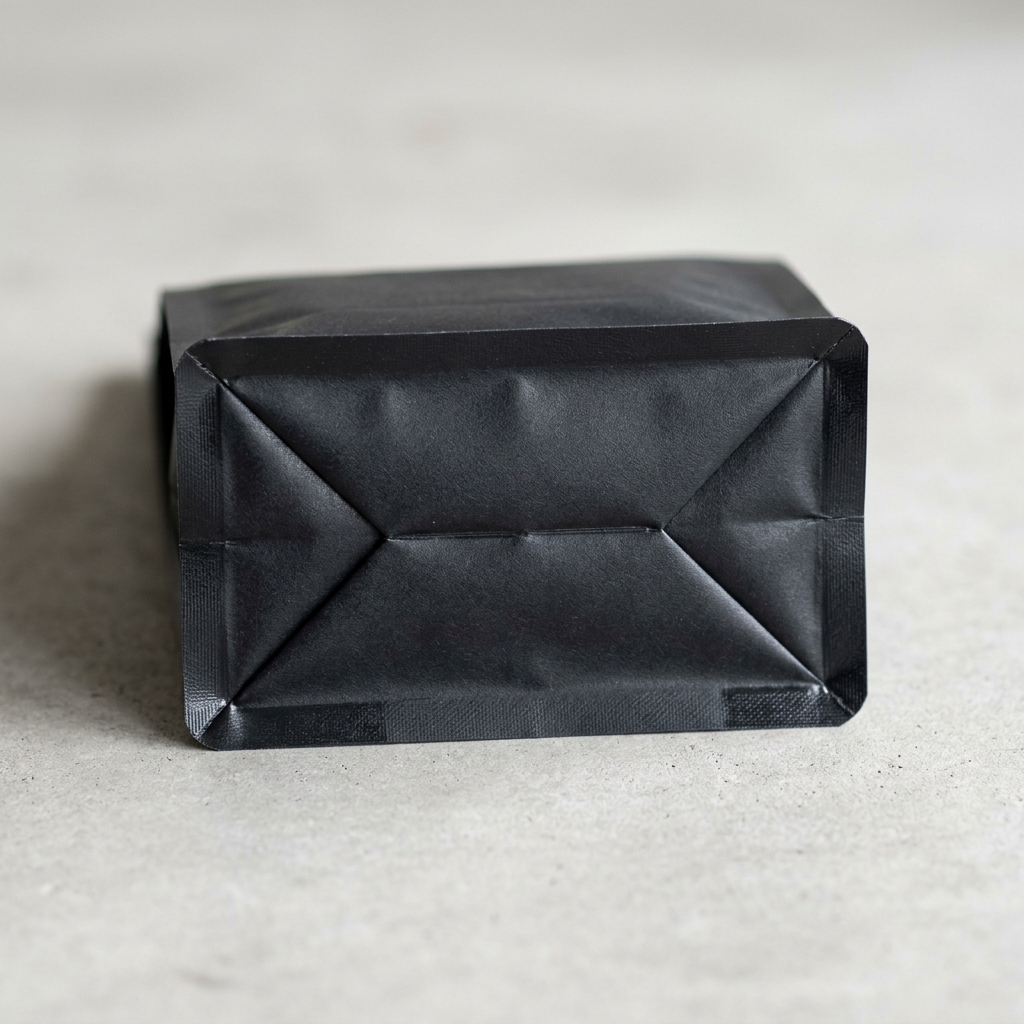
The Folded Side Gusset Bottom
A side gusset bag's bottom is formed by folding the bottom edge of the continuous pouch tube back. When empty, it lies flat. When filled, the side gussets expand, forcing the bottom to flare out into a cushion or boxy base, typically sealed with a center seam (fin-seal).
✓ Lower Cost Conversion: Simpler to convert in production line, resulting in 15% to 25% lower manufacturing costs.
✓ High Bulk Capacity: The structural folds handle stress exceptionally well for bulky volumes (1kg, 2kg, up to 5kg).
✓ Back-Seam Strength: Centered seals allow high tension fill lines without bottom rupture risks.
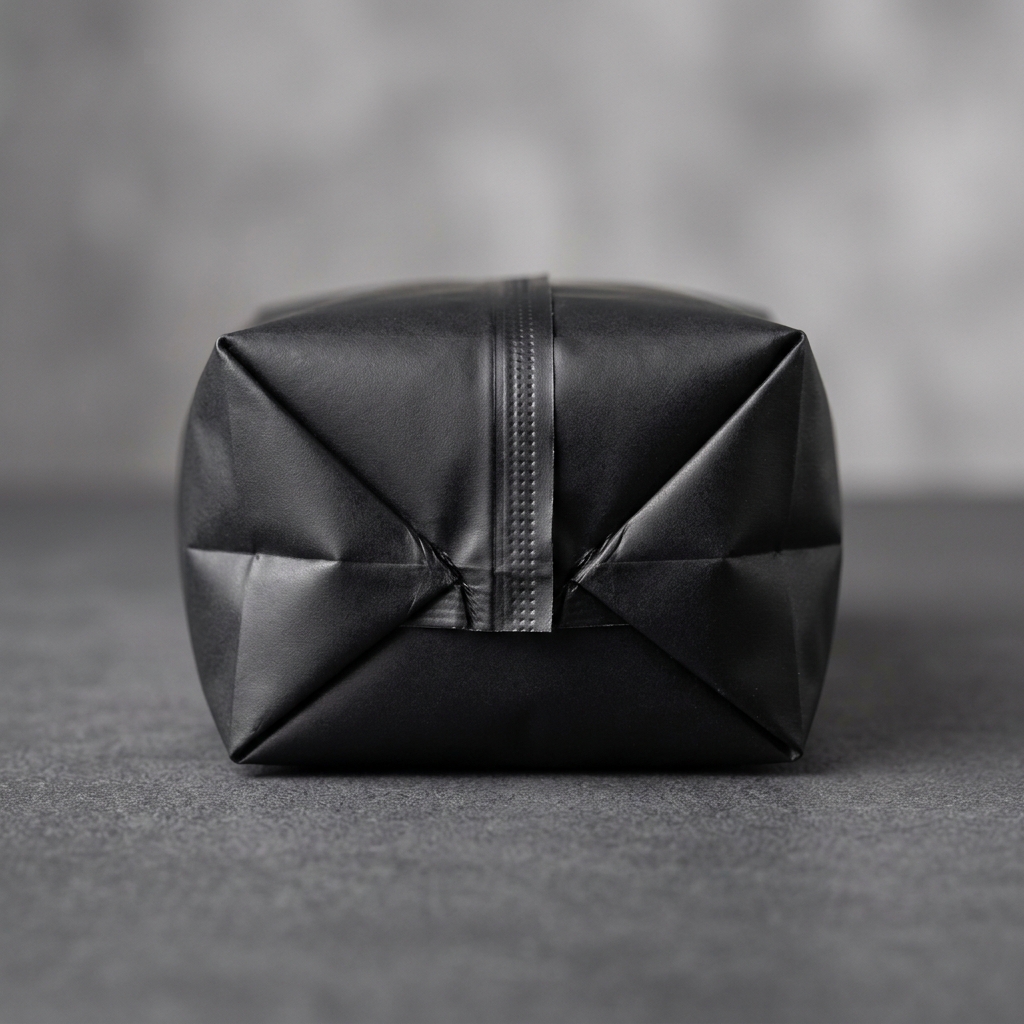
5 Packaging Pain Points & Engineering Solutions
01 / Pouch Tilting & Spillages
Lightweight or partially emptied side-gusset pouches fold at the base and fall over, spilling dry powders.
02 / Corner Crease Cracking & Leakages
Thick quad-seals on box bottoms experience high mechanical stress, causing micro-fractures in foil barrier layers.
03 / Graphic Distortion on Folds
Side-gusset seams running through critical branding elements distort logos when the pouch expands.
04 / Narrow Sealing Windows at Bottom Joints
The point where 5 separate panels meet requires high heat, which can burn through surrounding single-layer bioplastics.
05 / Slow Auto-Filling Line Throughput
Standard side-gusset bags resist opening cleanly, causing mechanical suction cups to miss or drop pouches.
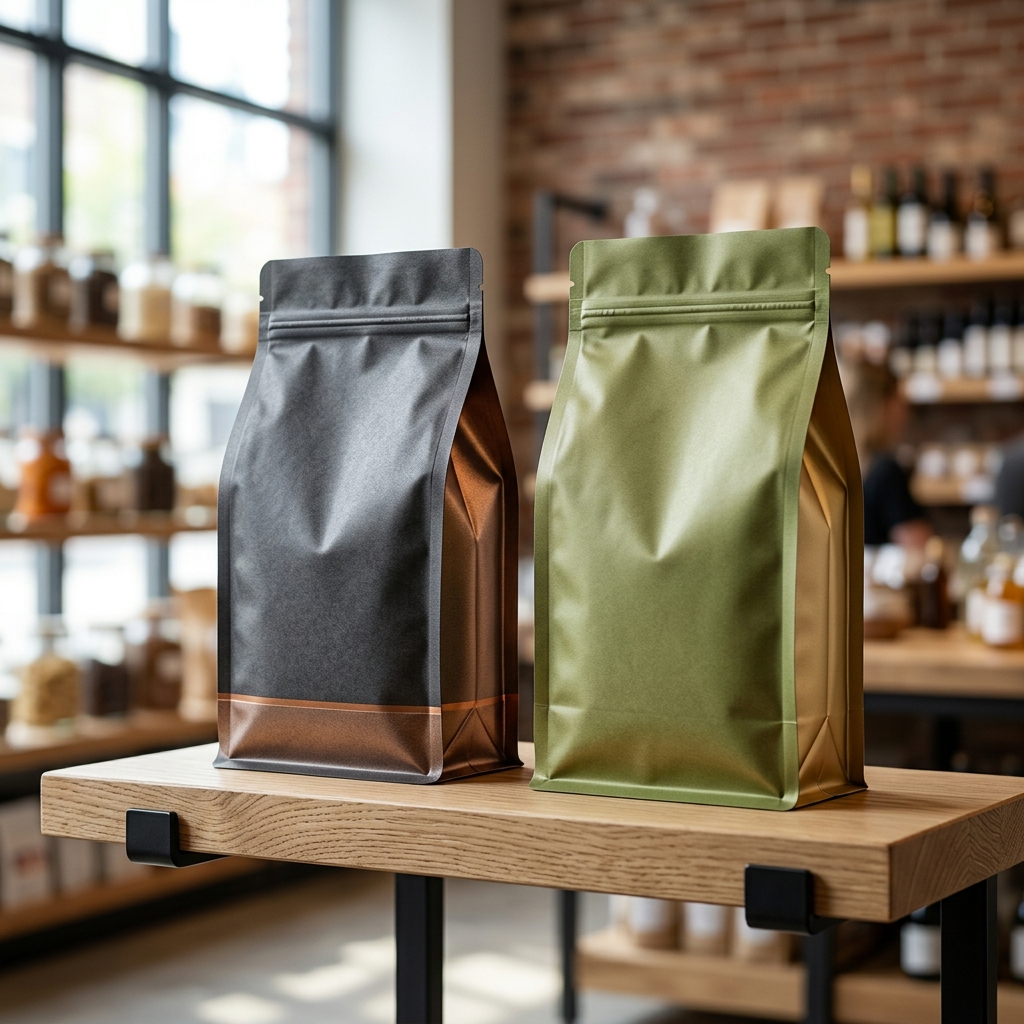
The Decision Matrix
Compare visual, physical, and commercial attributes to decide on the best base for your brand.
| Parameters | Flat Bottom Pouch | Side Gusset Pouch |
|---|---|---|
| Base Silhouette | Perfect flat rectangle. Stands rigid. | Pillow-block with center seam fold. |
| Standing Stability | Excellent (Unfilled or Filled) | Weight-dependent (Requires product fill) |
| Volumetric Efficiency | 10% - 15% Higher (Box format) | Standard (Slight volume loss in folds) |
| Printable Surface Areas | 5 Panels (Front, Back, Sides, Bottom) | 3 Panels (Front, Back, Sides) |
| Closure Adaptability | Zippers, Pocket Zippers, Sliders | Tin ties, top thermal seal fold |
| Best Fill Weights | 100g to 1.5kg (Gourmet packing) | 1kg to 10kg (Bulk & heavy duty packing) |
| Relative Unit Price | Premium (15% - 25% Higher cost) | Economical (Simpler converter lines) |
What This Comparison Won't Tell You
Both formats work — the wrong choice is usually about your line, not the look. Honestly:
- Flat bottom is NOT plug-and-play. The 5-panel bottom joint needs higher dwell time or dual-zone heat on your sealer. If your co-packer won't recalibrate, the premium base will leak.
- Side gusset is NOT shelf-stable when light. No bottom gusset means the bag stands on product weight alone — half-empty bags tip. For lightweight or gift products, that matters.
- Neither is decidable from photos. Fill weight, product density and line speed change the answer. Test both on your actual filling line.
Order the $40+ sample kit (credited toward your first order) with both bases, or book a line-fit consult at /support/contact.
Sustainable Materials & Technical Compliance
At Achieve Pack, we help brands transition away from legacy landfills. Both pouch designs are fully certifiable across eco-laminations.
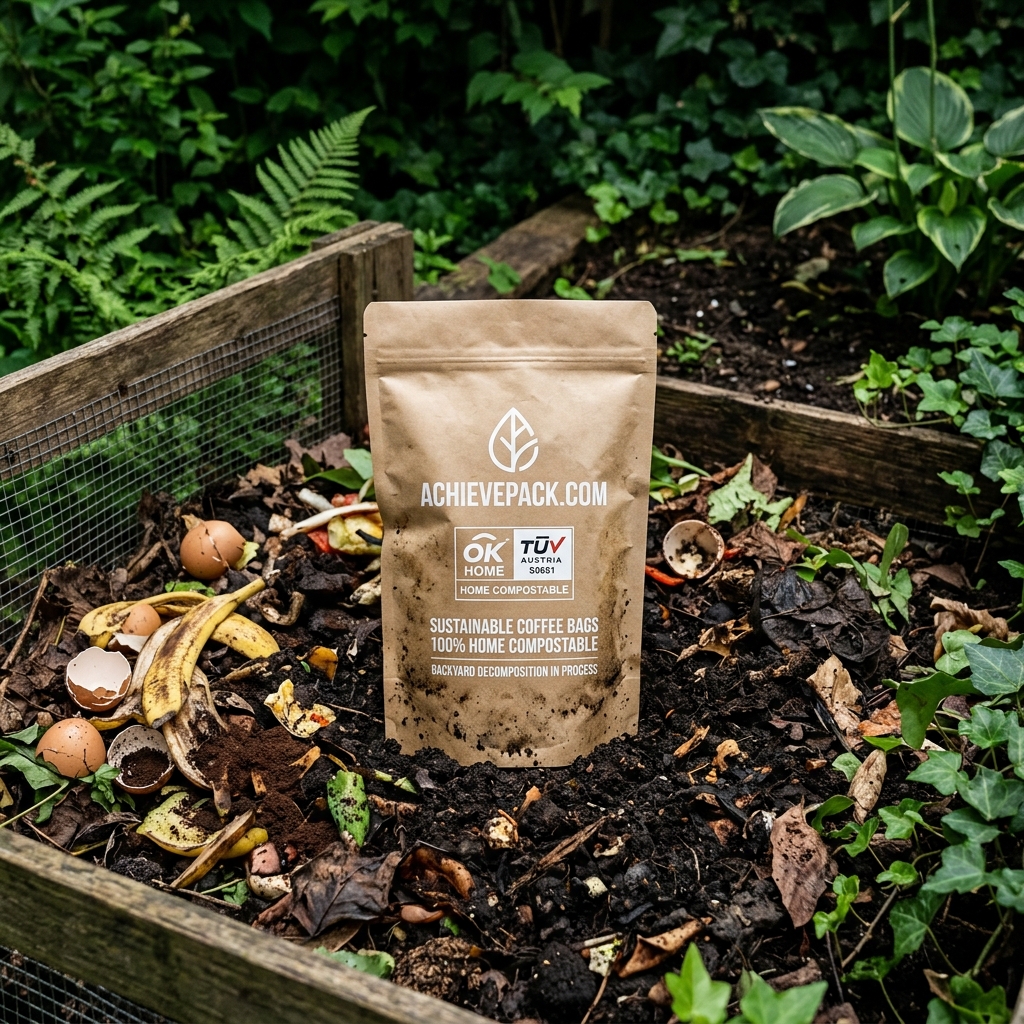
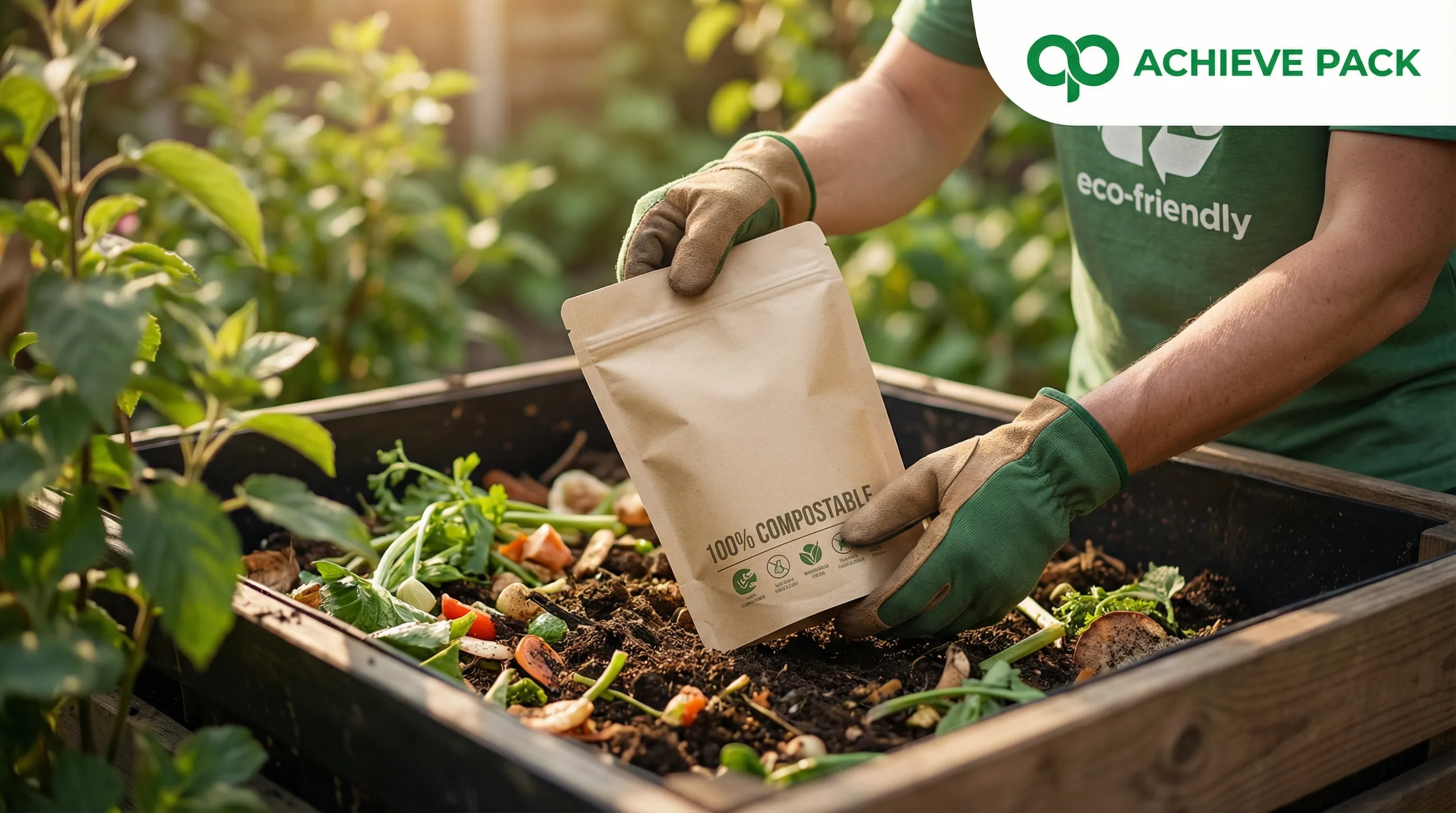
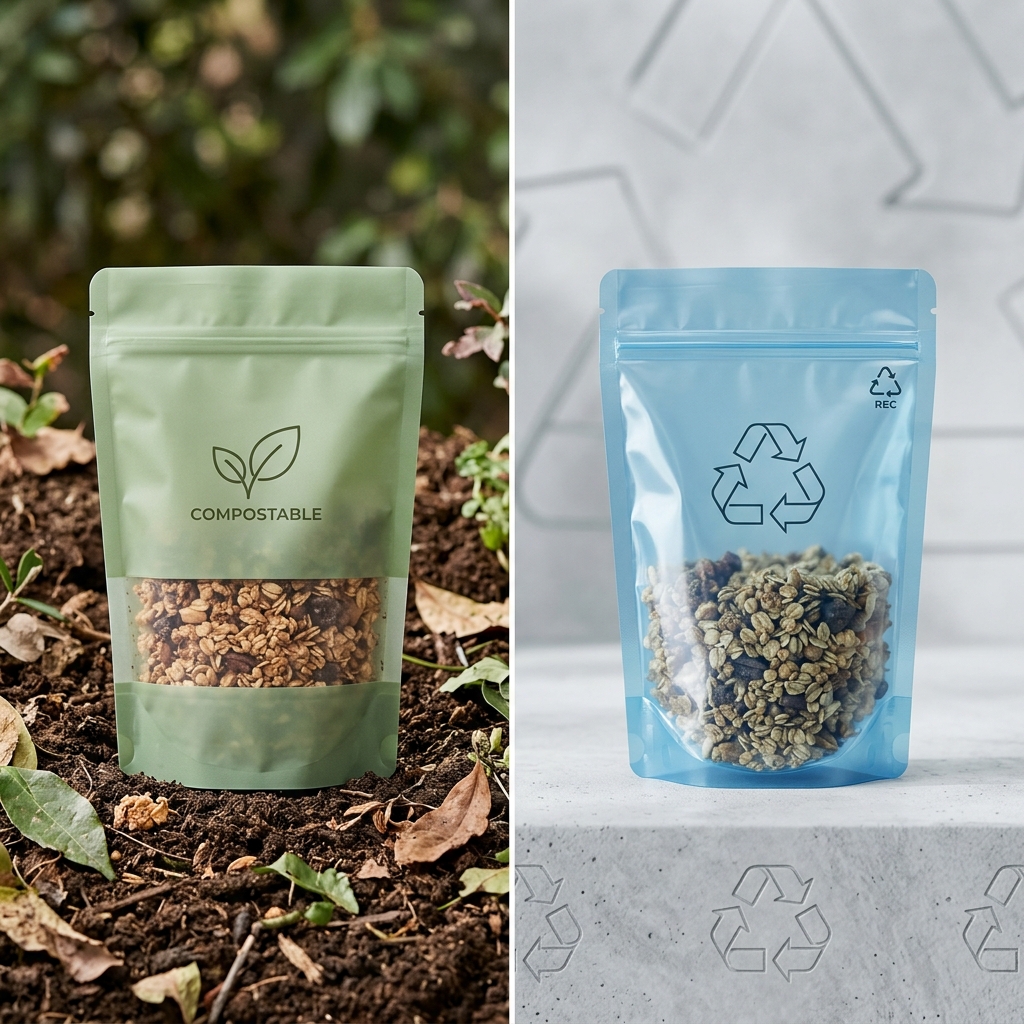
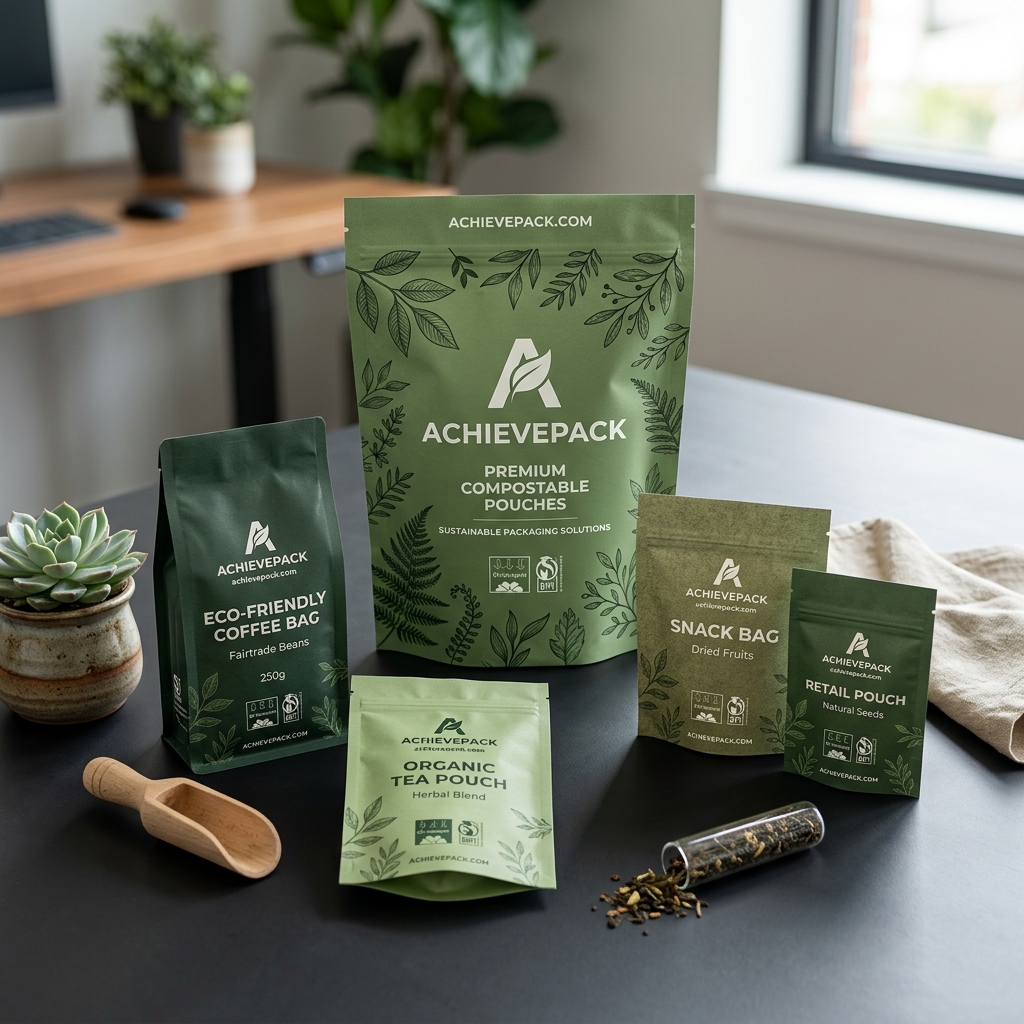
Industrial Compostable
Formulated with FSC-certified premium Kraft paper, metallized bio-barrier layers (NK/NKME), and PBS sealant liners. ✓ Certified EN 13432 & ASTM D6400
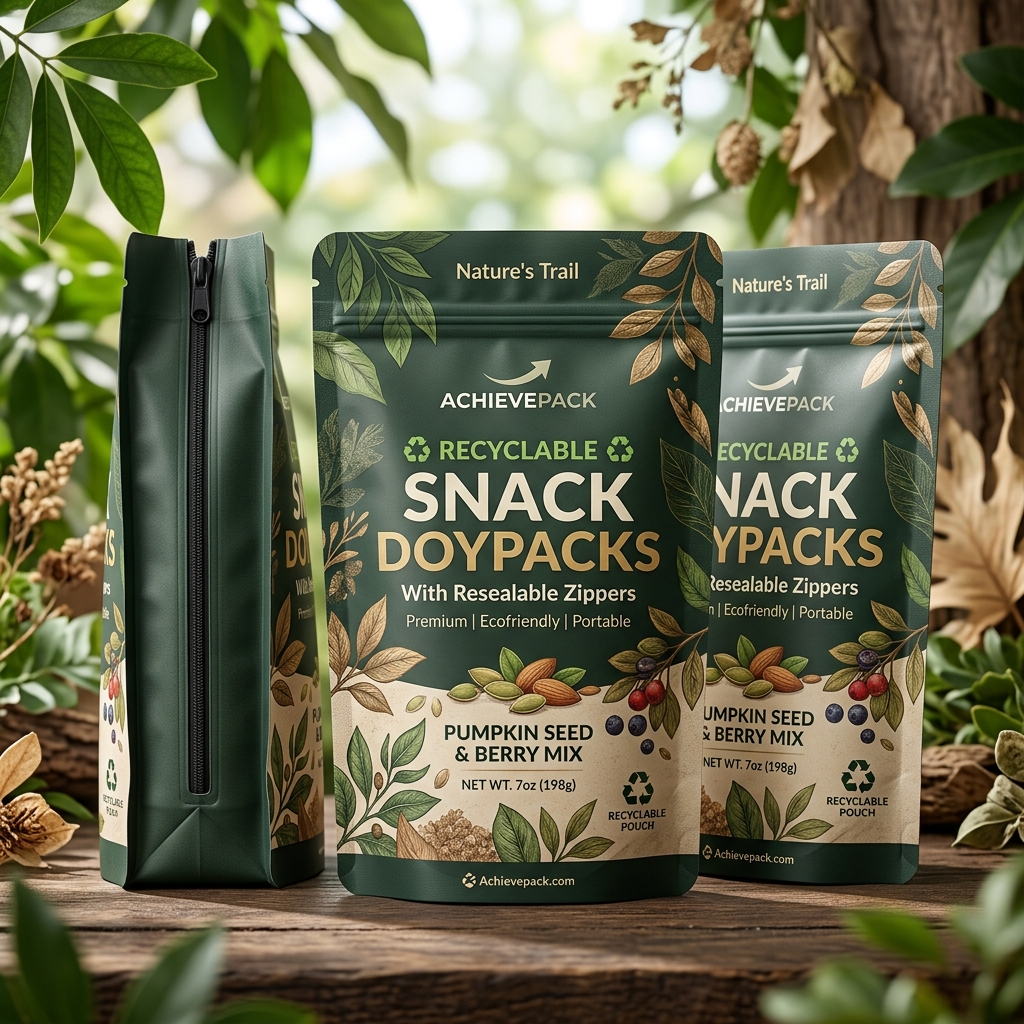
Recyclable Mono-PE
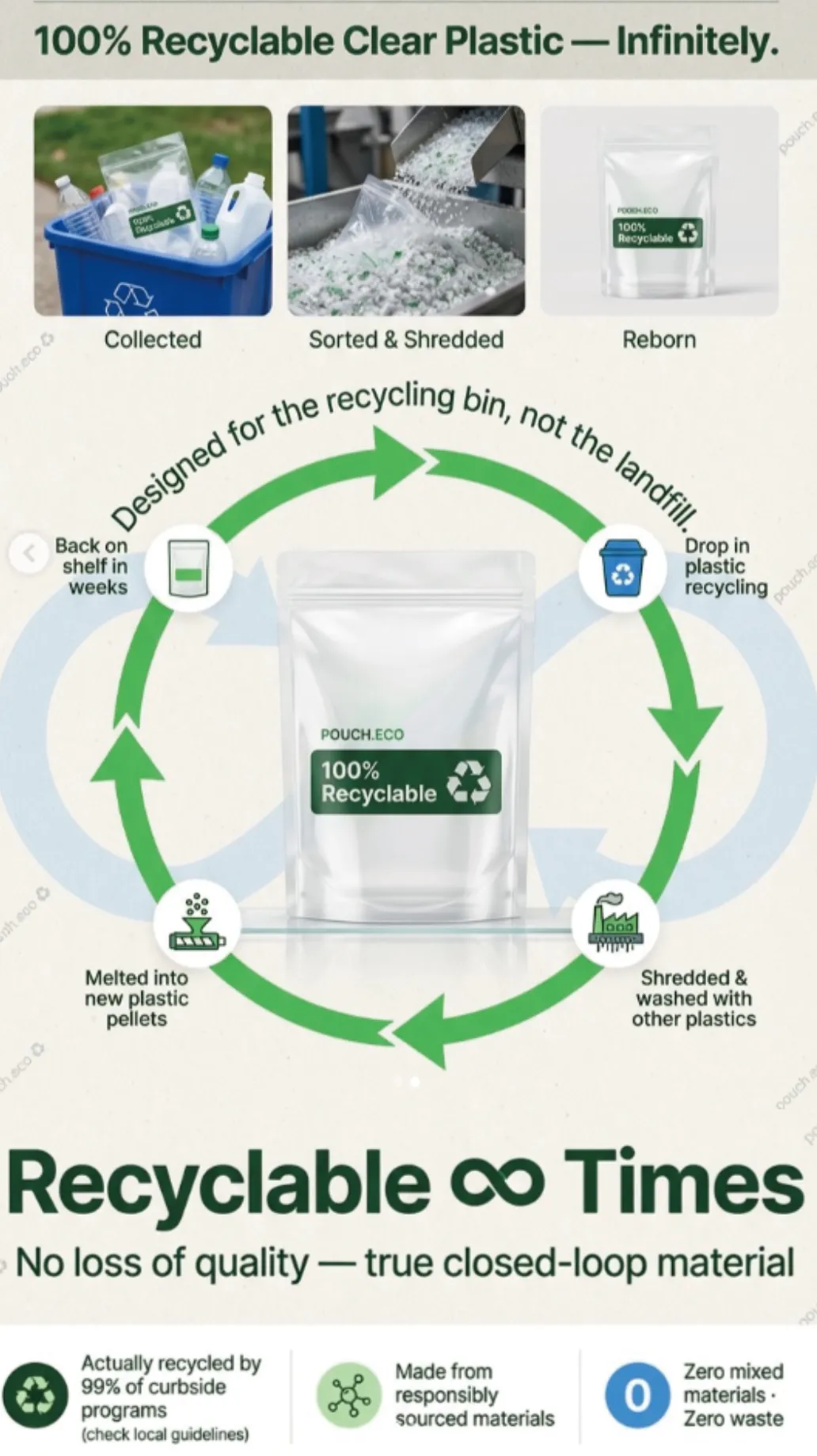
Single-polymer structure (EVOH-doped Mono-PE) with exceptional high oxygen & moisture barriers. Full recycling circle. ✓ Store Drop-off Circular Ready
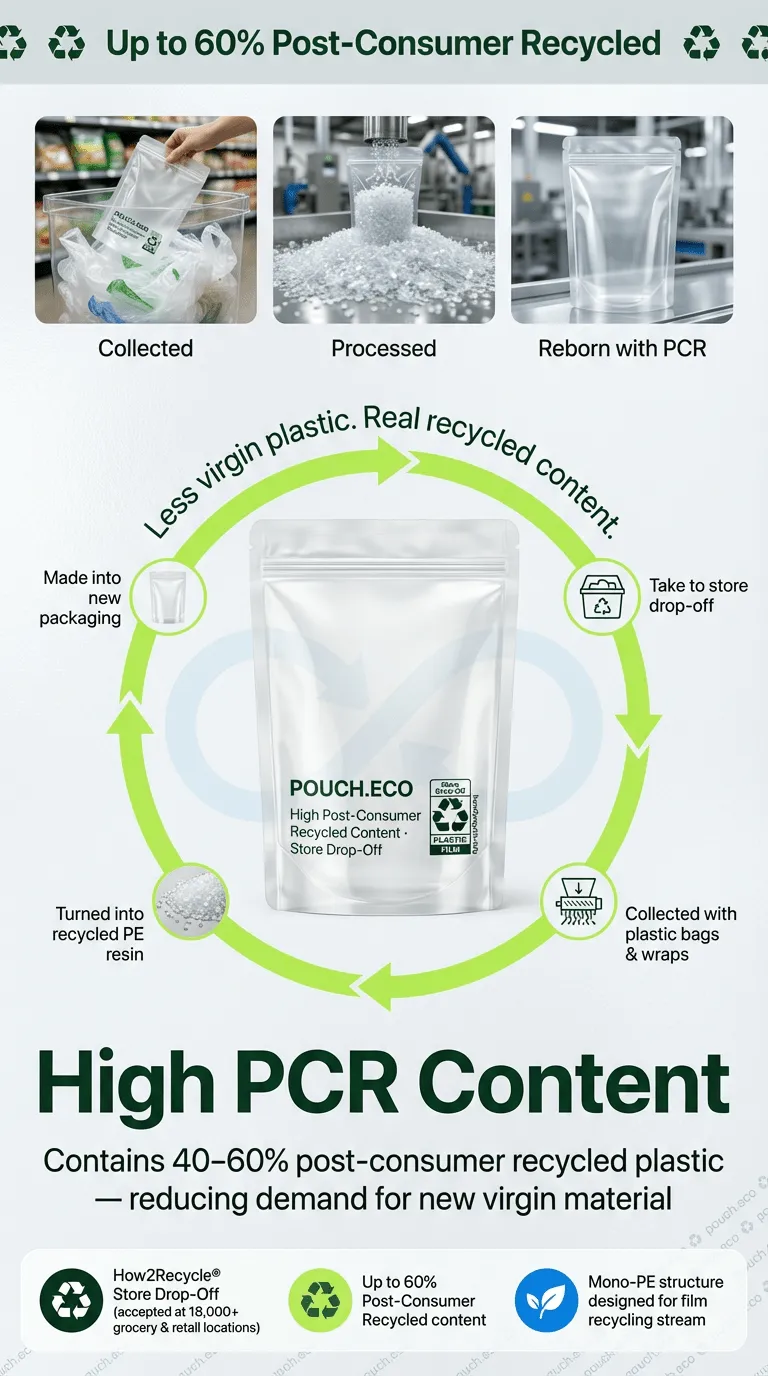
GRS Recycled PCR
Incorporates up to 50% Post-Consumer Recycled plastics in the outer PET/PP films, reducing virgin carbon footprint by 30%. ✓ Global Recycled Standard Certified
*All flexible packaging conversions are certified BPA-free and meet stringent FDA 21 CFR standards for direct food contact.
Technical Factory Validation & Quality Control
We don't just supply pouches; we validate every batch. Every raw material and finished pouch runs through our 6-step testing protocol to guarantee automatic packaging line compatibility and food-safe barrier preservation.
OTR & WVTR Barrier (MOCON)
Tested under ASTM D3985 & ASTM F1249 to ensure fresh shelf life up to 18 months.
GC-MS Solvent Residue
Gas Chromatography-Mass Spectrometry ensures zero odor transfer and absolute food safety.
Heat Seal Strength (ASTM F88)
Guarantees no seam burst under high pressure, perfect for VFFS automatic packing lines.
BRCGS Global Standard
Produced in Class 100,000 dust-free cleanrooms, ensuring zero contamination.
Puncture Resistance (ASTM F1306)
Prevents tear or puncture from sharp, hard items like coffee beans and pet kibble.
Tensile Strength (ASTM D882)
Ensures shape retention and structural integrity when heavy bags are dropped or stacked.
Packaging Transformation for Flat Bottom Pouch vs. Side Gusset Bottom: Structural Difference Guide | Achieve Pack
See how upgrading from generic commoditized bags to precision-engineered flexible barrier packaging eliminates transport failures and boosts shelf authority.
Standard / Generic Packaging (Before)
Standard stock bags fail under transit stress and expose sensitive goods to moisture, UV light, and oxygen.
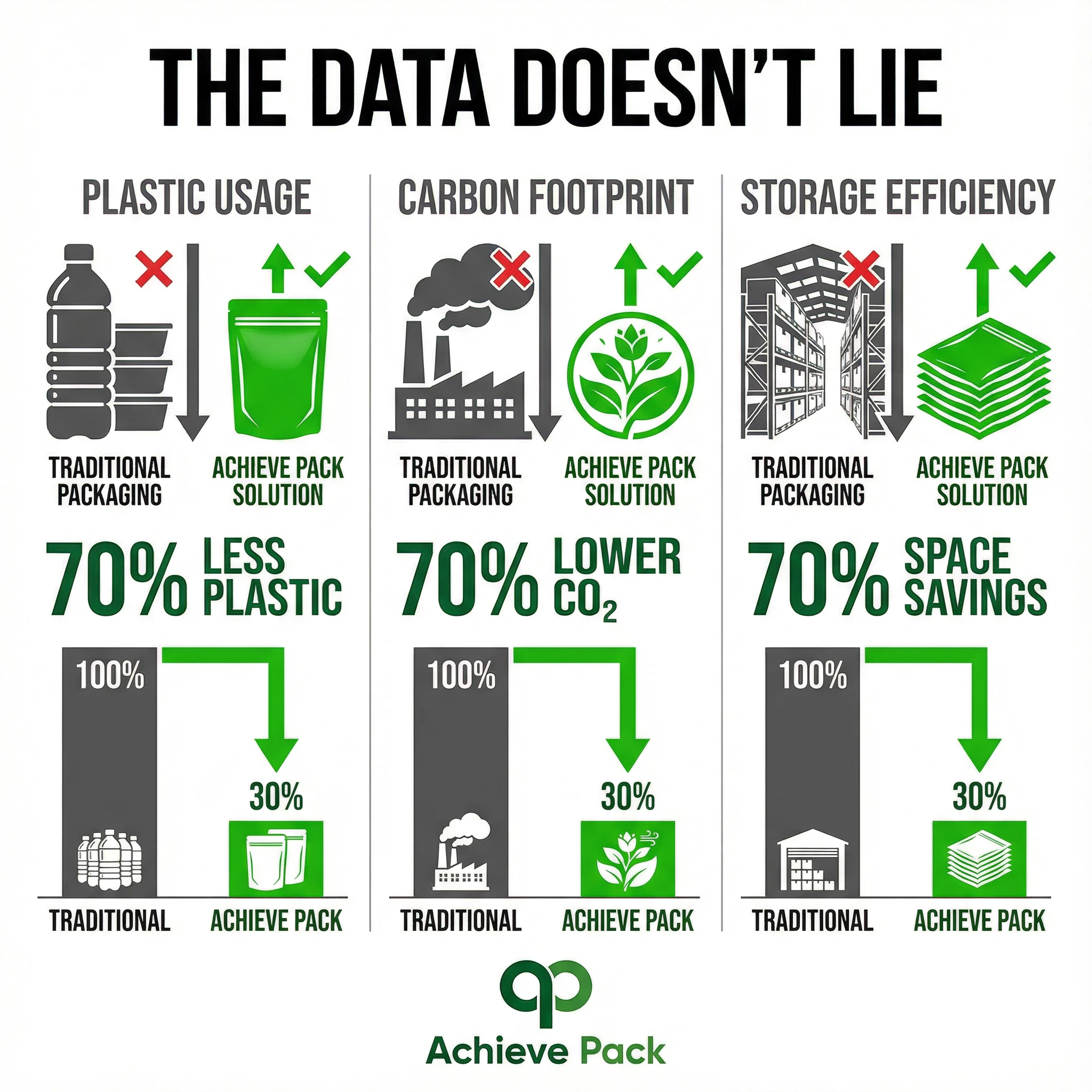
- Rapid Oxidation & Flavor DegradationCheap films allow O2 & moisture ingress, spoiling contents in < 30 days.
- High Seal Breakage in TransitThin seams fail under drop tests, leading to customer refunds & lost trust.
- Heavy Plastic Tax PenaltiesMulti-layer unrecyclable packaging incurs up to €800/ton in EU PPWR fines.
- High MOQs & Plate Cost FrictionTraditional printers force 10,000+ unit minimums and $1,500 cylinder fees.
Achieve Pack / Pouch Eco Solution (After)
Custom engineered multi-layer pouch structure tailored to your exact moisture barrier, seal strength, and aesthetic requirements.
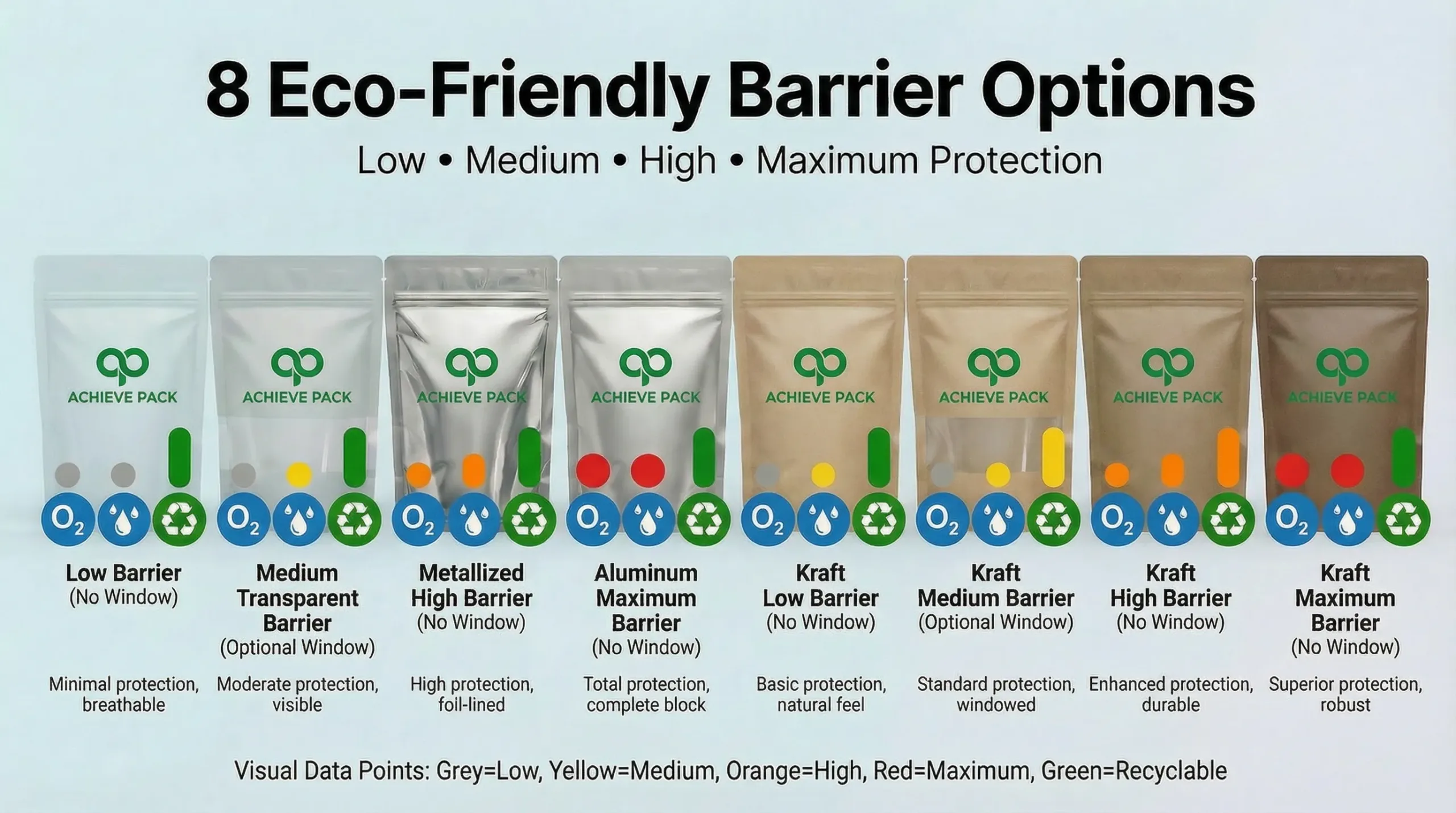
- Ultra High-Barrier Foil/EVOH CoreGuaranteed OTR < 0.1 cc/m²/day, keeping contents fresh for 18–24 months.
- Reinforced 45N/15mm Localized Heat Seal180°C precision seam dwell time prevents bursting even under 2-meter drops.
- 100% Certified Eco ComplianceTÜV OK Compost HOME (EN13432) & Mono-PE Recyclable structures (0% Tax).
- HD Digital Printing with 500-Unit Low MOQsPrint multi-SKU runs in 7 business days with zero setup plate charges.
Questions We Get Asked
What is the primary difference between a flat bottom pouch and a side gusset pouch bottom?▼
Which pouch style offers more internal volume?▼
Which pricing compare between these two pouch bottom structures?▼
Related Stuff
How We Ensure Absolute Accuracy and Trustworthiness
At Achieve Pack, sustainable packaging isn't just about printing; it's about hands-on material science. This article has been written and verified by Ryan Wong, a packaging specialist with 14+ years of experience engineering biopolymer stacks for DTC startups and Fortune 500 companies.
All research, material barrier specifications (OTR, WVTR), heat-seal values (N/15mm), and compostability timelines cited in our guides are backed by testing inside the Achieve Pack Materials Testing Lab. We cross-reference our data with official certification registries from BPI (Biodegradable Products Institute), TÜV Austria (OK Compost HOME), and FSC (Forest Stewardship Council).

Ryan Wong
Supply Chain Director
B.Eng honors degree graduate from Hong Kong Polytechnic University. Serving brands in 8 countries.
View Expert Profile →Still Unsure Which Base Your Product Needs?
Send us your fill weight and product type — we'll recommend the right base and include both formats in a $40+ sample kit you can test on your own line.
See the Material in Action
Real footage of our eco-friendly packaging structures in action.
Compostable Solution
Fully compostable flexible packaging certified under ASTM D6400 and EN 13432. Engineered to break do...
- ASTM D6400 & EN 13432 Certified
- Breaks down within 180 days in soil
Post-Consumer Recycled (PCR)
Made from high-quality post-consumer recycled plastic waste. Our PCR structures reduce carbon footpr...
- Saves post-consumer waste from landfills
- Lowers carbon footprint substantially
Plant-Based Bio-PE
Derived from sustainably-farmed Brazilian sugarcane. It captures atmospheric CO2 during growth and i...
- Captures CO2 during plant growth
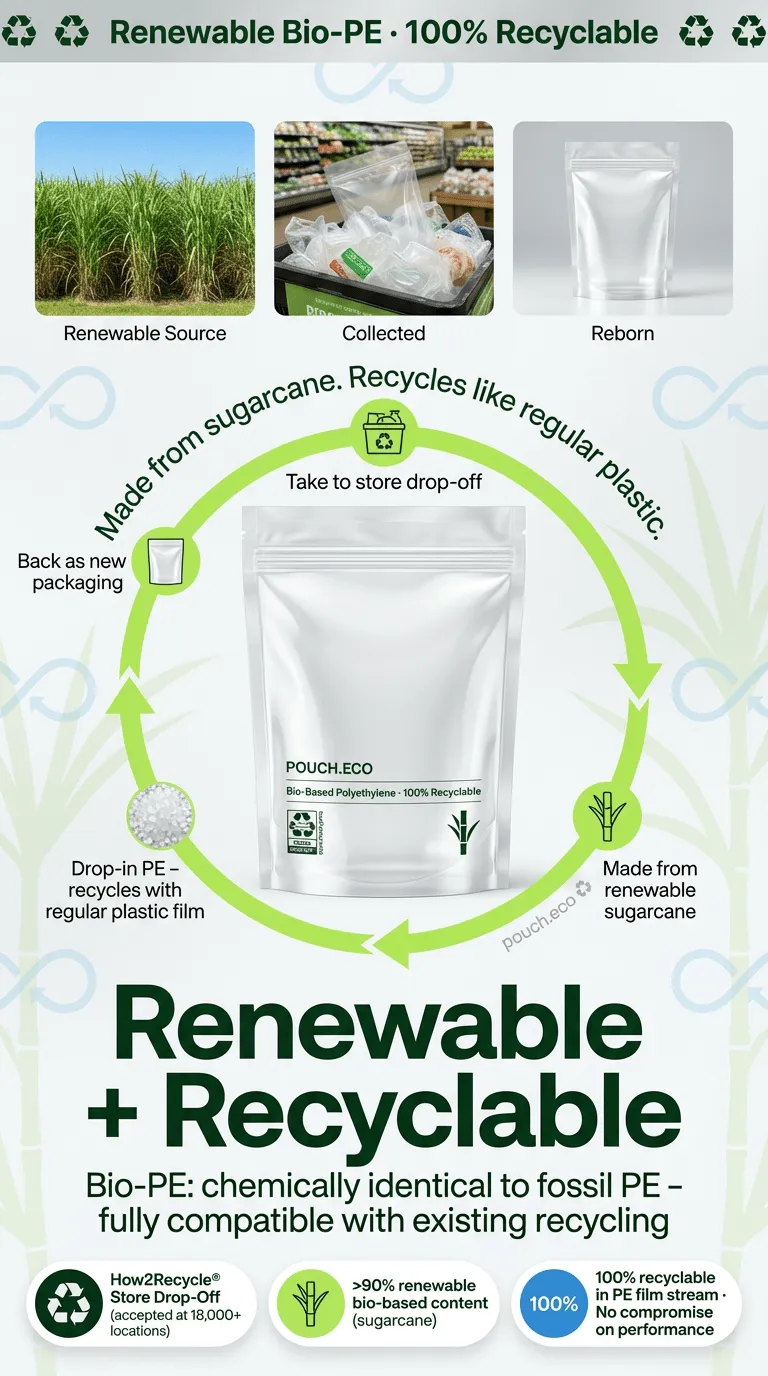
- 100% recyclable in regular PE stream (#4)
Recyclable Mono-Material
Engineered using Mono-PE or Mono-PP structures to enable simple, circular sorting and recycling. Com...
- 100% recyclable mono-polymer structure
- Meets EU Circular Economy directives