The Circular Refill Brand Model
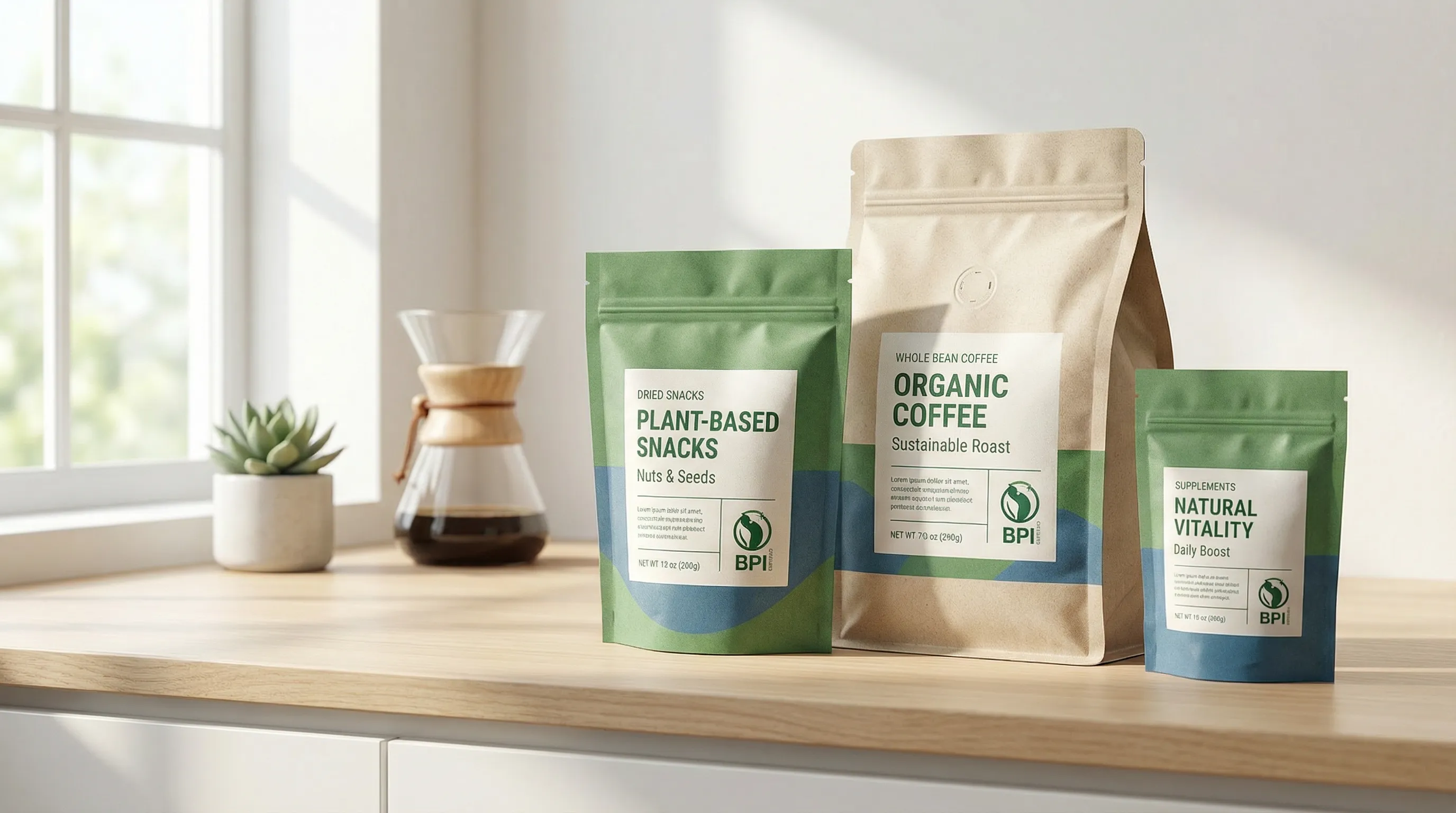
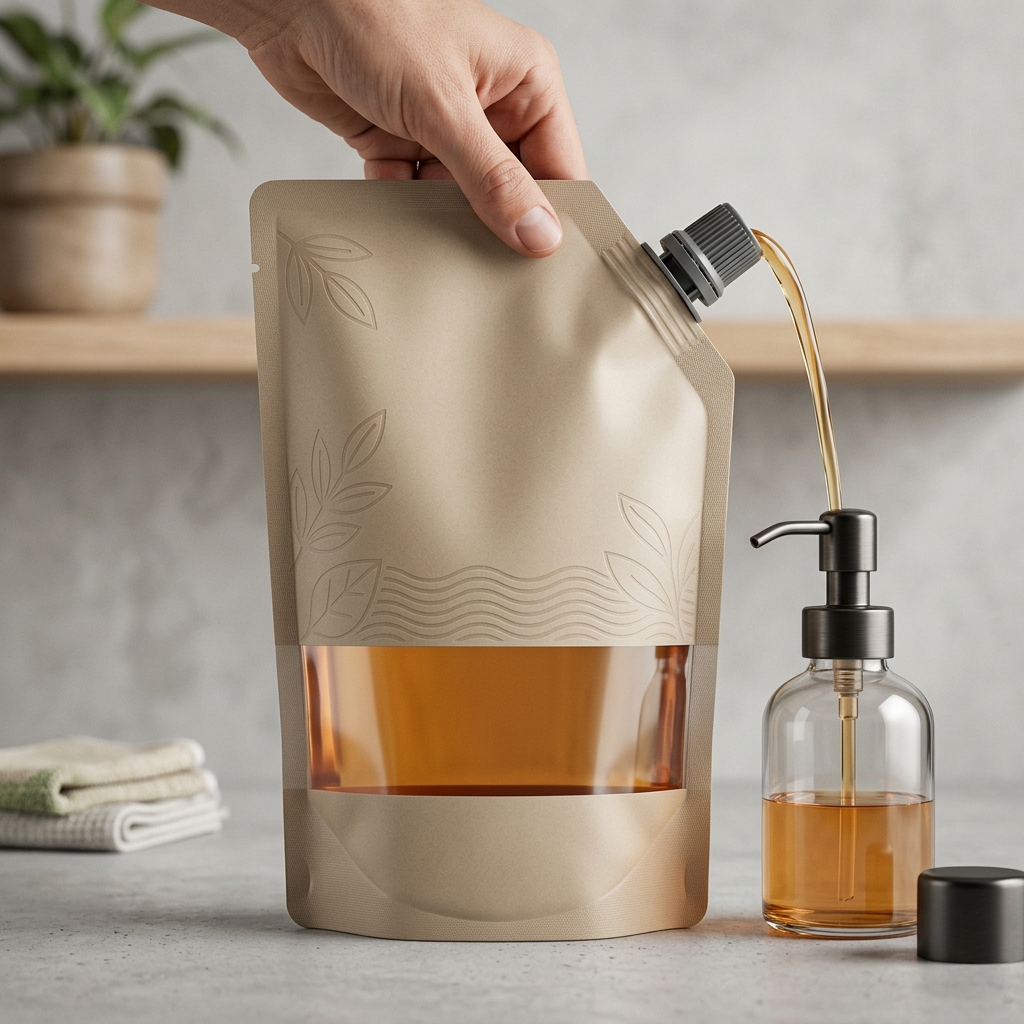
The subscription refill model is changing how consumer packaged goods (CPG) brands approach sustainability. Instead of selling a rigid plastic or heavy glass jar with every purchase, brands ship a premium "durable" container (like glass or ceramics) once, followed by lightweight, flat-shipped compostable refill pouches.
Refill Model Advantages:
- →Customer Loyalty: Refill pouches incentivize subscription-based repeat purchases.
- →Material Savings: Flat pouches use up to 70% less raw materials than rigid containers.
- →Shelf Differentiation: Matte Kraft paper or metallic refill bags look extremely premium and stand out on grocery shelves.
Compostable Refill Pouch Materials
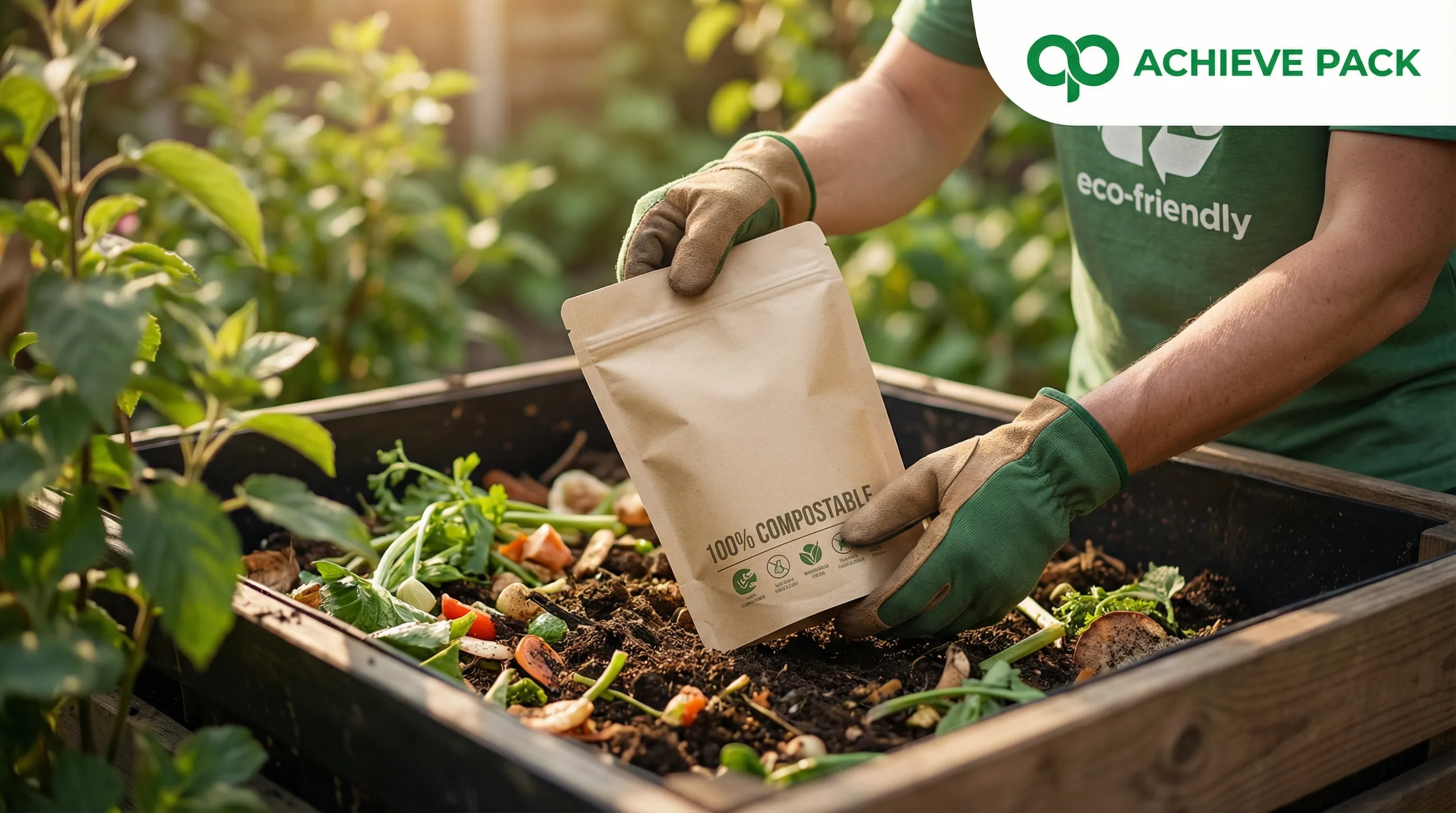
To hold powders, dry goods, coffee, or cosmetics refills, these pouches need protective barrier layers. We laminate wood-pulp-derived cellulose films (NatureFlex™) with plant-based starch binders (PLA/PBAT), offering high grease barriers and oxygen blocks while allowing the bag to decompose within 90 days in composting conditions.
Refill Pouch Structures
- ✓ Matte Kraft Paper + Metallized Cellulose + PLA (High Barrier MetPLA)
- ✓ Clear Cellulose + PLA Sealant (Transparent Window)
- ✓ Certified ASTM D6400 & EN 13432
- ✓ PFAS-free and FDA food contact approved
Refill Product Types
- ✓ Organic Spices, Salts & Herb Seasonings
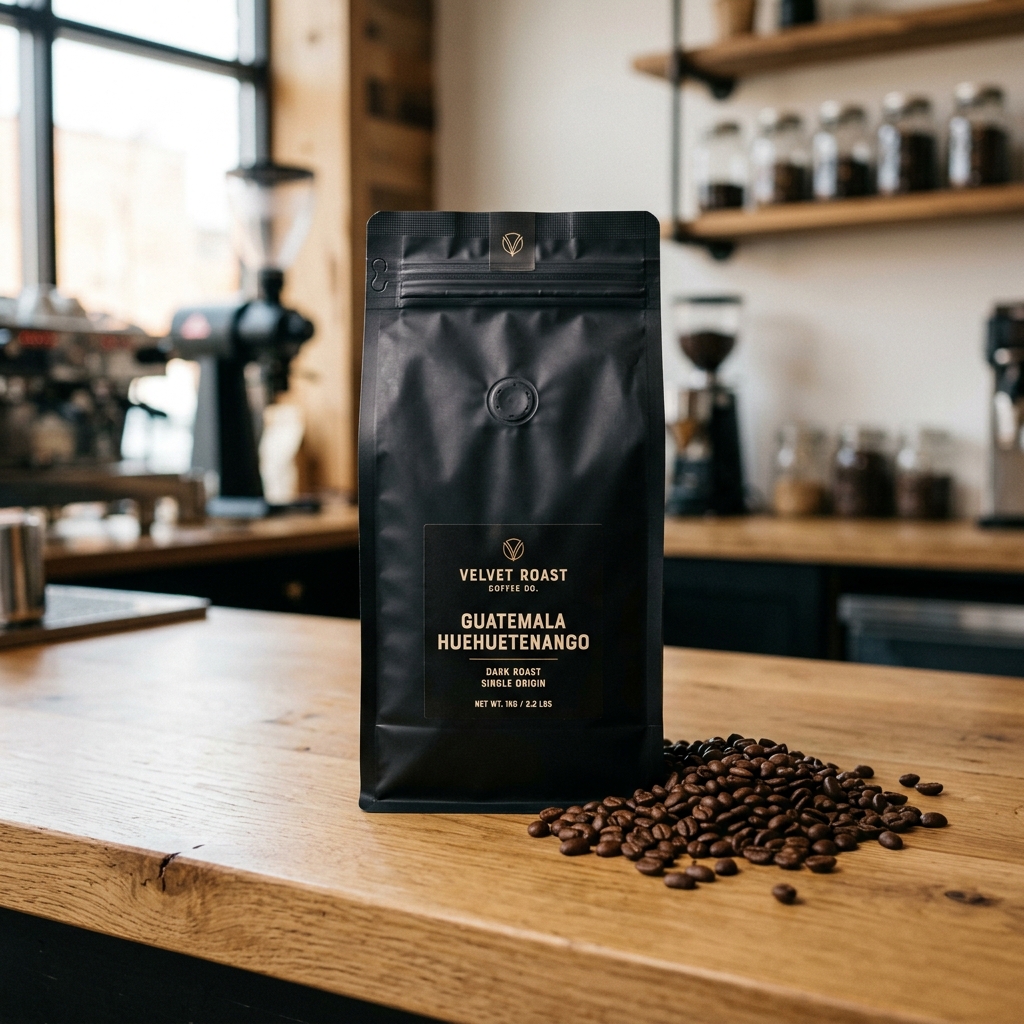
- ✓ Coffee Beans, Ground Coffee & Cocoa Powders
- ✓ Supplement Powders, Protein & Superfoods
- ✓ Dry Bath Salts, Cosmetics & Cleaning Powders
Carbon Footprint and Economic Freight Benefits
Shipping empty glass bottles or thick plastic jars is incredibly inefficient, basically transportating empty air across continents. Flat-shipped refill pouches pack with maximum density, drastically lowering freight volume:
5 Common Refill Pouch Problems (And Solutions)
Don't let poor packaging compromise your brand. Here are the top 5 pain points and how AchievePack engineering solves them.
1. Spout Leakage & Fitment Failure
Problem: Weak fitment seals leading to liquid leakage under shipping pressure.
Solution: Low-temperature ultrasonic spout sealing and dual-seal threaded caps.
2. Poor Stand-up Stability
Problem: Improper bottom gussets causing pouches to tip over or sag on store shelves.
Solution: Precision-engineered bottom gusset geometry for optimal center of gravity.
3. Layer Delamination
Problem: Chemical reaction between surfactant-rich contents and lamination adhesives.
Solution: Advanced chemical-resistant solventless polyurethane adhesive lamination.
4. Puncture & Tear Risks
Problem: High compression and impact during courier transit leading to puncture or burst.
Solution: Multi-layer co-extrusion incorporating high-tensile BOPA (Nylon) barrier layers.
5. Difficult or Gluggy Pouring
Problem: High-viscosity liquids glugging or splashing during the refilling process.
Solution: Ergonomically angled spouts and directional venting channels for continuous air flow.
AchievePack Eco Material Specifications
Direct-Factory Certified Sustainable Laminates
AchievePack designs and manufactures five classes of circular flexible barrier packaging materials. These options help brand owners meet regulatory standards (like EU PPWR and state-level laws) without sacrificing barrier performance or shelf-life.
1. Curbside Recyclable Mono-PE
Made from 100% Polyethylene (LDPE #4). This single-polymer structure is fully recyclable through European/UK curbside collection and USA Store Drop-Off networks. Optional EVOH coatings (<5% total weight) deliver extreme oxygen and moisture barriers without compromising the recycling stream.
2. Heat-Resistant Recyclable Mono-PP
Formulated from single-polymer Polypropylene (PP #5), providing excellent optical clarity, high rigidity, and thermal tolerance. Engineered specifically to survive hot-fill processes, pasteurization, retort cooking, and microwave sterilization lines.
3. Certified Compostable Biopolymers
Constructed from plant-derived biopolymers including natural Kraft paper, NatureFlex cellulose, and certified PLA/PBAT/PHA sealable blends. Extensively tested and certified under ASTM D6400 (USA) and EN 13432 (EU) to degrade into organic soil nutrients within 180 days.
4. PCR (Post-Consumer Recycled) Polymers
Integrates GRS-certified post-consumer recycled plastic resins into the laminate structure. Helps brands reduce dependence on virgin fossil resources, lower carbon footprints, and completely bypass plastic packaging taxes in global regions.
5. Carbon-Negative Sugarcane Bio-PE
Sourced from sugarcane bio-PE that acts exactly like petroleum PE. Captures atmospheric CO₂ during sugarcane growth, delivering carbon-negative performance while remaining 100% recyclable in standard PE sorting streams (#4).
Biopolymer Lab Validation & Compostability Proof
We don't make vague green claims. Our biopolymers (NatureFlex, PLA/PBAT) are batch-tested to verify 100% biodegradation in home and industrial composting within 180 days with zero toxic ecotoxicity residues.
Compostable Barrier (OTR)
Tested barrier layers (NK/NatureFlex) ensuring moisture and aroma protection.
Organic Chemical Purity
Exceeds EN 13432 criteria for organic safety and clean soil composting.
Biopolymer Sealing Window
Narrowed sealing temperature range preventing biopolymer deformation or thermal burn.
TÜV OK Compost HOME
Guarantees complete organic degradation in backyard compost bins within 26 weeks.
Puncture Strength (ASTM F1306)
Ensures biopolymer bag walls resist puncture during manual handling and packing.
Tensile Strength (ASTM D882)
Ensures biopolymer bags support products securely without structural stretch.