Engineering a High-Barrier 3-Layer Compostable Wrap
Traditional bar wrappers rely on non-recyclable plastic/foil laminations. Our engineered solution uses three compostable layers: 1) Raw Kraft Paper outer layer for strength and printability, 2) Metalized PLA middle layer that provides a high moisture and oxygen barrier, and 3) PLA and PBAT blend inner layer for flexible, durable sealing.
Technical Performance & Barrier Specifications
This packaging is strictly industrial compostable, certified to meet EN 13432 and ASTM D6400 standards. It requires commercial facility conditions (55-60°C) to biodegrade completely in 90-180 days. It achieves a low Moisture Vapor Transmission Rate (MVTR) under 0.1 g/m²/day and Oxygen Transmission Rate (OTR) under 0.1 cc/m²/day, ensuring standard snack bar shelf-life is maintained.
From Ryan Wong's Engineering Notebook
From Ryan Wong's Engineering Notebook
"In my 14 years designing sustainable packaging, high-speed wrapping compatibility was always the hurdle for compostable bar packaging. During a trial run for an organic protein bar brand, their HFFS machine kept jamming due to the high drag coefficient of pure PLA film. We formulated a custom outer slip-agent and switched to a PLA/PBAT blend. By optimizing the sealing temperature to exactly 148°C with a 1.2-second dwell time, we achieved a smooth run of 180 packs per minute—zero seal failures and zero jams. It proved that you don't have to sacrifice speed for sustainability."
— Ryan Wong, Co-Founder & Chief Packaging Engineer
5 Packaging Pain Points & Engineering Solutions
Oil Staining & Paper Bleedthrough
✅ Solution: High-fat ingredients like chocolate, nuts, and seed oils can seep through paper, causing unsightly dark grease spots. We solve this by laminating a 15-micron high-density Metallized PLA middle layer that completely blocks lipid migration and keeps the outer Kraft paper pristine.
Brittle Heat Seals and Packaging Blowouts
✅ Solution: Standard bioplastics like PLA have a very narrow sealing window and low elasticity, causing seams to burst on packing lines. Our proprietary inner sealing film blends PLA with flexible PBAT, widening the thermal window (140°C–160°C) and increasing tensile seam strength.
Rapid Oxidation & Stale Ingredients
✅ Solution: Nuts, seeds, and protein powders degrade quickly in contact with oxygen, turning rancid. Our metalized PLA barrier reduces Oxygen Transmission Rate (OTR) to under 0.1 cc/m²/day, protecting delicate fats from oxidation and preserving crunch and flavor.
Moisture Absorption & Softening
✅ Solution: Ambient humidity can penetrate simple paper wraps, making crispy energy bars soft and soggy. The laminated metalized PLA film acts as an excellent moisture barrier, keeping Moisture Vapor Transmission Rate (MVTR) below 0.1 g/m²/day to maintain product texture.
High Friction Jamming on VFFS Machines
✅ Solution: Compostable films often have a tacky surface that sticks to forming collars, causing line stoppages on high-speed VFFS wrappers. We formulate our sealing layer with organic slip agents to lower the Coefficient of Friction (COF) to 0.2–0.3, matching standard plastic run speeds.
Certified Store Products
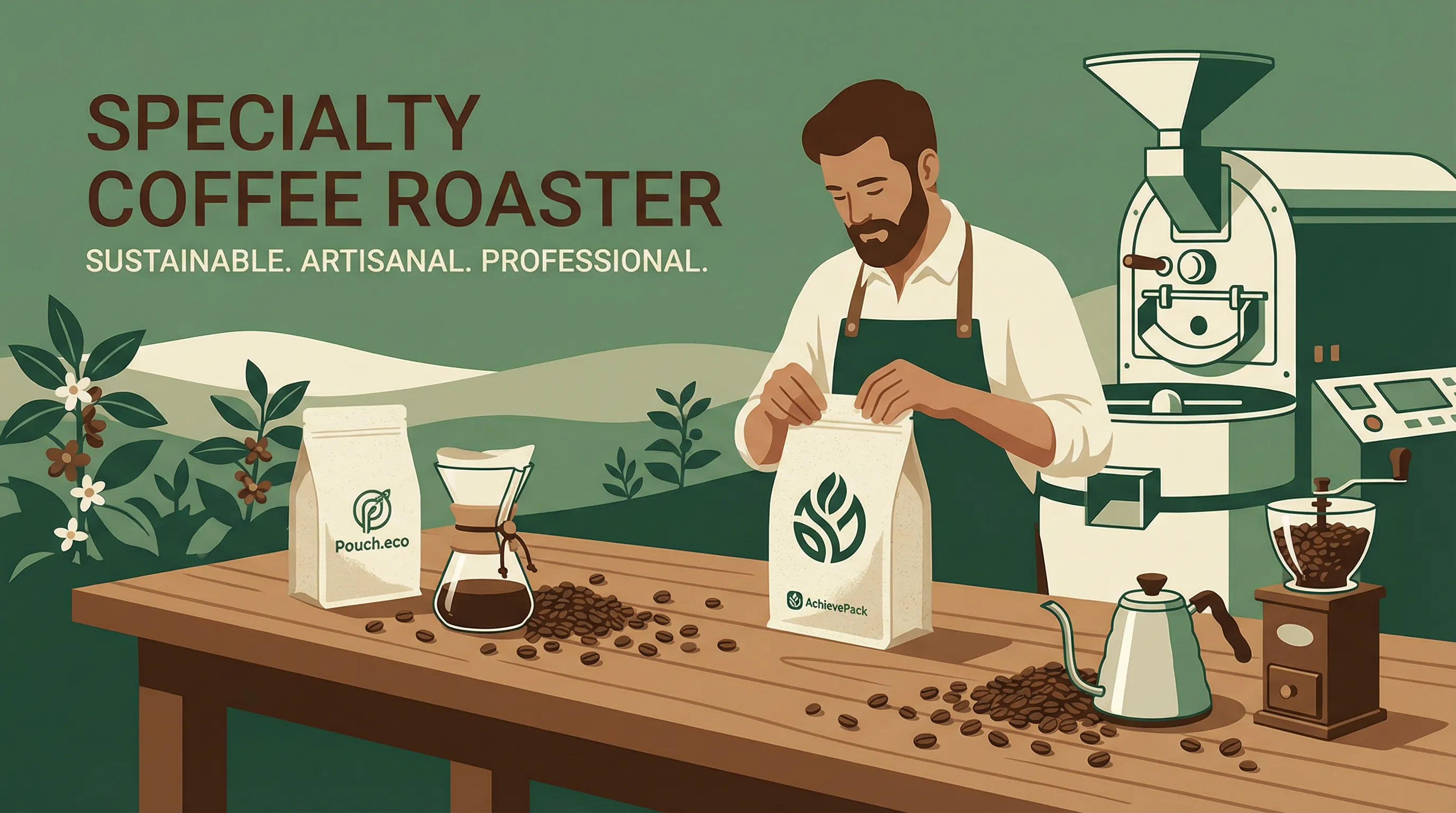
Compostable Coffee Bags
Certified industrial and home compostable bags featuring high barrier properties.
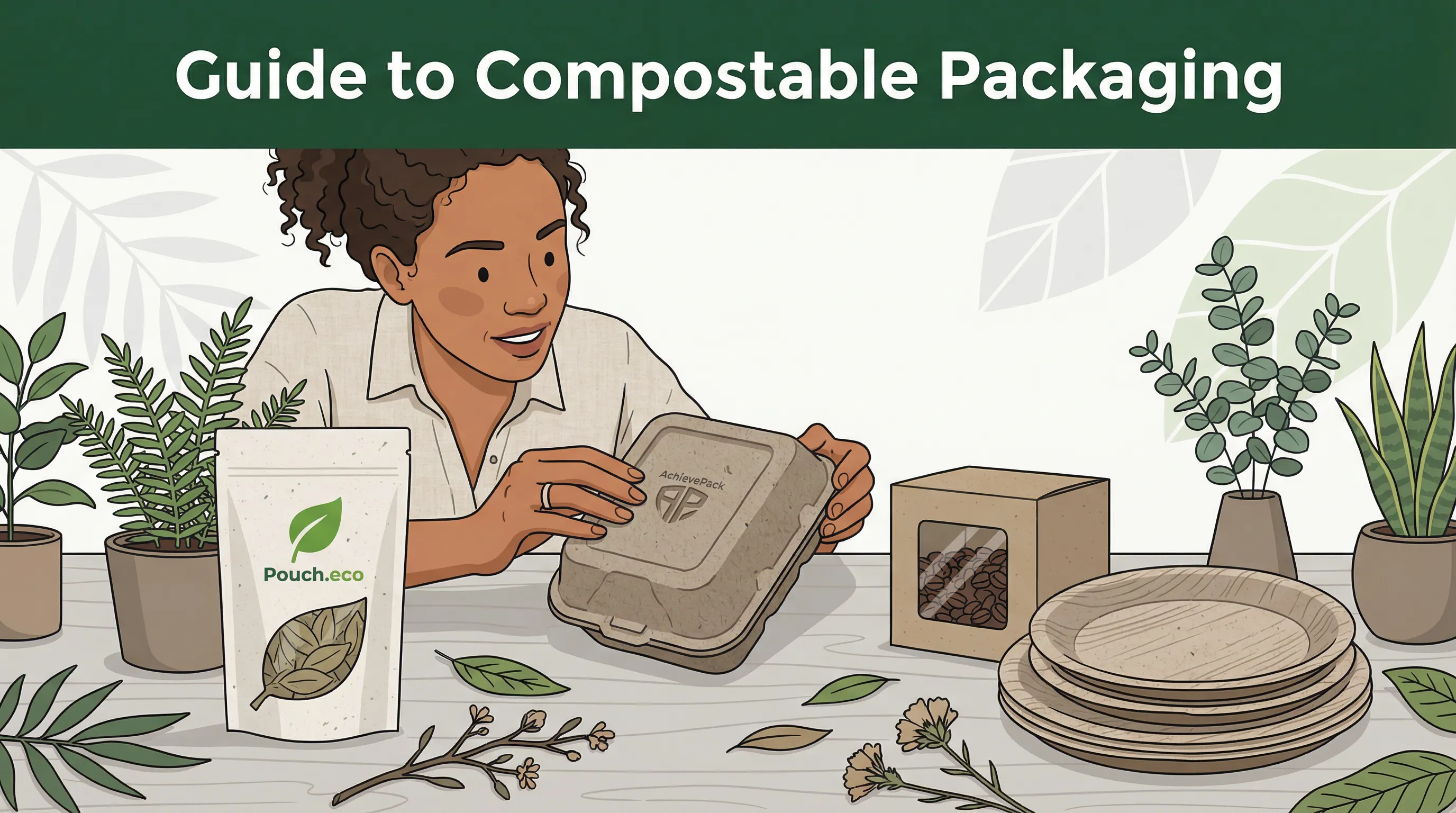
Compostable Stand Up Pouches
Versatile and durable stand-up pouches with premium organic matte textures.
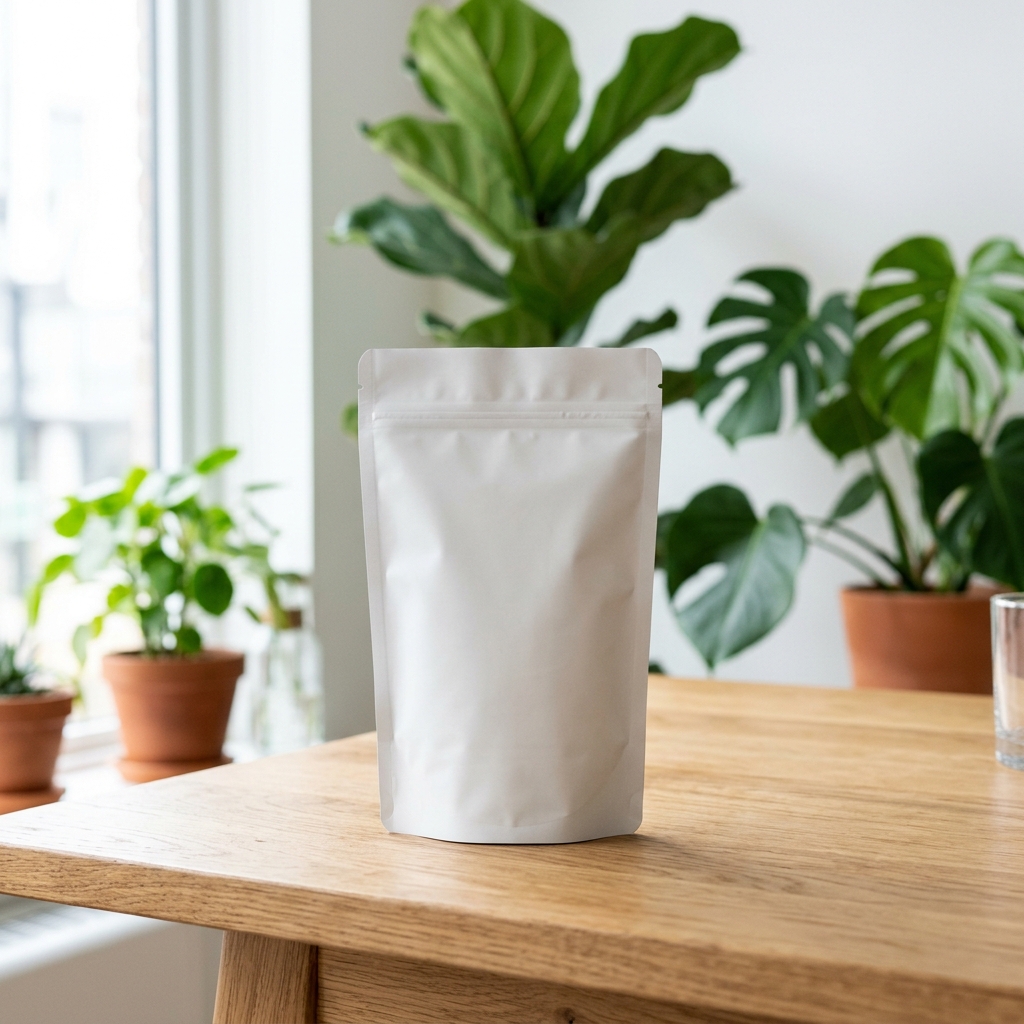
Compostable Side Gusset Bags
High-capacity side-gusseted bags designed for wholesale snack and coffee brands.
AchievePack Eco Material Specifications
Direct-Factory Certified Sustainable Laminates
AchievePack designs and manufactures five classes of circular flexible barrier packaging materials. These options help brand owners meet regulatory standards (like EU PPWR and state-level laws) without sacrificing barrier performance or shelf-life.
1. Curbside Recyclable Mono-PE
Made from 100% Polyethylene (LDPE #4). This single-polymer structure is fully recyclable through European/UK curbside collection and USA Store Drop-Off networks. Optional EVOH coatings (<5% total weight) deliver extreme oxygen and moisture barriers without compromising the recycling stream.
2. Heat-Resistant Recyclable Mono-PP
Formulated from single-polymer Polypropylene (PP #5), providing excellent optical clarity, high rigidity, and thermal tolerance. Engineered specifically to survive hot-fill processes, pasteurization, retort cooking, and microwave sterilization lines.
3. Certified Compostable Biopolymers
Constructed from plant-derived biopolymers including natural Kraft paper, NatureFlex cellulose, and certified PLA/PBAT/PHA sealable blends. Extensively tested and certified under ASTM D6400 (USA) and EN 13432 (EU) to degrade into organic soil nutrients within 180 days.
4. PCR (Post-Consumer Recycled) Polymers
Integrates GRS-certified post-consumer recycled plastic resins into the laminate structure. Helps brands reduce dependence on virgin fossil resources, lower carbon footprints, and completely bypass plastic packaging taxes in global regions.
5. Carbon-Negative Sugarcane Bio-PE
Sourced from sugarcane bio-PE that acts exactly like petroleum PE. Captures atmospheric CO₂ during sugarcane growth, delivering carbon-negative performance while remaining 100% recyclable in standard PE sorting streams (#4).
Biopolymer Lab Validation & Compostability Proof
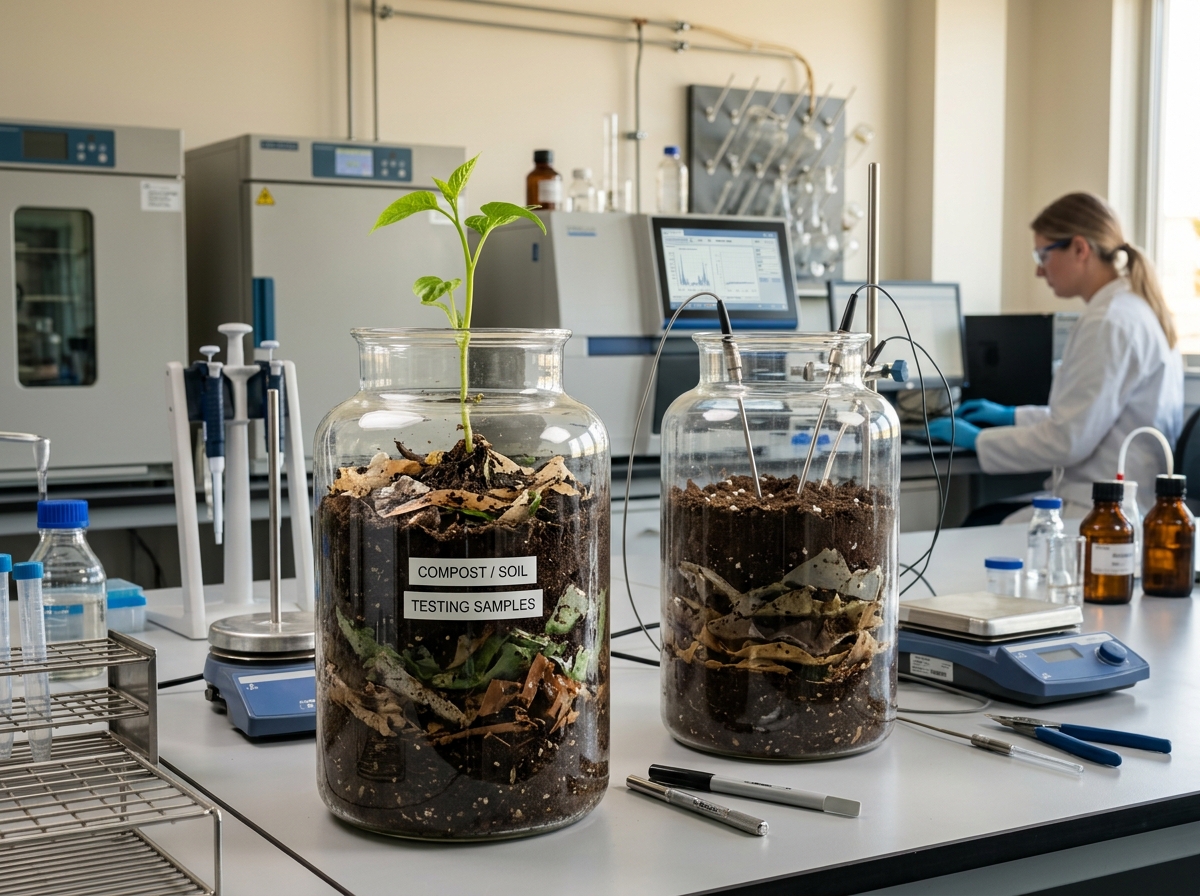
We don't make vague green claims. Our biopolymers (NatureFlex, PLA/PBAT) are batch-tested to verify 100% biodegradation in home and industrial composting within 180 days with zero toxic ecotoxicity residues.
Compostable Barrier (OTR)
Tested barrier layers (NK/NatureFlex) ensuring moisture and aroma protection.
Organic Chemical Purity
Exceeds EN 13432 criteria for organic safety and clean soil composting.
Biopolymer Sealing Window
Narrowed sealing temperature range preventing biopolymer deformation or thermal burn.
TÜV OK Compost HOME
Guarantees complete organic degradation in backyard compost bins within 26 weeks.
Puncture Strength (ASTM F1306)
Ensures biopolymer bag walls resist puncture during manual handling and packing.
Tensile Strength (ASTM D882)
Ensures biopolymer bags support products securely without structural stretch.