COMBUSTION
SAFETY TEST:
PLA vs. PET
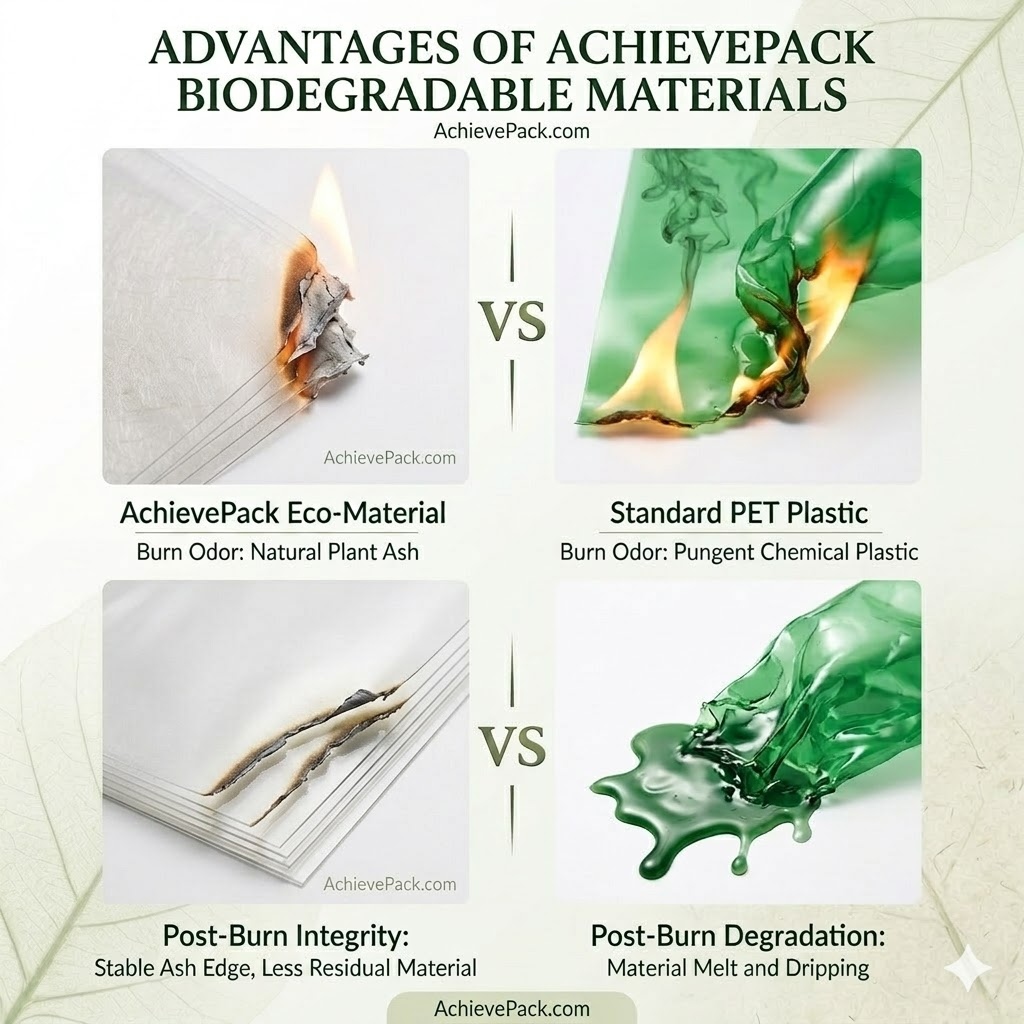
Protect your brand's environmental claims from greenwashing. A simple combustion safety test immediately distinguishes plant-based Compostable PLA (which burns cleanly with a mild grass-wood scent) from Conventional PET Plastic (which melts rapidly with severe toxic dripping and hazardous chemical fumes).
Is This Test For You?
Procurement & QA
Verify supplier claims in-house. Protect your brand's integrity and eco-claims before mass-producing custom printed labels or bags.
DTC Ecom Brands
Ensure zero microplastics. Guarantee your shipping labels and product box stickers break down naturally in standard industrial compost piles.
Sustainability Officers
Enforce strict compliance. Certify that materials satisfy international composting benchmarks (EN 13432 & ASTM D6400).
The Science of
Combustion
Plastics and plant-based biopolymers have radically different molecular architectures. Fossil fuel-based plastics are structured from long carbon chains with heavy chemical additives, while Polylactic Acid (PLA) is synthesized from fermented plant starch (primarily corn dextrose).
When exposed to an open flame, these distinct molecular structures react in highly specific, unforgeable ways. A standard combustion test evaluates three primary metrics:
1. Combustion Aroma
Plants burn like wood or leaves. Synthetic conventional plastics emit vaporized petroleum, producing a toxic, highly offensive chemical signature.
2. Flame Behavior
PLA burns with a clean, light yellow flame and steady combustion. PET curls back, melts instantly, and drips dangerous flaming droplets.
3. Post-Burn Residual
PLA leaves a structurally solid, dry, and brittle ash edge that crushes to fine charcoal powder. Conventional PET hardens into a dense, solid, and glassy plastic bead.
The Combustion Blueprint
- Q:""
- Q:""
- Q:""
- Q:""
5 Common Combustion Safety Problems (And Solutions)
1. Toxic Fumes Release
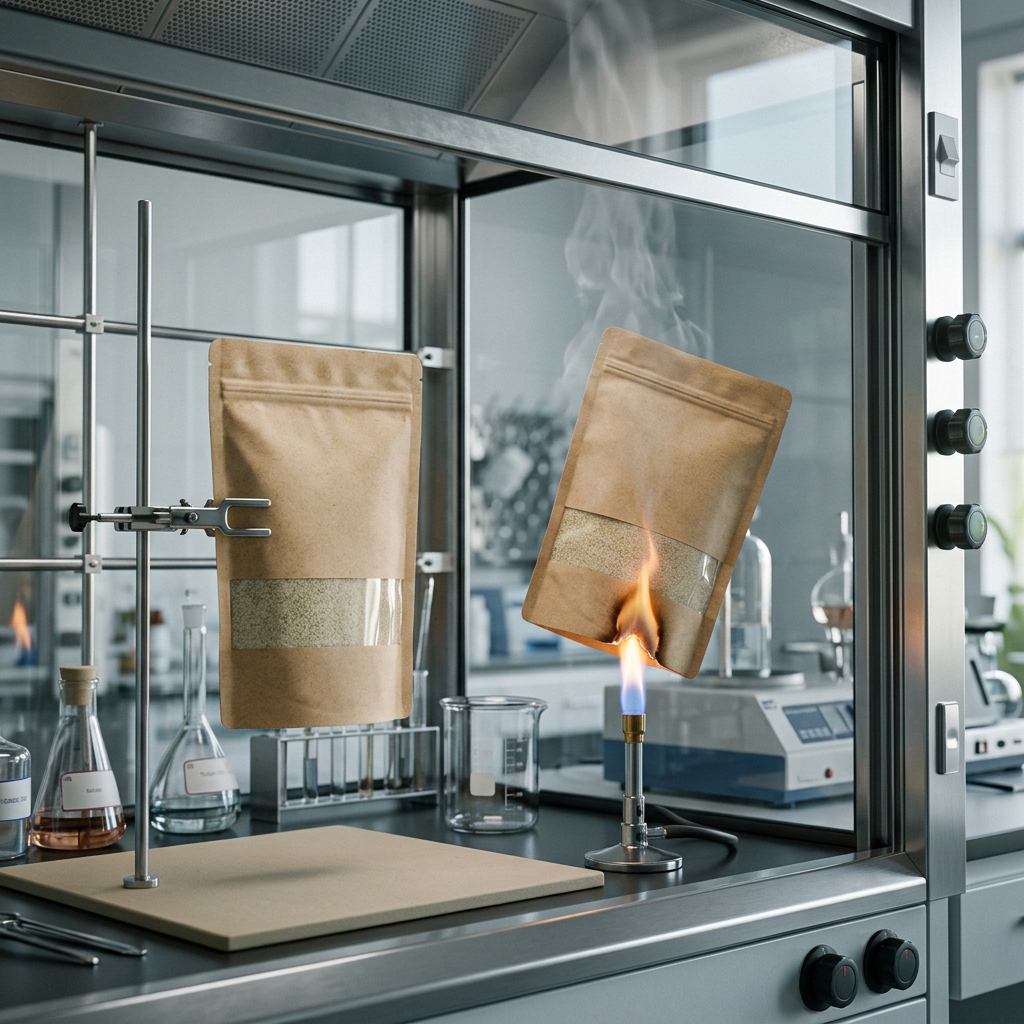
Burning standard plastics releases harmful toxins and VOCs. Solution: Our PLA materials are certified to release non-toxic emissions during combustion.
2. High Ash Residue
Incomplete combustion leaves significant solid waste and ash. Solution: Eco-friendly pouches burn efficiently, leaving minimal clean ash behind.
3. Microplastic Contamination
Residue from combustion can introduce microplastics into soil and air. Solution: 100% compostable layers ensure zero microplastic generation even when burned.
4. Chemical Flammability Risks
Unregulated inks and adhesives can cause aggressive, dangerous flare-ups. Solution: We use water-based inks and organic adhesives for controlled, safe burning.
5. Inconsistent Material Melting
Standard polymers melt and drip dangerously before combusting. Solution: Engineered PLA layers maintain structural integrity longer and avoid hazardous dripping.
Frequently Asked Questions
Q:Is burning PLA toxic to inhale?
A: Unlike synthetic plastics like PET or PVC which release toxic, highly carcinogenic vapors (such as benzene and acid gases), burning pure PLA primarily yields carbon dioxide (CO₂) and water vapour. It releases a mild, non-offensive plant/wood ash scent. However, as with all combustion events, we recommend performing tests in a well-ventilated space.
Q:Why does PLA form carbon ash while PET melts into plastic beads?
A: PLA is synthesized from plant carbohydrates. When it burns, the carbon-oxygen-hydrogen structures convert directly into ash, resembling burning paper or grass. PET is an engineered petroleum derivative designed for crystalline durability; upon heating, it undergoes a rapid thermal transition back into its liquid polymer form, dropping molten flame beads.
Q:Is the adhesive on your PLA stickers compostable as well?
A: Yes, absolutely. A sticker is only as compostable as its weakest link. AchievePack / Pouch.eco clear stickers use a certified, custom-formulated bio-adhesive. It decomposes in <=14 weeks, leaves zero microplastics, and meets all strict international composting protocols (EN 13432 and ASTM D6400).
Q:Will PLA sealing stickers melt on my package in hot cargo shipping?
A: No. While PLA has a lower melting point than PET, it remains fully stable up to 55°C (131°F). Standard cargo containers rarely exceed 45°C. Pouch.eco stickers are engineered with excellent heat resistance, holding strong integrity in transit while maintaining rapid breakdown when exposed to industrial compost facilities.