🔬 From Ryan Wong's Engineering Notebook
Engineering Memo
"A high-end granola startup was using side-gusset bags but kept getting customer complaints that the bag would tip over on breakfast tables, scattering oats. When they tried to transition to flat-bottom box bags, their co-packer warned them that the thicker bottom joints would melt or fail under their existing sealing settings. We visited their facility and calculated that their thermal sealer was set to 150°C with only a 0.8s dwell time—perfect for side-gussets but causing cold-seals on flat bottoms. We increased the dwell time to 1.3s and dropped the temperature to 135°C to allow heat to penetrate the 5-panel joint without burning the outer PE layer. Corner seal strength tripled, and failures dropped to zero. Stability and sealing solved in one go."
🔬 Interactive 3D Structural Visualizer
[ REAL-TIME WEBGL RENDERS — MOVE CURSOR TO SWAY / SCROLL TO ROTATE ]
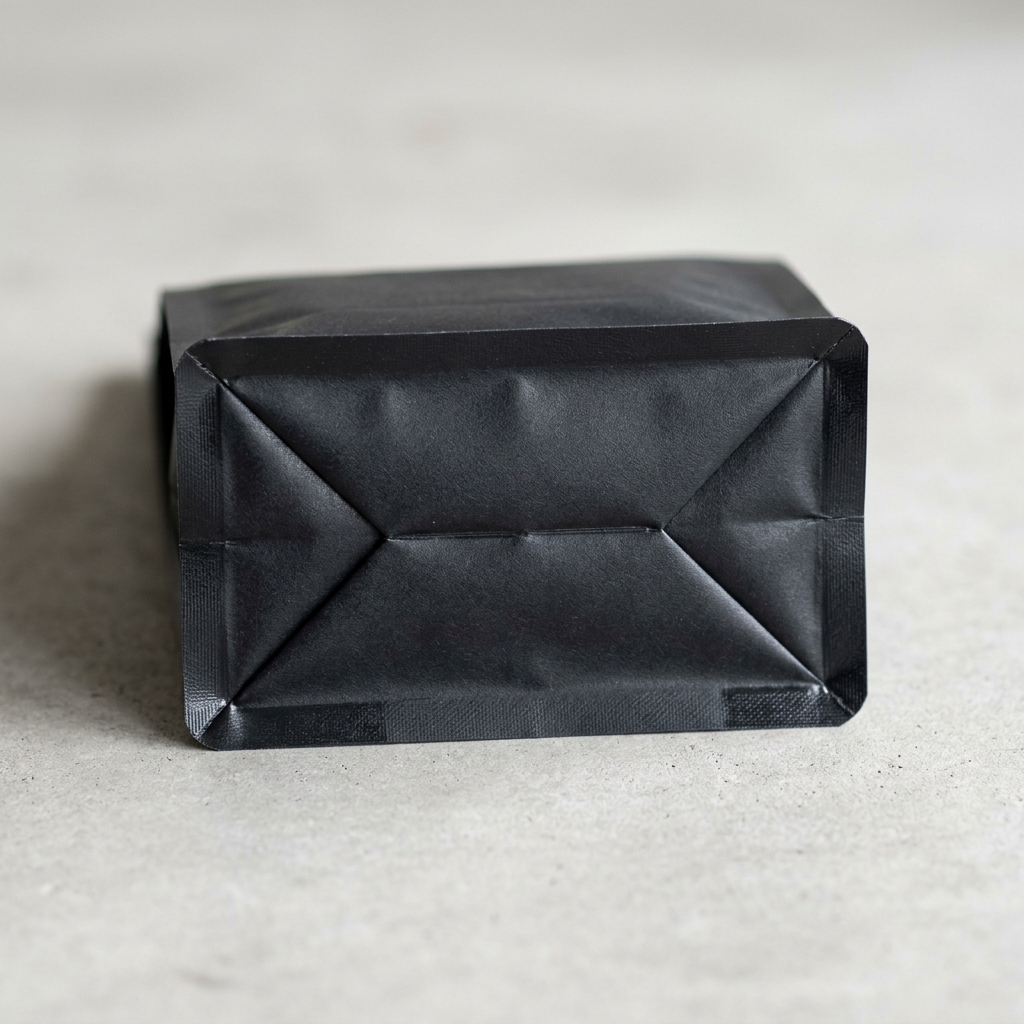
Flat Bottom Pouch
Note the separate, fully flat rectangular base and clean vertical quad corner seals.
3D Structure Viewer
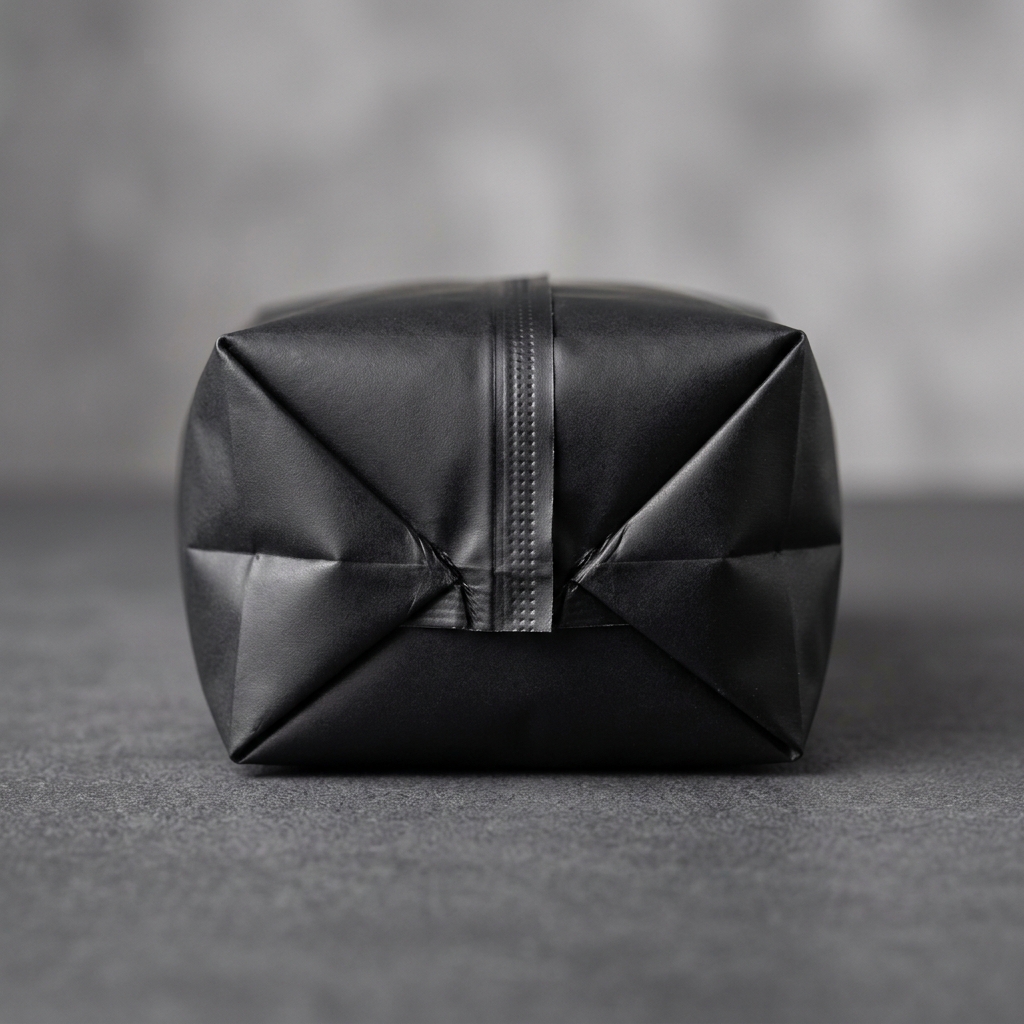
Side Gusset Pouch
Notice how the side folds collapse and gather at the bottom to form a center folded seam.
3D Structure Viewer
Technical Anatomy Deep Dive
Analyzing the mechanical properties, stress points, and retail advantages of both bottom shapes.
The 5-Panel Flat Bottom Box
Unlike standard gusset bags, the bottom of a flat bottom pouch is a separate rectangular panel of packaging film heat-sealed to the front, back, and two side gussets. This is what creates its distinct box-like silhouette.
✓ Total Standing Stability: Completely flat footprint stands upright even when holding extremely lightweight products or when partially empty.
✓ Five Printable Panels: Front, back, left gusset, right gusset, and bottom display panel are all available for branding.
✓ Resealable Zip Integration: Enables convenient pocket zippers or standard press zippers.
The Folded Side Gusset Bottom
A side gusset bag's bottom is formed by folding the bottom edge of the continuous pouch tube back. When empty, it lies flat. When filled, the side gussets expand, forcing the bottom to flare out into a cushion or boxy base, typically sealed with a center seam (fin-seal).
✓ Lower Cost Conversion: Simpler to convert in production line, resulting in 15% to 25% lower manufacturing costs.
✓ High Bulk Capacity: The structural folds handle stress exceptionally well for bulky volumes (1kg, 2kg, up to 5kg).
✓ Back-Seam Strength: Centered seals allow high tension fill lines without bottom rupture risks.
5 Packaging Pain Points & Engineering Solutions
01 / Pouch Tilting & Spillages
Lightweight or partially emptied side-gusset pouches fold at the base and fall over, spilling dry powders.
02 / Corner Crease Cracking & Leakages
Thick quad-seals on box bottoms experience high mechanical stress, causing micro-fractures in foil barrier layers.
03 / Graphic Distortion on Folds
Side-gusset seams running through critical branding elements distort logos when the pouch expands.
04 / Narrow Sealing Windows at Bottom Joints
The point where 5 separate panels meet requires high heat, which can burn through surrounding single-layer bioplastics.
05 / Slow Auto-Filling Line Throughput
Standard side-gusset bags resist opening cleanly, causing mechanical suction cups to miss or drop pouches.
The Decision Matrix
Compare visual, physical, and commercial attributes to decide on the best base for your brand.
| Parameters | Flat Bottom Pouch | Side Gusset Pouch |
|---|---|---|
| Base Silhouette | Perfect flat rectangle. Stands rigid. | Pillow-block with center seam fold. |
| Standing Stability | Excellent (Unfilled or Filled) | Weight-dependent (Requires product fill) |
| Volumetric Efficiency | 10% - 15% Higher (Box format) | Standard (Slight volume loss in folds) |
| Printable Surface Areas | 5 Panels (Front, Back, Sides, Bottom) | 3 Panels (Front, Back, Sides) |
| Closure Adaptability | Zippers, Pocket Zippers, Sliders | Tin ties, top thermal seal fold |
| Best Fill Weights | 100g to 1.5kg (Gourmet packing) | 1kg to 10kg (Bulk & heavy duty packing) |
| Relative Unit Price | Premium (15% - 25% Higher cost) | Economical (Simpler converter lines) |
Sustainable Materials
At Achieve Pack, we help brands transition away from legacy landfills. Both pouch designs are fully certifiable across eco-laminations.
Industrial Compostable
Formulated with FSC-certified premium Kraft paper, metallized bio-barrier layers (NK/NKME), and PBS sealant liners. ✓ Certified EN 13432 & ASTM D6400
Recyclable Mono-PE
Single-polymer structure (EVOH-doped Mono-PE) with exceptional high oxygen & moisture barriers. Full recycling circle. ✓ Store Drop-off Circular Ready
GRS Recycled PCR
Incorporates up to 50% Post-Consumer Recycled plastics in the outer PET/PP films, reducing virgin carbon footprint by 30%. ✓ Global Recycled Standard Certified
*All flexible packaging conversions are certified BPA-free and meet stringent FDA 21 CFR standards for direct food contact.
Frequently Asked Questions
What is the primary difference between a flat bottom pouch and a side gusset pouch bottom?
The primary difference lies in the bottom design and stability. A flat bottom pouch (box pouch) is made of 5 separate web panels, creating a completely flat, rectangular brick-like base. It stands with absolute stability even when lightweight. A side gusset pouch bottom is formed by folding the sides inward; when filled, the bottom expands into a pillow/block base shaped by folds and a center fin-seal, relying on product weight to stand upright.
Which pouch style offers more internal volume?
The flat bottom pouch provides higher volumetric efficiency. Because its bottom is a separate flat rectangular panel rather than a folded seam, it expands into a box-like structure, giving it roughly 10% to 15% more usable internal volume compared to a side gusset pouch of the same outer dimensions.
Which pricing compare between these two pouch bottom structures?
Side gusset pouches are more cost-effective. They require simpler machinery conversion lines. Flat bottom pouches involve a complex 5-panel conversion process that requires advanced bag-making machines, making them roughly 15% to 25% more expensive depending on material lamination and size.
Standard Factory Quality Control & Material Auditing
Our general quality management system guarantees that every packaging batch meets international safety requirements. We perform rigorous mechanical, thermal, and barrier tests from raw materials to final shipping pallets to ensure complete peace of mind.
Gas Transmission
Gas transmission rate tests verify material specification sheets.
Chemical Safety
Zero chemical odor or harmful heavy metal contamination.
Heat Seal Strength
Verifies strong and secure heat seal seams for leak prevention.
Manufacturing Standard
Strict quality logs maintained for traceability of every batch.
Transit Durability
Simulated shipping tests ensure packages arrive in pristine condition.
Tensile Strength
Film properties optimized for smooth packaging line operation.
See Our Products
 🌱 Fresh Valve Tech
Compostable Flat Bottom Coffee Bags with Degassing Valve
High-barrier flat bottom box bags with compostable degassing valve for fresh coffee.
 📦 5-Panel Design
Custom Flat Bottom Box Pouches
Premium 5-panel box pouches for maximum shelf presence and high barrier safety.
Ready to Upgrade Your Pouch Base?
Book a free consultation with our packaging engineering team to test samples on your filling line.