🔬 From Ryan Wong's Engineering Notebook
Engineering Memo
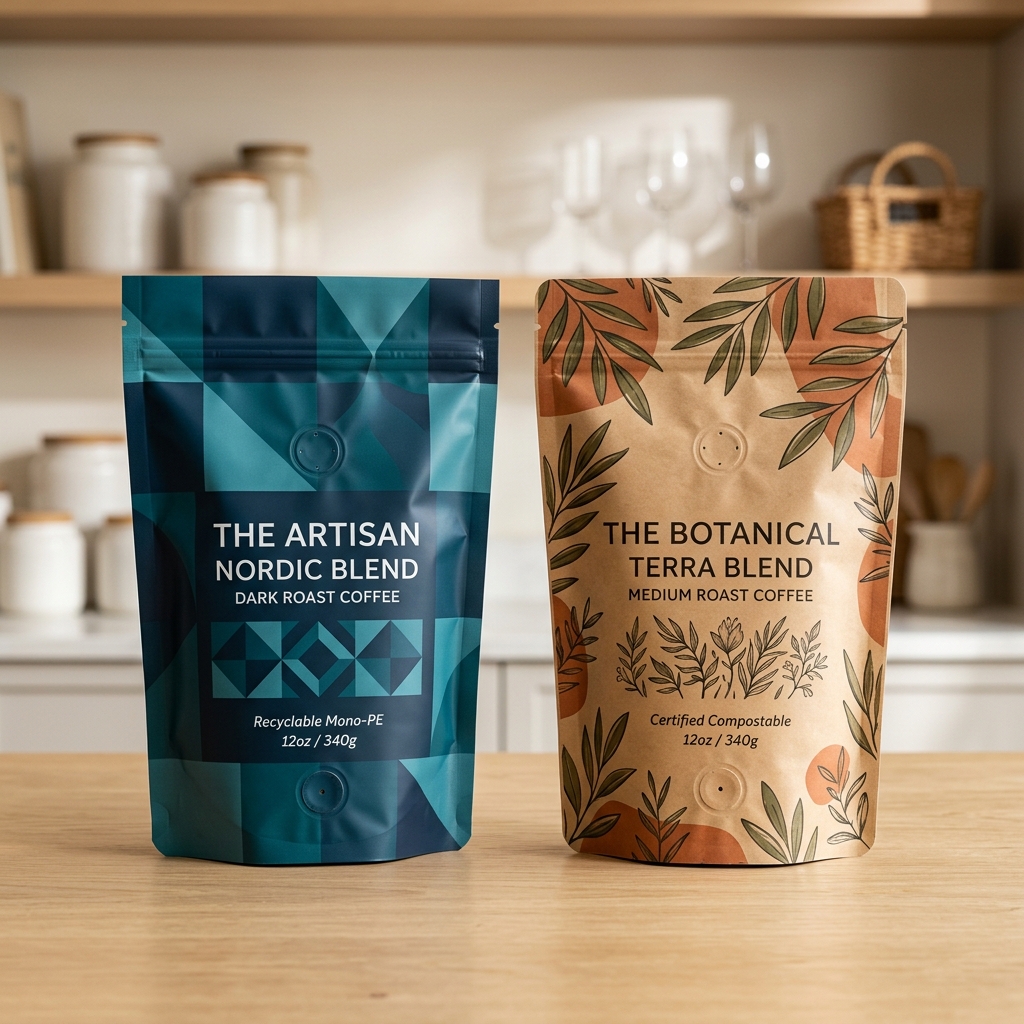
"During a packaging audit for an organic coffee roaster, they proudly showed me their BPI-certified compostable bags. However, when we checked their local municipal waste management facility, we discovered they rejected all compostable plastics directly to the landfill. The sorting machines couldn't distinguish PLA from PET, and they feared contamination. The client was shocked to learn their 'eco-friendly' bag was actually generating landfill methane. I advised them to shift to Mono-PE recyclable bags with EVOH barriers for store-drop-off recycling. Always audit your local disposal infrastructure before selecting your material."
1. Compostability Skepticism: The Composting Paradox
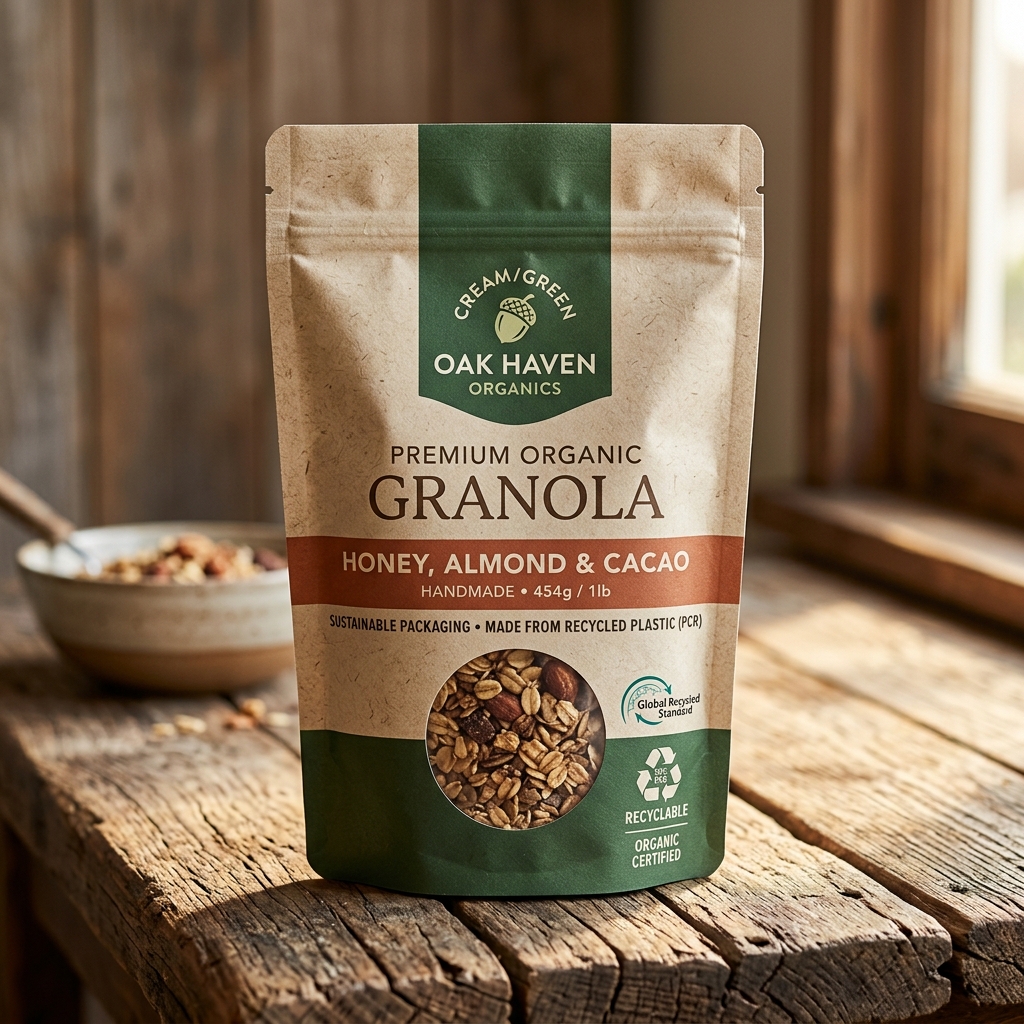
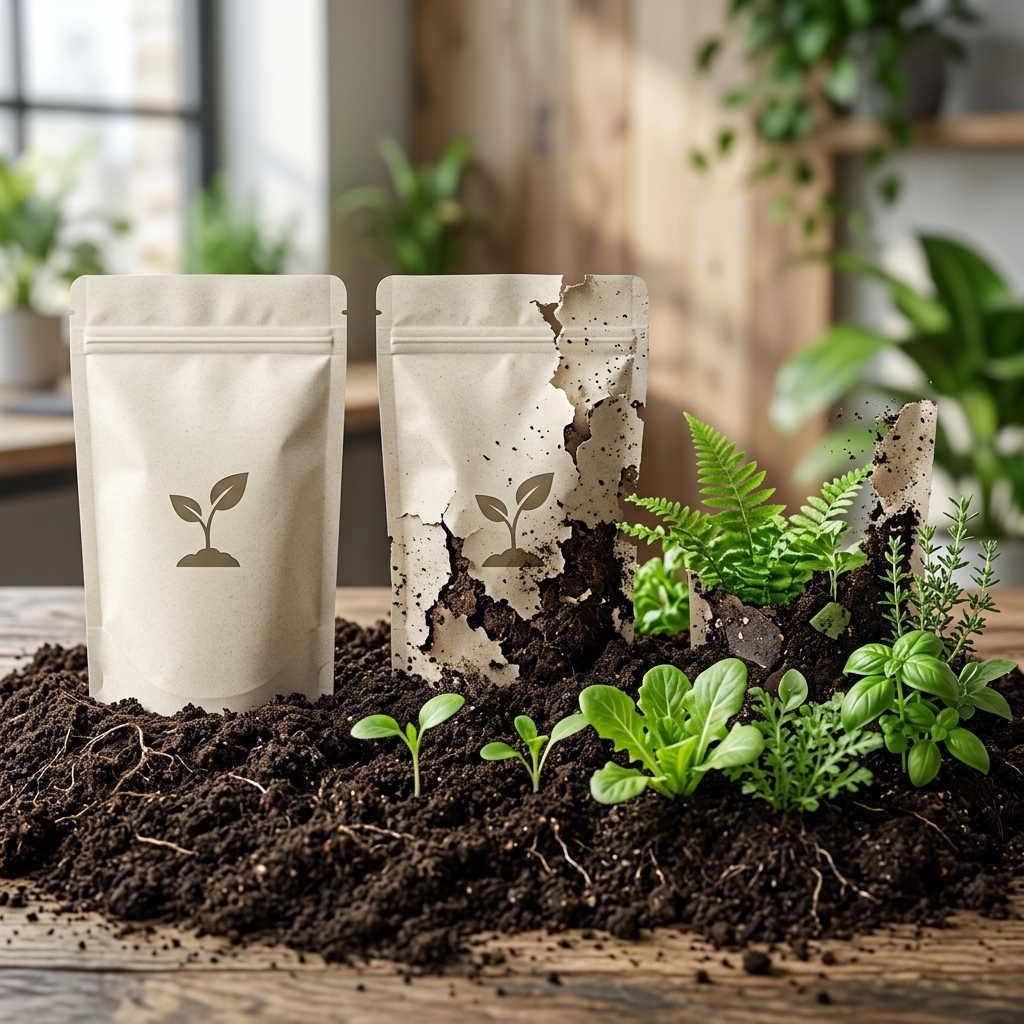
Consumers are increasingly skeptical of the word 'compostable'—and for good reason. Most compostable packaging does not break down in a standard backyard pile. Standard compostable plastics (like PLA) require industrial composting facilities with controlled heat (58°C) and microbes to decompose. Without local infrastructure, compostable bags end up in landfills, where they undergo anaerobic decomposition and emit methane. That is why Achieve Pack prioritizes Home Compostable laminates (certified cellulose and bio-PBS) which degrade in backyard garden heaps within 24 weeks.
2. Recyclability vs. Reality: The Circularity Loop
To achieve true circularity, we must focus on materials that work with existing sorting equipment. Standard multilayer bags (PET/AL/PE) are unrecyclable because the layers cannot be separated. In contrast, Mono-PE (single-polymer) bags are accepted in store-drop-off recycling programs. However, consumer education remains a bottleneck: if consumers throw Mono-PE in standard curbside bins, sorting plants may still discard them.
5 Packaging Pain Points & Engineering Solutions
01 / Greenwashing Accusations & Mislabeling
Brands using industrially compostable bags in cities without facilities face greenwashing backlash.
02 / Premature Shelf Degradation
Bio-plastics degrading or losing strength on warehouse shelves before filling.
03 / Coffee Freshness Loss (Oxidation)
Biodegradable films having high oxygen transmission rates (OTR), leading to stale coffee in 4 weeks.
04 / Recycling Stream Rejection
Multilayer mixed-plastic laminates (e.g. PET/AL/PE) being sorted as municipal waste and landfilled.
05 / Poor Thermal Sealing Window
Bio-films having narrow seal windows, causing seam failure or melting on standard sealing jaws.
3. Coffee Freshness vs. Eco Tradeoffs: The OTR Barrier
Coffee roasters face a difficult choice: oxygen is the enemy of fresh coffee. Traditional high-barrier bags use aluminum foil layers, which offer excellent protection but are completely unrecyclable. Removing the foil reduces shelf life. Our engineering solution is co-extruded Mono-PE with EVOH coatings, which matches foil barrier protection (OTR < 0.1 cc/m²/day) while remaining recyclable.
Frequently Asked Questions
Why do eco-friendly communities favor Recyclable Mono-PE over novel bioplastics?
Zero-waste and eco-friendly communities favor Mono-PE (single-polymer recyclable plastic) because it operates cleanly within existing municipal recycling systems. Many novel bio-plastics (like PLA or PBS) cannot be sorted easily by current infrared optical sorters. As a result, they are flagged as contaminants and discarded directly into landfills, whereas Mono-PE can be converted back into plastic pellets, supporting a true circular loop.
What is the difference between Industrial Compostable and Home Compostable packaging?
Industrial compostable packaging (certified EN 13432 or ASTM D6400) requires high-temperature commercial facilities (approx. 58°C) with managed hydration and aeration to break down. In contrast, Home Compostable packaging (certified TUV OK Compost Home) is formulated using highly sensitive cellulose or bio-PBS liners that degrade naturally inside regular backyard soil and garden compost piles (approx. 20-30°C) within 24 weeks.
How does Achieve Pack resolve the coffee packaging freshness vs. eco-friendliness tension?
We resolve this tension by replacing composite foil laminates with advanced high-barrier single materials. Our Mono-PE recyclable bags are co-extruded with EVOH (ethylene-vinyl alcohol copolymer), providing an oxygen transmission rate (OTR) of less than 0.1 cc/m²/day—matching traditional foil freshness without rendering the bag unrecyclable. For compostable options, we utilize bio-EVOH barriers sourced from plant starches.
Standard Factory Quality Control & Material Auditing
Our general quality management system guarantees that every packaging batch meets international safety requirements. We perform rigorous mechanical, thermal, and barrier tests from raw materials to final shipping pallets to ensure complete peace of mind.
Gas Transmission
Gas transmission rate tests verify material specification sheets.
Chemical Safety
Zero chemical odor or harmful heavy metal contamination.
Heat Seal Strength
Verifies strong and secure heat seal seams for leak prevention.
Manufacturing Standard
Strict quality logs maintained for traceability of every batch.
Transit Durability
Simulated shipping tests ensure packages arrive in pristine condition.
Tensile Strength
Film properties optimized for smooth packaging line operation.
See Our Products
 🌱 Compostable Barrier
Custom Printed Home Compostable Stand Up Pouches
High-barrier compostable pouches certified for home and industrial composting.
 ♻️ 100% Recyclable
Clear Matte Zipper Stand Up Pouch
Recyclable high-clarity matte finish stand up pouches with resealable zippers.
Achieve Sustainable Packaging Circularity
Book a quick 30-minute consultation with our packaging specialists to review material compliance and order free samples.